
The Unseen Curriculum: How Holistic Outdoor Teaching Weaves Eco-Literacy into Every Leaf and Lesson
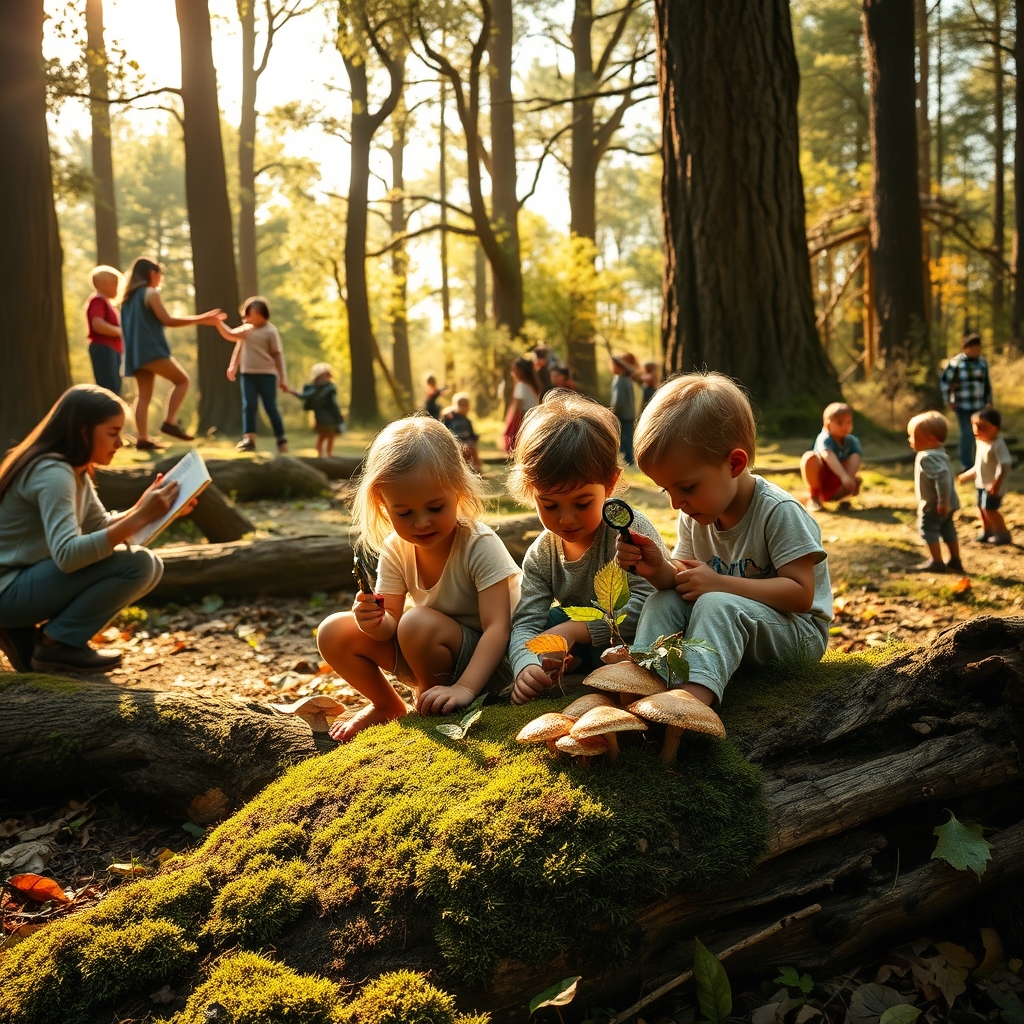
In a world where screens often replace streams and concrete overshadows canopies, a quiet revolution is taking root in education—one that trades fluorescent lights for dappled sunlight and textbooks for the living, breathing pages of the natural world. Holistic outdoor teaching isn’t just an alternative to traditional education; it’s a return to the way learning was meant to be: immersive, interconnected, and alive with possibility. At its core, this approach doesn’t just teach children about the environment—it teaches them through it, weaving eco-literacy into every lesson, every observation, and every moment of unstructured play.
The Philosophy of Wholeness: Beyond Subjects and Silos
Holistic outdoor teaching dismantles the rigid boundaries of conventional education, where subjects like science, math, and art exist in isolated bubbles. Instead, it embraces the natural world as a dynamic, interdisciplinary classroom where learning flows as freely as a river. A single morning in a forest kindergarten might begin with children measuring the circumference of an ancient oak (math), sketching its gnarled roots (art), and discussing the mycelium network that connects it to other trees (science). The lesson isn’t about ticking boxes; it’s about understanding the web of relationships that sustain life—and our place within it.
This methodology draws from indigenous wisdom, where knowledge isn’t compartmentalized but seen as a living, breathing entity. Elders and educators in cultures around the world have long understood that the land itself is the greatest teacher. By stepping into the forest, children don’t just learn about ecosystems; they become part of them, developing a sense of belonging that transcends the classroom walls. It’s this sense of connection that forms the bedrock of eco-literacy—a deep, intuitive understanding that we are not separate from nature, but a thread in its vast tapestry.
Sensory Immersion: The Language of the Natural World
For young learners, the natural world is a symphony of sensory experiences, each one an opportunity to deepen their understanding of the environment. Holistic outdoor teaching leverages this innate curiosity, turning every outing into a masterclass in eco-literacy. Children might press their palms into damp moss to feel its spongy texture, inhale the earthy scent of rain-soaked soil, or listen to the rhythmic chorus of frogs at dusk. These moments aren’t just incidental; they’re intentional invitations to engage with the world in ways that textbooks simply can’t replicate.
Outdoor sensory play is particularly powerful in early childhood, where the brain is wired to absorb information through touch, sound, and movement. A child who spends an afternoon balancing on fallen logs isn’t just developing motor skills—they’re learning about gravity, friction, and the resilience of wood. A group of children huddled around a puddle, watching tadpoles dart between the shadows, isn’t just observing life cycles; they’re developing empathy, patience, and a sense of wonder that no worksheet could ever inspire. These experiences lay the foundation for eco-literacy by fostering a love for the natural world that is visceral, emotional, and enduring.
The Role of the Educator: Guide, Not Gatekeeper
In holistic outdoor teaching, the educator’s role shifts from authority figure to facilitator—a guide who walks alongside children as they explore, question, and discover. This approach requires a deep trust in the learning process, where mistakes are seen as opportunities and curiosity is the compass. A child who asks, “Why do leaves change color?” might be met with another question: “What do you think happens to them when they fall?” rather than a pre-packaged answer. This Socratic method encourages critical thinking and empowers children to seek their own understanding of the world.
Educators in these settings are also attuned to the subtle lessons the environment offers. A sudden downpour isn’t a disruption; it’s a chance to discuss the water cycle, the importance of rain for plants, or how animals seek shelter. A child’s frustration at failing to start a fire with a bow drill becomes a lesson in perseverance, problem-solving, and the science of friction. By reframing challenges as teachable moments, holistic outdoor teaching nurtures resilience and adaptability—qualities that are essential for navigating an uncertain future.
Bushcraft and Beyond: Survival Skills as Eco-Literacy
Wilderness survival skills, often dismissed as niche or outdated, are in fact a cornerstone of eco-literacy. When children learn to build shelters from natural materials, identify edible plants, or track animals, they’re not just acquiring practical skills—they’re developing a profound respect for the land and its resources. These activities require observation, patience, and an understanding of ecological relationships. A child who knows how to find water in the wild isn’t just prepared for an emergency; they’ve gained insight into the delicate balance of ecosystems and the ingenuity of nature.
Bushcraft also fosters a sense of self-reliance that is increasingly rare in a world of instant gratification. When a child successfully starts a fire using only sticks and tinder, they experience a surge of confidence that no standardized test could ever replicate. This confidence extends beyond the physical act; it’s a belief in their ability to interact with and understand the natural world. It’s this kind of empowerment that transforms passive observers into active stewards of the environment.
Conservation as a Natural Extension of Learning
Eco-literacy isn’t just about understanding the natural world—it’s about taking action to protect it. Holistic outdoor teaching seamlessly integrates conservation into the curriculum, turning lessons into opportunities for environmental stewardship. Children might participate in a local river cleanup, plant native species in a school garden, or monitor the health of a nearby wetland. These activities aren’t add-ons; they’re a natural extension of the learning process, reinforcing the idea that knowledge carries responsibility.
When children see the tangible impact of their actions—like the return of pollinators to a restored meadow or the reduction of litter in a stream—they begin to understand that their choices matter. This sense of agency is a powerful antidote to the eco-anxiety that plagues so many young people today. Instead of feeling overwhelmed by the scale of environmental challenges, they learn that even small actions can ripple outward, creating meaningful change.
The Ripple Effect: How Holistic Outdoor Teaching Shapes Communities
The benefits of holistic outdoor teaching extend far beyond the individual child. When schools embrace this model, they become catalysts for change within their communities. Parents who once saw nature as a backdrop for recreation begin to see it as a classroom. Local organizations partner with schools to create green spaces, restore habitats, and offer workshops on sustainable living. The ripple effect is profound: children bring their eco-literacy home, influencing their families and neighbors, and gradually shifting cultural attitudes toward the environment.
In some communities, holistic outdoor teaching has even sparked the creation of “green corridors”—networks of parks, trails, and natural areas that connect schools, neighborhoods, and businesses. These spaces serve as outdoor classrooms, recreational areas, and wildlife habitats, blurring the lines between education, conservation, and community life. They’re a testament to the power of eco-literacy to transform not just minds, but entire landscapes.
As the sun dips below the horizon and the last echoes of children’s laughter fade into the forest, it’s clear that something extraordinary is happening. These young learners aren’t just memorizing facts or passing tests—they’re developing a relationship with the natural world that will shape their values, their choices, and their futures. In a time when the planet faces unprecedented challenges, eco-literacy isn’t a luxury; it’s a necessity. And perhaps, in the quiet wisdom of the trees and the boundless curiosity of children, we’ll find the blueprint for a more sustainable, connected world.



