
Rewilding Education: How Nature-Based Learning Shapes Young Minds
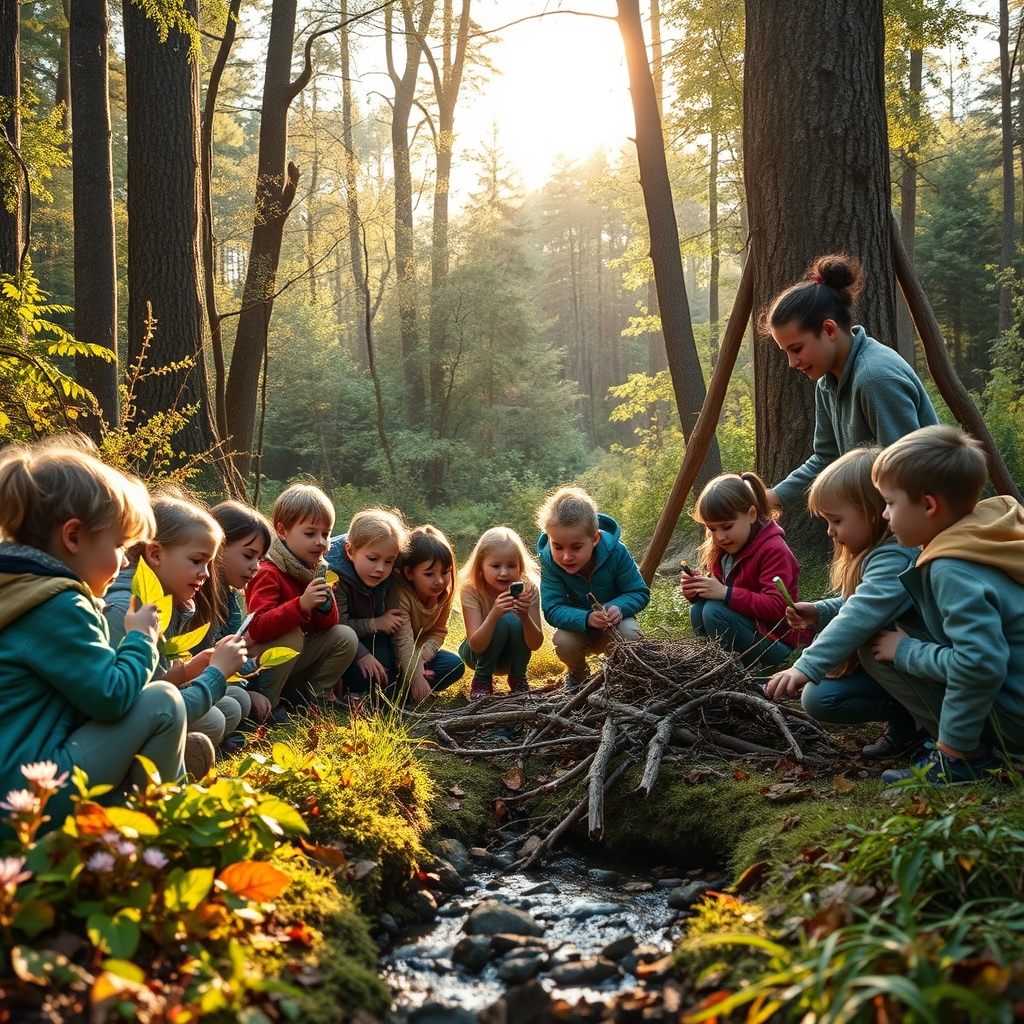
In an era where screens dominate attention and concrete jungles replace green spaces, a quiet revolution is taking root in education. Nature-based learning models are reclaiming the outdoors as the ultimate classroom, offering children more than just academic knowledge—they provide a deep, sensory-rich connection to the living world. These programs, from forest kindergartens to wilderness survival courses, are not just about teaching ecology; they are about fostering resilience, curiosity, and a lifelong bond with the environment.
The Philosophy Behind Forest School Methodology
At the heart of forest school methodology lies a simple yet profound belief: children thrive when they learn through direct experience in nature. Unlike traditional classrooms, where desks and walls confine exploration, forest schools embrace the unpredictability of the natural world. Lessons unfold beneath towering trees, beside babbling streams, or in the quiet rustle of leaves. The curriculum is fluid, shaped by the seasons, the weather, and the interests of the children themselves.
Educators in these settings act as guides rather than instructors, encouraging students to ask questions, take risks, and discover answers through hands-on nature study. A fallen log becomes a lesson in decomposition, a bird’s nest sparks discussions about ecosystems, and a rainy day transforms into an opportunity to observe how water shapes the land. This approach aligns with the principles of place-based learning, where the local environment becomes the primary textbook.
Eco-Literacy: More Than Just Science
Eco-literacy development goes beyond memorizing facts about photosynthesis or the water cycle. It’s about cultivating an intuitive understanding of how living systems interact and depend on one another. In outdoor experiential education, children learn to read the land like a story—identifying animal tracks, recognizing plant species, and understanding the subtle signs of seasonal change. These skills foster a sense of stewardship, as students begin to see themselves as part of the ecosystem rather than separate from it.
Programs that integrate environmental science classrooms with real-world exploration help children grasp complex concepts like sustainability and conservation. For example, a lesson on waste might involve a trash audit of the school grounds, followed by a discussion on how litter affects local wildlife. Such activities make abstract ideas tangible, leaving a lasting impression on young minds.
The Benefits of Outdoor Sensory Play
For young children, sensory play is a cornerstone of development, and nature offers an unparalleled playground. The crunch of leaves underfoot, the scent of damp earth after rain, the rough texture of bark—these experiences engage all five senses, enhancing cognitive growth and emotional well-being. Studies have shown that outdoor sensory play improves focus, reduces stress, and even boosts immune function in children.
Forest kindergarten programs, in particular, prioritize unstructured play in natural settings. Without the constraints of traditional playground equipment, children invent games, build forts, and create imaginary worlds using sticks, stones, and mud. This kind of play nurtures creativity, problem-solving skills, and social collaboration. It also builds physical confidence, as children learn to navigate uneven terrain, climb trees, and balance on logs—skills that are increasingly rare in a world of paved sidewalks and digital entertainment.
Wilderness Survival Skills and Resilience
Adventure education courses and bushcraft for kids take outdoor learning a step further by teaching practical survival skills. From building shelters to starting fires (safely and under supervision), these activities instill self-reliance and adaptability. Children learn to assess risks, make decisions, and persevere through challenges—qualities that translate far beyond the wilderness.
Wildlife observation skills are another key component. Using binoculars, field guides, and quiet patience, students learn to identify birds, insects, and mammals in their natural habitats. This practice sharpens attention to detail and fosters a sense of wonder. It also encourages empathy, as children begin to see animals not as distant creatures but as neighbors sharing the same environment.
Sustainable Education Models for the Future
As the climate crisis intensifies, the need for sustainable education models has never been more urgent. Green school initiatives are leading the way by integrating eco-literacy into every aspect of the curriculum. Some schools have adopted zero-waste policies, while others have transformed their campuses into living laboratories with gardens, compost systems, and renewable energy projects. These efforts teach children that sustainability is not just a subject to study but a way of life.
Conservation-focused learning extends beyond the classroom as well. Many programs partner with local environmental organizations to involve students in real-world projects, such as tree planting, stream cleanups, or habitat restoration. These experiences show children that their actions matter, empowering them to become advocates for the planet.
Holistic Outdoor Teaching: Mind, Body, and Spirit
Nature-based therapy and holistic outdoor teaching recognize that education is not just about the mind but also the body and spirit. Time spent in nature has been shown to reduce symptoms of anxiety and ADHD, improve mood, and enhance overall mental health. For children who struggle in traditional academic settings, the outdoors can be a sanctuary—a place where they feel competent, curious, and connected.
Teachers in these programs often incorporate mindfulness practices, such as guided nature walks or reflective journaling, to help students process their experiences. The goal is not just to teach facts but to nurture a sense of belonging in the natural world. When children feel at home in nature, they are more likely to protect it as adults.
The shift toward nature-based learning is not just a trend; it’s a return to the way humans have learned for millennia. By stepping outside the four walls of a classroom, we give children the space to grow, explore, and develop a relationship with the earth that is both personal and profound. In a world that often feels disconnected, these programs remind us that the most powerful lessons are not found in textbooks but in the rustling leaves, the flowing rivers, and the endless mysteries of the wild. The future of education may well lie in the dirt beneath our feet and the sky above our heads, waiting to be discovered by the next generation of explorers.



