
The Living Textbook: How Forest School Methodology and Bushcraft for Kids Are Crafting Eco-Literate Explorers
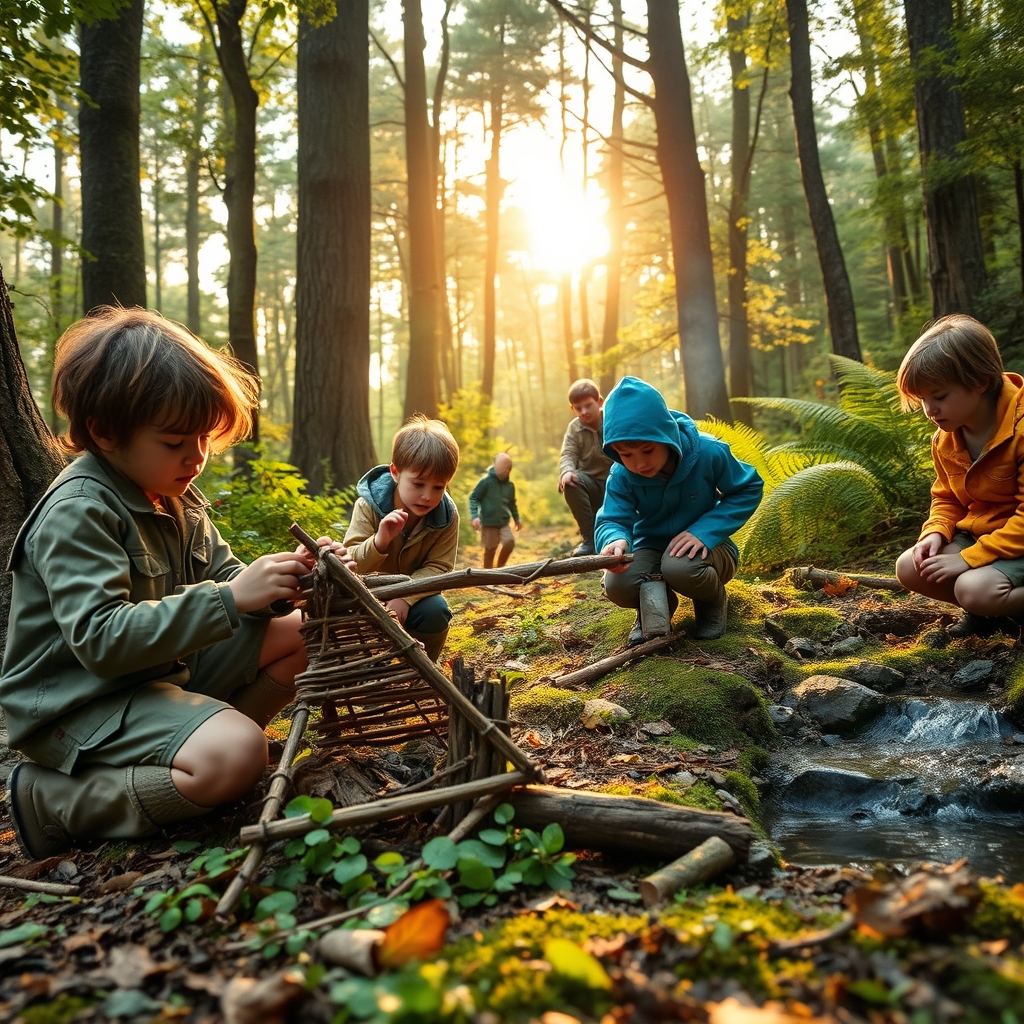
In a world where screens often dominate attention, a quiet revolution is taking place beneath the canopy of ancient trees and along the banks of babbling streams. Forest school methodology and bushcraft for kids are not just educational trends—they are transformative approaches that reconnect children with the natural world while fostering eco-literacy in ways traditional classrooms cannot. These programs do more than teach about nature; they immerse young learners in it, turning forests, meadows, and rivers into dynamic, living textbooks where every leaf, rock, and creature becomes a lesson in ecology, resilience, and wonder.
The Philosophy Behind the Forest
At the heart of forest school methodology lies a simple yet profound belief: children learn best when they are free to explore, experiment, and engage with their environment on their own terms. Originating in Scandinavia in the 1950s, this approach has since spread globally, adapting to diverse landscapes and cultural contexts. Unlike conventional education, which often prioritizes standardized outcomes, forest schools emphasize process over product, curiosity over compliance, and experience over memorization. The classroom is unbounded, the curriculum is emergent, and the teacher’s role shifts from instructor to facilitator, guiding rather than directing.
This philosophy aligns seamlessly with the principles of place-based learning, where the local environment becomes the primary resource for education. Whether it’s a coastal forest, a desert oasis, or an urban park, the landscape dictates the lessons. Children might spend a morning tracking animal prints in the mud, only to find themselves later sketching the same creatures in their nature journals. The learning is tactile, visceral, and deeply personal, rooted in the child’s direct experience of the world around them.
Bushcraft as a Bridge to Eco-Literacy
Bushcraft for kids takes this immersion a step further by introducing practical, hands-on skills that have sustained humans for millennia. From building shelters with fallen branches to identifying edible plants, these activities are not just about survival—they are about cultivating a deep, intuitive understanding of the natural world. When a child learns to start a fire using friction, they are not just mastering a skill; they are forging a connection to the elements, to the history of human ingenuity, and to the delicate balance of ecosystems.
These experiences are inherently interdisciplinary. A single bushcraft session might weave together lessons in physics (how friction generates heat), biology (the properties of different woods), chemistry (combustion), and ecology (the role of fire in forest regeneration). More importantly, they teach children to see themselves as part of a larger web of life, where every action has consequences and every resource is precious. This is eco-literacy in its most authentic form—not as an abstract concept, but as a lived reality.
The Role of Sensory Exploration
One of the most powerful tools in the forest school arsenal is sensory play. In a world where children are increasingly disconnected from the physicality of their surroundings, outdoor sensory activities—like blindfolded sound walks, texture scavenger hunts, or mud kitchen experiments—reawaken their innate curiosity. These activities are not just fun; they are foundational to cognitive and emotional development. When a child runs their fingers through damp soil, listens to the rustle of leaves, or inhales the scent of pine needles, they are engaging with the world in a way that screens cannot replicate.
Sensory exploration also fosters empathy and stewardship. A child who has felt the fragility of a spider’s web or the roughness of tree bark is more likely to develop a sense of responsibility toward the natural world. These moments of connection are the building blocks of eco-literacy, laying the groundwork for a lifetime of environmental awareness and action.
From Skills to Stewardship
The ultimate goal of forest school methodology and bushcraft for kids is not just to teach skills, but to nurture a generation of eco-literate stewards. When children learn to navigate by the stars, purify water from a stream, or build a shelter from natural materials, they are not just acquiring survival skills—they are developing a profound respect for the earth’s resources. These experiences instill a sense of agency, showing children that they are capable of both understanding and protecting the natural world.
Moreover, these programs often incorporate conservation-focused learning, where children participate in real-world projects like habitat restoration, wildlife monitoring, or sustainable gardening. These activities transform abstract concepts like biodiversity and climate change into tangible, actionable challenges. A child who plants a tree or cleans up a local stream is not just learning about conservation—they are actively contributing to it, fostering a sense of ownership and hope.
The Ripple Effect of Nature-Based Education
The impact of forest schools and bushcraft programs extends far beyond the individual child. When children bring their newfound eco-literacy home, they become catalysts for change within their families and communities. Parents might find themselves joining their children on nature walks, adopting sustainable practices, or even advocating for green school initiatives in their local districts. The lessons learned in the forest ripple outward, creating a culture of environmental awareness and action.
Schools that adopt these models often see broader benefits as well. Studies have shown that children who participate in outdoor experiential education demonstrate improved focus, creativity, and social skills. They are more resilient, more adaptable, and more likely to approach challenges with a problem-solving mindset. These are the skills that will serve them not just in their academic careers, but in their lives as citizens of a rapidly changing world.
As the sun dips below the horizon and the forest settles into twilight, the lessons of the day linger like the scent of woodsmoke in the air. Children who have spent their hours kneeling in the dirt, climbing trees, or whispering to the wind carry something intangible yet invaluable home with them—a sense of belonging to the earth, a curiosity that cannot be quenched, and a quiet confidence in their ability to navigate both the wild and the world. In an age of uncertainty, these are the gifts that will guide them forward, lighting the way toward a future where humanity and nature thrive in harmony.



