
Muddy Boots and Mighty Minds: How Green School Initiatives Are Cultivating Eco-Literacy Through Hands-On Nature Study
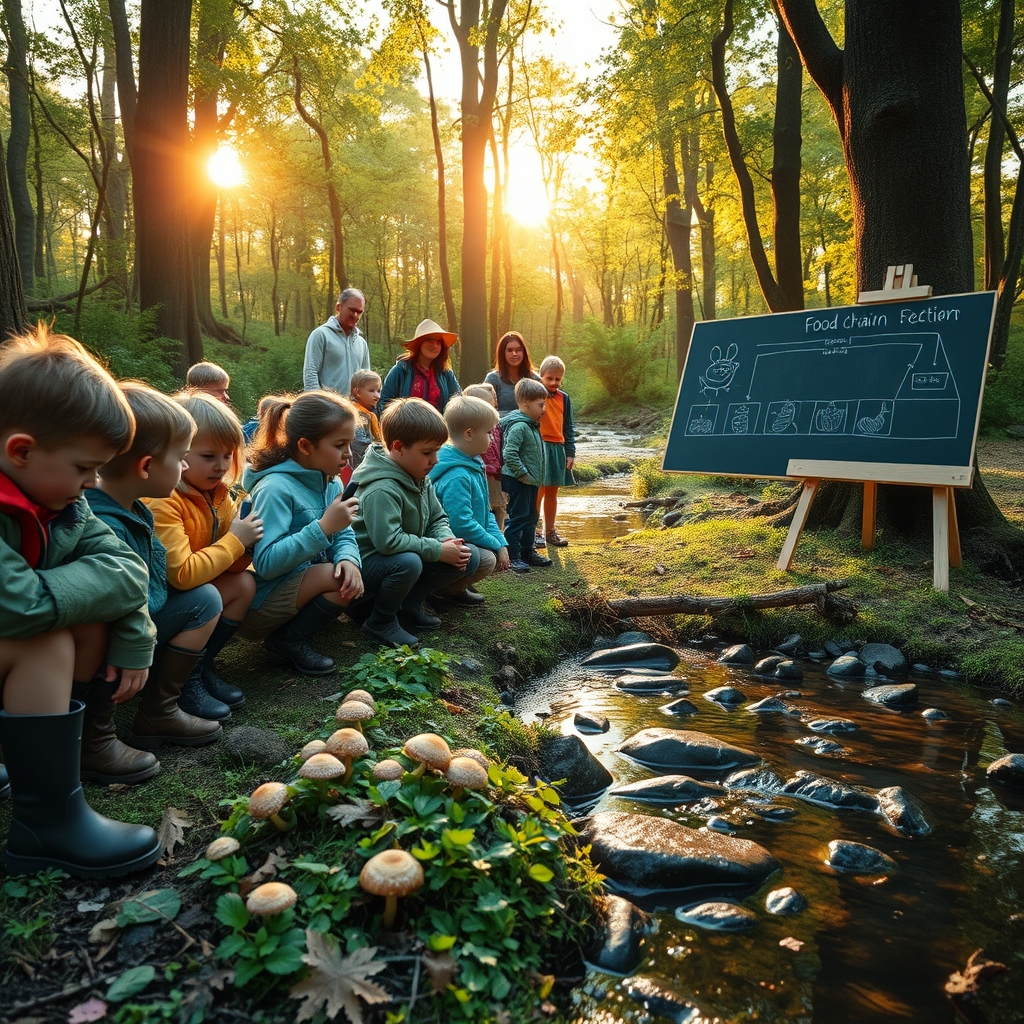
In an era where screens dominate attention and concrete jungles replace green spaces, a quiet revolution is taking root in education. Green school initiatives are reimagining learning by moving it outdoors, where the curriculum is written not in textbooks but in the language of rustling leaves, babbling brooks, and the earthy scent of damp soil. These programs are not merely about teaching children to identify trees or recite the water cycle; they are about fostering a deep, enduring connection to the natural world—one that shapes how young minds perceive, interact with, and ultimately protect the environment.
The Philosophy Behind Green School Initiatives
At the heart of green school initiatives lies the belief that education should be as dynamic and interconnected as the ecosystems it seeks to teach about. Unlike traditional classrooms, where learning is often segmented into subjects and confined to four walls, these programs embrace a holistic approach. Math is learned through measuring the circumference of ancient oaks, science through observing the life cycles of insects, and literature through storytelling under the open sky. This methodology, often referred to as place-based learning, anchors education in the local environment, making lessons relevant, tangible, and deeply personal.
Research supports the transformative power of this approach. Studies have shown that children who engage in regular outdoor learning exhibit improved concentration, creativity, and problem-solving skills. They also develop a stronger sense of empathy and responsibility toward the environment. For instance, a child who plants a seed and watches it grow over weeks is far more likely to understand the value of conservation than one who reads about photosynthesis in a textbook. Green schools leverage this innate curiosity, turning the natural world into a living laboratory where every discovery is a lesson in eco-literacy development.
From Classrooms to Forests: The Rise of Forest School Methodology
One of the most compelling models within green school initiatives is the forest school methodology, a movement that originated in Scandinavia and has since spread globally. Forest schools operate on the principle that children learn best through unstructured, hands-on exploration in nature. Here, the curriculum is fluid, guided by the interests of the students and the rhythms of the natural world. A morning might begin with a group of children building a fort from fallen branches, only to shift into a spontaneous lesson on teamwork, physics, or local wildlife habitats.
What sets forest schools apart is their emphasis on outdoor sensory play and risk-taking. Children are encouraged to climb trees, wade through streams, and even use real tools under supervision. This might sound alarming to some parents, but proponents argue that these experiences are essential for developing resilience, confidence, and a sense of agency. When a child navigates a muddy slope or balances on a log, they are not just playing—they are learning to assess risk, make decisions, and trust their own abilities. These are skills that cannot be taught in a sterile classroom but are vital for navigating both the natural world and life’s challenges.
Bushcraft and Wilderness Survival: Skills for a Lifetime
Beyond play, many green school initiatives incorporate bushcraft for kids and wilderness survival skills into their curricula. These programs teach children how to build shelters, start fires safely, identify edible plants, and navigate using natural landmarks. While these skills may seem archaic in our modern world, they serve a deeper purpose. They instill a sense of self-reliance and respect for nature’s resources, reminding children that humans are not separate from the environment but a part of it.
For example, a lesson on fire-building might begin with a discussion on the role of fire in ecosystems, followed by a hands-on activity where children gather tinder and kindling. As they work, they learn about the properties of different woods, the importance of controlled burns in preventing wildfires, and the cultural significance of fire in human history. These lessons are not just about survival; they are about fostering a conservation-focused learning mindset that views nature as something to be cherished, not exploited.
Eco-Literacy in Action: Real-World Applications
Green school initiatives extend beyond the schoolyard, often partnering with local conservation groups, farms, and environmental organizations. These collaborations provide students with opportunities to engage in real-world problem-solving. For instance, a class might work with a local park to restore a degraded wetland, learning about water filtration, native plant species, and the impact of human activity on ecosystems. Such projects not only deepen students’ understanding of environmental science but also empower them to see themselves as agents of change.
Another powerful aspect of these programs is their focus on wildlife observation skills. Children are taught to use binoculars, field guides, and citizen science apps to document local species. They might track bird migrations, monitor frog populations, or participate in global initiatives like the Great Backyard Bird Count. These activities teach patience, attention to detail, and the value of data in understanding ecological patterns. More importantly, they cultivate a sense of wonder and stewardship—qualities that are essential for the next generation of environmental leaders.
The Role of Teachers: Guides, Not Gatekeepers
In green school initiatives, teachers take on a new role: that of facilitators rather than lecturers. Their job is not to impart knowledge from the front of the classroom but to guide students as they explore, question, and discover. This shift requires a deep understanding of both the subject matter and the natural world, as well as the ability to adapt lessons to the ever-changing outdoor environment. A teacher might start the day with a plan to study pond ecosystems, only to pivot when a student spots a rare butterfly or a sudden rainstorm creates a teachable moment about weather patterns.
This holistic outdoor teaching approach also emphasizes social-emotional learning. In nature, children learn to collaborate, communicate, and resolve conflicts. They experience the joy of shared discoveries and the frustration of setbacks, all of which contribute to their emotional resilience. Teachers in these settings often report that their students are more engaged, more curious, and more connected to one another than in traditional classrooms. The natural world, it seems, has a way of breaking down barriers and fostering a sense of community.
Challenges and Opportunities
Despite their many benefits, green school initiatives face challenges. Funding is often a hurdle, as outdoor programs require additional resources like transportation, gear, and trained staff. There are also logistical challenges, such as inclement weather or limited access to natural spaces, particularly in urban areas. Additionally, some parents and educators remain skeptical about the academic rigor of outdoor learning, fearing that it may not prepare children for standardized tests or traditional career paths.
However, these challenges are not insurmountable. Many green schools address funding issues through grants, community partnerships, and creative solutions like school gardens or rooftop green spaces. As for academic rigor, research shows that students in outdoor programs often outperform their peers in traditional settings, particularly in science, math, and critical thinking. The key lies in striking a balance—integrating outdoor learning with core academic subjects in a way that enhances, rather than replaces, traditional education.
Perhaps the greatest opportunity lies in the growing recognition of the mental health benefits of nature-based learning. In an age where anxiety and depression among children are on the rise, green school initiatives offer a much-needed antidote. Time spent outdoors has been shown to reduce stress, improve mood, and enhance overall well-being. For many children, these programs provide a sanctuary—a place where they can unplug, breathe, and reconnect with the natural world. In doing so, they are not just learning about ecology; they are learning about themselves and their place in the world.
The shift toward green school initiatives is more than just a trend; it is a necessary evolution in education. As the challenges of climate change and environmental degradation loom large, the need for eco-literate citizens has never been greater. By immersing children in nature, these programs are sowing the seeds of a more sustainable future—one where the next generation views the natural world not as a resource to be exploited, but as a community to which they belong. The lessons learned in muddy boots today will echo in the mighty minds of tomorrow, shaping a world where both people and the planet can thrive.



