
The Next Wave of EdTech: How Virtual Reality Classrooms and Gamification Are Crafting the Future of Immersive Learning
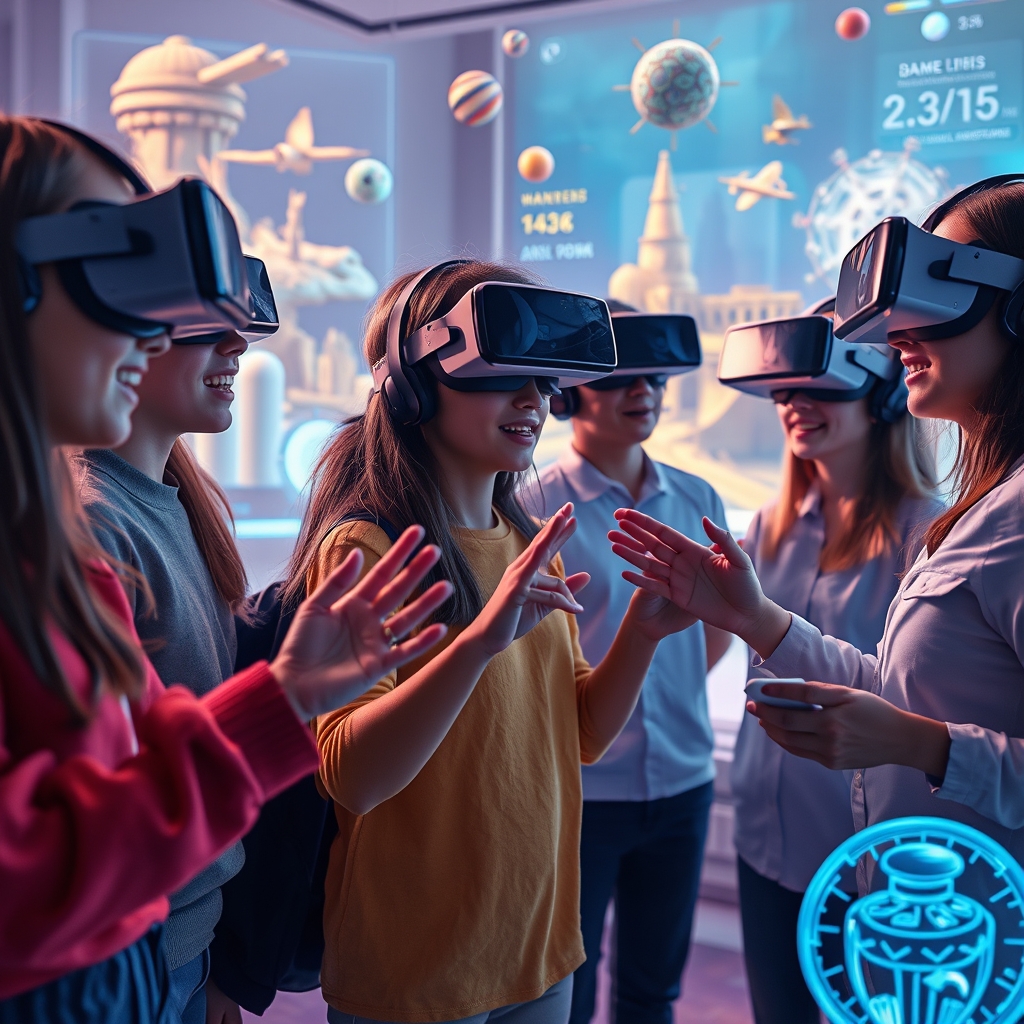
Education is undergoing a seismic shift, driven by technologies that were once the stuff of science fiction. Among the most transformative are virtual reality (VR) classrooms and gamification, two innovations that are redefining how we engage with learning. These tools are not just enhancing traditional education—they are creating entirely new paradigms where immersion, interactivity, and personalization take center stage. As we stand on the brink of this next wave of EdTech, it’s worth exploring how these technologies are shaping the future of learning and why they matter now more than ever.
The Rise of Virtual Reality Classrooms
Virtual reality classrooms are no longer a futuristic concept; they are here, and they are changing the way students experience education. By donning a VR headset, learners can step into a three-dimensional environment that simulates real-world scenarios or transports them to places they could only dream of visiting. Imagine a history class where students can walk through ancient Rome, or a biology lesson where they can explore the human body from the inside out. These experiences make learning tangible in ways that textbooks and lectures simply cannot.
One of the most compelling advantages of VR classrooms is their ability to foster empathy and understanding. For example, students studying climate change can virtually visit melting glaciers or deforested rainforests, witnessing the consequences of environmental degradation firsthand. This level of immersion creates a deeper emotional connection to the subject matter, making the learning experience more memorable and impactful. Additionally, VR classrooms break down geographical barriers, allowing students from different parts of the world to collaborate in shared virtual spaces, fostering global citizenship and cultural exchange.
Overcoming Challenges in VR Adoption
Despite its potential, the widespread adoption of VR in education faces several challenges. Cost is a significant barrier, as high-quality VR headsets and the infrastructure to support them can be expensive. However, as technology advances and becomes more accessible, prices are gradually decreasing, making VR a more viable option for schools and institutions. Another challenge is the need for content that aligns with educational curricula. While there are already some excellent VR educational experiences available, there is still a demand for more diverse and curriculum-specific content that can be seamlessly integrated into lesson plans.
Moreover, there are concerns about the potential for VR to cause motion sickness or eye strain, particularly during prolonged use. Developers are actively working on solutions to mitigate these issues, such as improving refresh rates and designing experiences that minimize discomfort. As these challenges are addressed, VR classrooms are poised to become a staple in modern education, offering unparalleled opportunities for immersive learning.
The Power of Gamification in Learning
Gamification, the application of game-design elements in non-game contexts, is another powerful tool transforming education. By incorporating elements like points, badges, leaderboards, and challenges, gamification makes learning more engaging and motivating. It taps into the natural human desire for achievement, competition, and reward, turning even the most mundane subjects into exciting adventures. For instance, a math app that rewards students with badges for solving problems or a language-learning platform that allows users to compete with friends can make the learning process feel like a game rather than a chore.
One of the key benefits of gamification is its ability to foster a growth mindset. When students see their progress visualized through points or levels, they are more likely to persist in the face of challenges. This is particularly important in subjects where students may struggle or feel discouraged. Gamification also encourages collaboration, as many educational games are designed for multiplayer experiences, where students can work together to solve problems or achieve common goals. This not only enhances learning outcomes but also helps develop essential soft skills like teamwork and communication.
Gamification Beyond the Classroom
The impact of gamification extends beyond traditional education settings. In corporate training, for example, gamified learning platforms are being used to onboard new employees, teach compliance, and develop leadership skills. These platforms often include simulations that allow employees to practice real-world scenarios in a risk-free environment. For instance, a sales team might use a gamified simulation to practice handling customer objections, while a healthcare provider could use VR to simulate emergency medical procedures. By making training more interactive and engaging, gamification increases retention and ensures that employees are better prepared for their roles.
Gamification is also making waves in lifelong learning and professional development. Platforms like Duolingo and Khan Academy have successfully used gamification to keep users engaged and motivated over the long term. Micro-credentials and digital badges, which are often earned through gamified learning experiences, are becoming increasingly valuable in the job market. They provide a way for individuals to demonstrate their skills and knowledge in a tangible way, making them more competitive in an ever-evolving workforce.
The Synergy of VR and Gamification
When virtual reality and gamification are combined, the result is a learning experience that is both immersive and engaging. Imagine a VR classroom where students embark on a quest to solve a historical mystery, earning points and badges as they uncover clues and complete challenges. Or a science lesson where students work together in a virtual lab to conduct experiments, with their progress tracked through a gamified system. These experiences make learning feel like an adventure, where every step forward is rewarded, and every challenge is an opportunity to grow.
This synergy is particularly powerful in subjects that require hands-on experience or spatial understanding. For example, architecture students can use VR to design and walk through their virtual buildings, while engineering students can simulate complex mechanical systems. By gamifying these experiences, students are not only learning the theoretical aspects of their subjects but also applying their knowledge in practical, real-world scenarios. This approach bridges the gap between education and industry, preparing students for the challenges they will face in their careers.
As we look to the future, the integration of VR and gamification in education will continue to evolve. Advances in artificial intelligence will enable even more personalized and adaptive learning experiences, where the content dynamically adjusts to the needs and preferences of each student. Imagine a VR classroom where an AI-powered virtual tutor guides students through their lessons, offering real-time feedback and support. Or a gamified learning platform that adapts its challenges based on the student’s progress, ensuring that they are always engaged and motivated. These innovations are not just enhancing education—they are redefining what it means to learn.
The next wave of EdTech is not just about adopting new tools; it’s about reimagining the entire learning experience. Virtual reality classrooms and gamification are at the forefront of this transformation, offering immersive, interactive, and personalized learning opportunities that were once unimaginable. As these technologies become more accessible and integrated into education, they have the potential to unlock the full potential of every learner, regardless of their background or circumstances. The future of learning is here, and it is more exciting than ever.



