
Empowering Learners: The Role of Interactive Video Lectures in Modern Distance Education
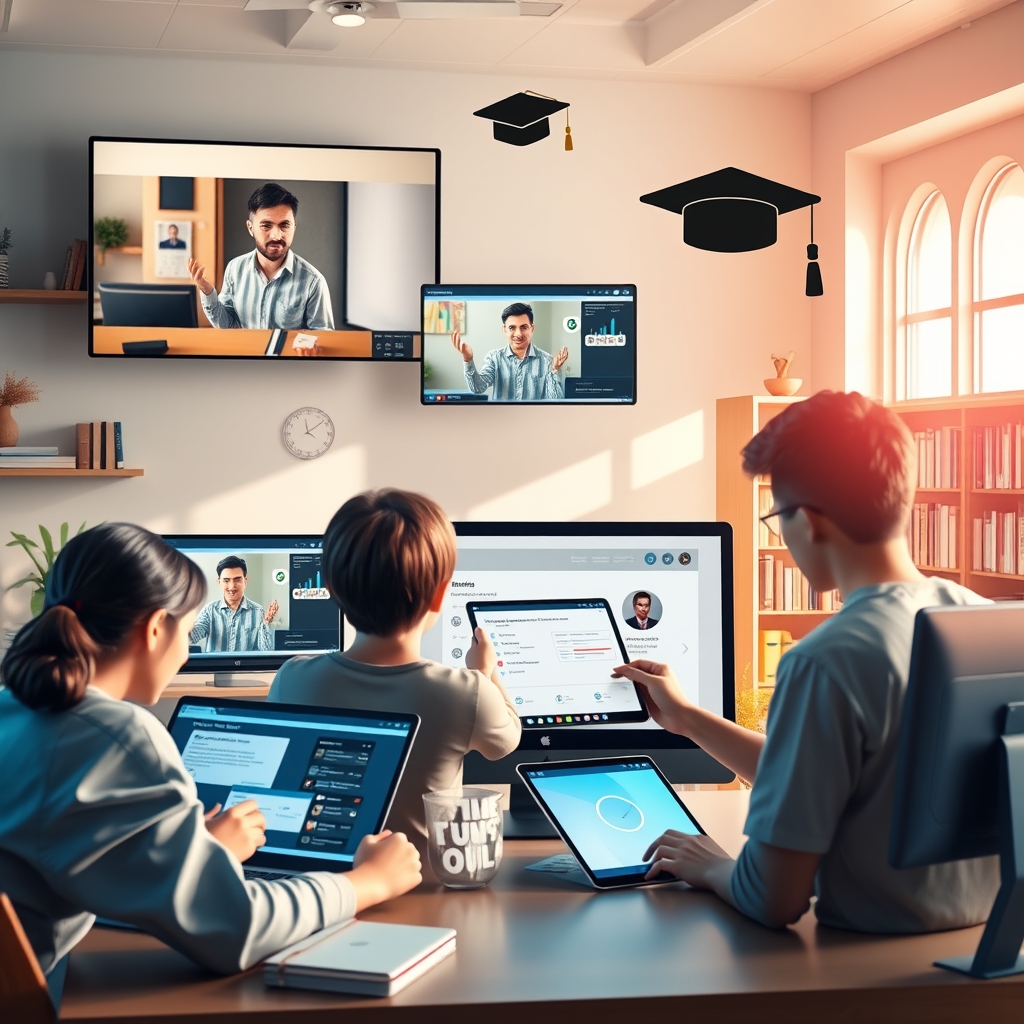
In an era where technology permeates every aspect of our lives, education has undergone a seismic shift. The traditional classroom, once the cornerstone of learning, is now just one of many avenues through which knowledge is acquired. Among these, distance education programs have emerged as a powerful force, democratizing access to education and catering to the diverse needs of learners worldwide. At the heart of this transformation lies the rise of interactive video lectures, a dynamic tool that is redefining the digital learning environment and making education more engaging, flexible, and effective than ever before.
The Evolution of Distance Education
Distance education is not a new concept. Its roots can be traced back to correspondence schooling in the 19th century, where students received lessons and assignments by mail. However, the advent of the internet and educational technology tools has propelled distance education into a new dimension. Today, learners can access online degree courses, virtual high schools, and cyber charter schools from the comfort of their homes, breaking down geographical and temporal barriers that once limited educational opportunities.
The shift from static, text-based materials to dynamic, multimedia-rich content has been a game-changer. Interactive video lectures stand at the forefront of this evolution, offering a blend of visual, auditory, and kinesthetic learning experiences. These lectures are not merely recordings of traditional classroom sessions; they are carefully designed to foster engagement, critical thinking, and active participation. Features such as embedded quizzes, clickable annotations, and real-time feedback transform passive viewing into an immersive learning experience.
Why Interactive Video Lectures Stand Out
One of the most significant advantages of interactive video lectures is their ability to cater to different learning styles. Visual learners benefit from diagrams, animations, and on-screen text, while auditory learners absorb information through narrated explanations. Kinesthetic learners, who thrive on hands-on activities, can engage with interactive elements like drag-and-drop exercises or simulation tools embedded within the videos. This multi-sensory approach ensures that no learner is left behind, making education more inclusive and effective.
Moreover, interactive video lectures align perfectly with the principles of self-paced modules. In a traditional classroom, the pace of instruction is often dictated by the needs of the majority, leaving some students struggling to keep up while others feel unchallenged. Interactive videos allow learners to pause, rewind, and revisit complex concepts as many times as needed. This flexibility empowers students to take control of their learning journey, fostering a sense of autonomy and responsibility that is invaluable in both academic and professional settings.
The Role of Engagement in Virtual Learning
A common challenge in distance education programs is maintaining student engagement. Without the physical presence of peers and instructors, learners can easily feel isolated or disconnected. Interactive video lectures address this issue by incorporating elements that mimic the interactivity of a traditional classroom. For instance, live polls, Q&A sessions, and discussion forums embedded within videos create opportunities for virtual student engagement, fostering a sense of community and collaboration.
Additionally, the use of synchronous online classes alongside asynchronous content can further enhance engagement. While asynchronous classrooms offer the flexibility to learn at one’s own pace, synchronous sessions provide real-time interaction with instructors and peers. This hybrid approach ensures that learners benefit from both the convenience of self-paced learning and the social dynamics of live instruction. Platforms like Zoom, Microsoft Teams, and Google Meet have become integral to this model, enabling seamless communication and collaboration.
Leveraging Technology for Personalized Learning
The integration of educational technology tools into interactive video lectures has opened up new possibilities for personalized learning. Adaptive learning algorithms, for example, can analyze a student’s performance in real-time and adjust the difficulty of content accordingly. If a learner struggles with a particular concept, the system can provide additional resources or alternative explanations to reinforce understanding. Conversely, if a student excels, the system can introduce more advanced material to keep them challenged.
Furthermore, cloud-based classrooms and distributed learning networks enable seamless access to learning materials from any device, at any time. This level of accessibility is particularly beneficial for non-traditional students, such as working professionals or parents, who need to balance their education with other responsibilities. By leveraging flexible degree paths, these learners can pursue their academic goals without sacrificing their personal or professional commitments.
The Future of Interactive Video Lectures
As technology continues to advance, the potential of interactive video lectures is boundless. Emerging technologies like virtual reality (VR) and augmented reality (AR) are already being explored to create even more immersive learning experiences. Imagine a history lesson where students can virtually walk through ancient Rome or a biology class where they can dissect a virtual frog. These innovations have the potential to make learning not just informative, but truly unforgettable.
Moreover, the rise of artificial intelligence (AI) is poised to revolutionize the way interactive video lectures are created and delivered. AI-powered tools can automate the production of personalized video content, tailoring lessons to individual learning styles and preferences. Chatbots and virtual assistants can provide instant support, answering questions and offering guidance 24/7. These advancements will further enhance the accessibility, efficiency, and effectiveness of distance education programs.
The journey of education is no longer confined to the four walls of a classroom. With interactive video lectures leading the way, learners are empowered to explore, engage, and excel in ways that were once unimaginable. As we embrace these innovations, we are not just transforming how we learn; we are redefining what it means to be educated in the 21st century. The future of education is here, and it is interactive, flexible, and limitless, offering opportunities for every learner to thrive in a rapidly changing world.



