
The Invisible Thread: How AI and Micro-Credentials Are Weaving the Fabric of Lifelong Skill Evolution
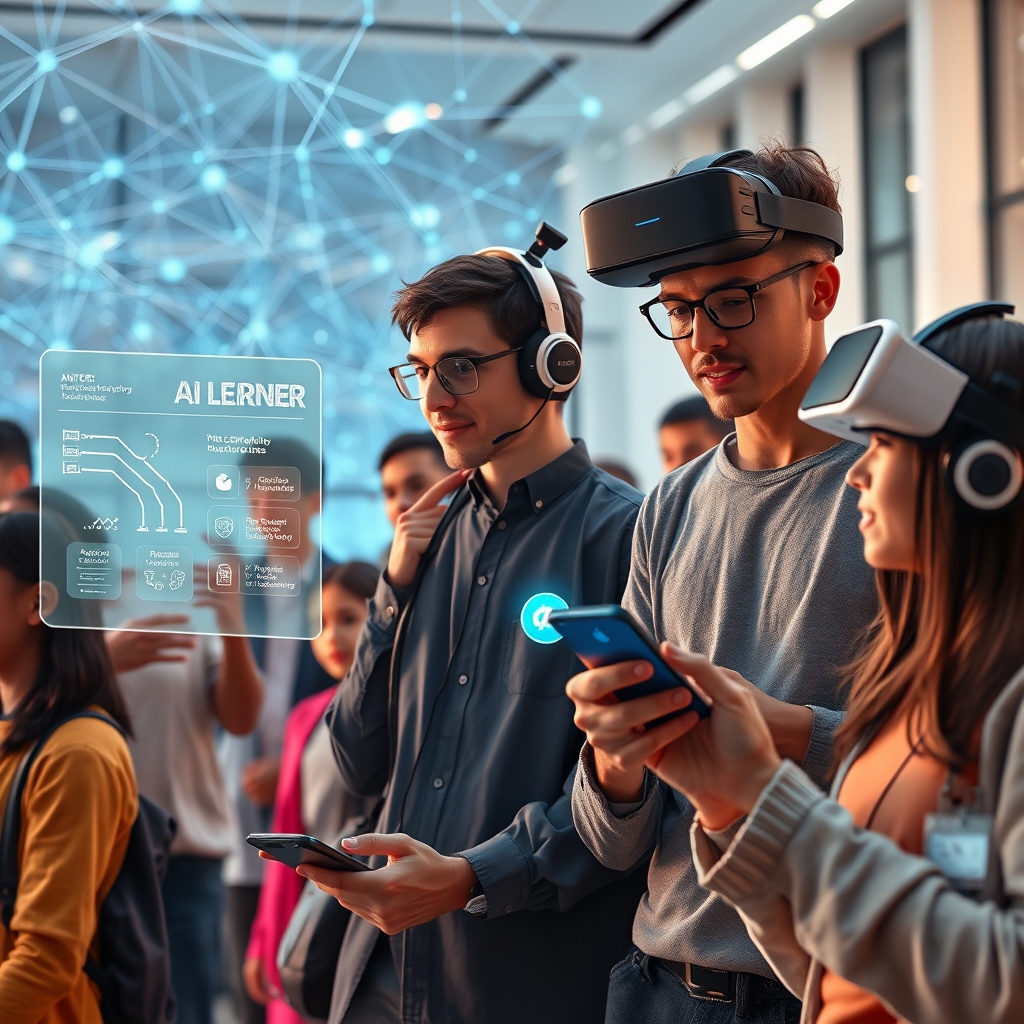
Imagine a world where learning is not confined to the four walls of a classroom or the rigid structure of a semester. A world where education adapts to you, not the other way around. This is not a distant utopia but the reality being woven today by the invisible thread of artificial intelligence and micro-credentials. Together, they are stitching together a new fabric of lifelong skill evolution, one that is flexible, personalized, and relentlessly relevant.
The Alchemy of Personalization: AI as the Master Tailor
At the heart of this transformation lies AI-powered learning systems, which act as master tailors, meticulously crafting educational experiences to fit the unique contours of each learner. These systems analyze vast amounts of data—from learning styles and pace to engagement levels and knowledge gaps—to create a dynamic, adaptive learning path. Unlike traditional education, which often employs a one-size-fits-all approach, AI-driven platforms like Duolingo, Khan Academy, and Coursera’s adaptive learning tools adjust in real-time, ensuring that learners are neither bored by material that’s too easy nor overwhelmed by concepts that are too complex.
For instance, consider an aspiring data scientist navigating a course on machine learning. An AI-powered system might detect that they excel in statistical modeling but struggle with neural networks. The platform can then prioritize additional resources, interactive exercises, or even virtual tutoring sessions to strengthen their weak areas while allowing them to progress swiftly through familiar topics. This level of personalization was once the stuff of science fiction, but today, it’s a tangible reality reshaping how we acquire and refine skills.
The Currency of the Future: Micro-Credentials and Digital Badges
While AI tailors the learning experience, micro-credentials and digital badges serve as the currency of this new educational economy. These bite-sized certifications validate specific skills or competencies, offering learners a way to demonstrate mastery without committing to lengthy degree programs. Platforms like edX, Udacity, and LinkedIn Learning have popularized micro-credentials, enabling professionals to upskill or reskill in areas like cloud computing, digital marketing, or project management—often in a matter of weeks rather than years.
The beauty of micro-credentials lies in their granularity. Instead of earning a broad degree in computer science, a learner can stack micro-credentials in Python programming, cybersecurity fundamentals, and data visualization, creating a customized portfolio of skills that aligns with their career goals. This modular approach to education is particularly valuable in today’s fast-paced job market, where the half-life of skills is shrinking and the demand for agility is growing. Employers, too, are taking notice, with many now recognizing micro-credentials as valid indicators of expertise, especially in tech-driven industries.
The Synergy of AI and Micro-Credentials: A Feedback Loop of Growth
The true magic happens when AI and micro-credentials converge, creating a feedback loop that accelerates skill evolution. AI systems can recommend micro-credentials based on a learner’s goals, performance, and even labor market trends. For example, if a professional expresses interest in transitioning to a career in artificial intelligence, an AI-powered platform might suggest a sequence of micro-credentials in foundational math, programming, and machine learning, while also highlighting emerging specializations like ethical AI or natural language processing.
This synergy extends beyond individual learners. Organizations are leveraging AI and micro-credentials to build agile workforces capable of adapting to technological disruptions. Companies like IBM and Google have developed their own micro-credentialing programs, using AI to identify skill gaps within their teams and curate personalized learning paths for employees. The result is a workforce that is not only more skilled but also more resilient in the face of change.
The Rise of the Lifelong Learner: Education Without Expiry
Perhaps the most profound shift brought about by AI and micro-credentials is the democratization of lifelong learning. In the past, education was often front-loaded—concentrated in the early years of life, with the expectation that one’s skills would remain relevant for decades. Today, that model is obsolete. The World Economic Forum estimates that 50% of all employees will need reskilling by 2025, and the skills required for many jobs are evolving at an unprecedented pace. AI and micro-credentials are dismantling the barriers to continuous learning, making it possible for individuals to upskill, reskill, or pivot their careers at any stage of life.
Consider the story of Sarah, a marketing professional who spent a decade in traditional advertising before realizing her skills were becoming outdated in the digital age. Rather than enrolling in a costly and time-consuming MBA program, she turned to AI-powered platforms to earn micro-credentials in digital marketing, SEO, and data analytics. Within a year, she had transformed her skill set, transitioned to a role in digital strategy, and even launched a side hustle as a consultant. Sarah’s story is not unique; it’s a testament to the power of AI and micro-credentials to turn learning into a lifelong journey rather than a finite destination.
The Human Element: Virtual Tutors and Interactive Learning
While AI and micro-credentials are often associated with automation, they are also humanizing education in unexpected ways. Virtual tutors, powered by AI, provide one-on-one support that was once the exclusive domain of private tutors or small classroom settings. These virtual tutors can answer questions, explain concepts, and even provide emotional support, creating a sense of connection in digital learning environments. For example, platforms like ScribeSense and Carnegie Learning use AI to simulate the experience of a personal tutor, offering real-time feedback and encouragement to keep learners motivated.
Interactive learning tools, such as gamified courses and augmented reality simulations, further enhance engagement by making education immersive and enjoyable. Imagine a medical student practicing surgical techniques in a virtual reality operating room or a language learner conversing with an AI-powered avatar in a simulated café. These experiences not only make learning more effective but also more memorable, as they tap into the brain’s natural affinity for storytelling and play.
The Corporate Classroom: AI and Micro-Credentials in the Workplace
The impact of AI and micro-credentials extends far beyond individual learners; it’s also revolutionizing corporate training. Traditional corporate training programs are often criticized for being time-consuming, expensive, and disconnected from real-world applications. AI-powered learning platforms are changing that by delivering personalized, just-in-time training that employees can access on demand. For example, a sales team might use an AI-driven app to practice negotiation skills through simulated client interactions, receiving instant feedback and tailored recommendations for improvement.
Micro-credentials play a complementary role by providing employees with tangible proof of their new skills. Companies like Accenture and PwC have adopted micro-credentialing programs to upskill their workforces, offering badges in areas like data literacy, leadership, and digital transformation. These credentials not only boost employee morale but also provide a clear pathway for career advancement within the organization. Moreover, they enable companies to track skill development at scale, ensuring that their workforce remains competitive in an ever-changing business landscape.
As we stand on the brink of this educational revolution, it’s clear that the future of learning is not about replacing human educators or traditional institutions. Instead, it’s about augmenting them with tools that make education more accessible, personalized, and responsive to the needs of learners and the demands of the modern world. The invisible thread of AI and micro-credentials is weaving a new tapestry of lifelong learning, one where education is not a one-time event but a continuous, evolving journey. In this world, the only limit to what you can learn is the limit of your curiosity.



