
The Digital Renaissance: How AI and Skill-Based Certifications Are Crafting the Future of Workforce Evolution
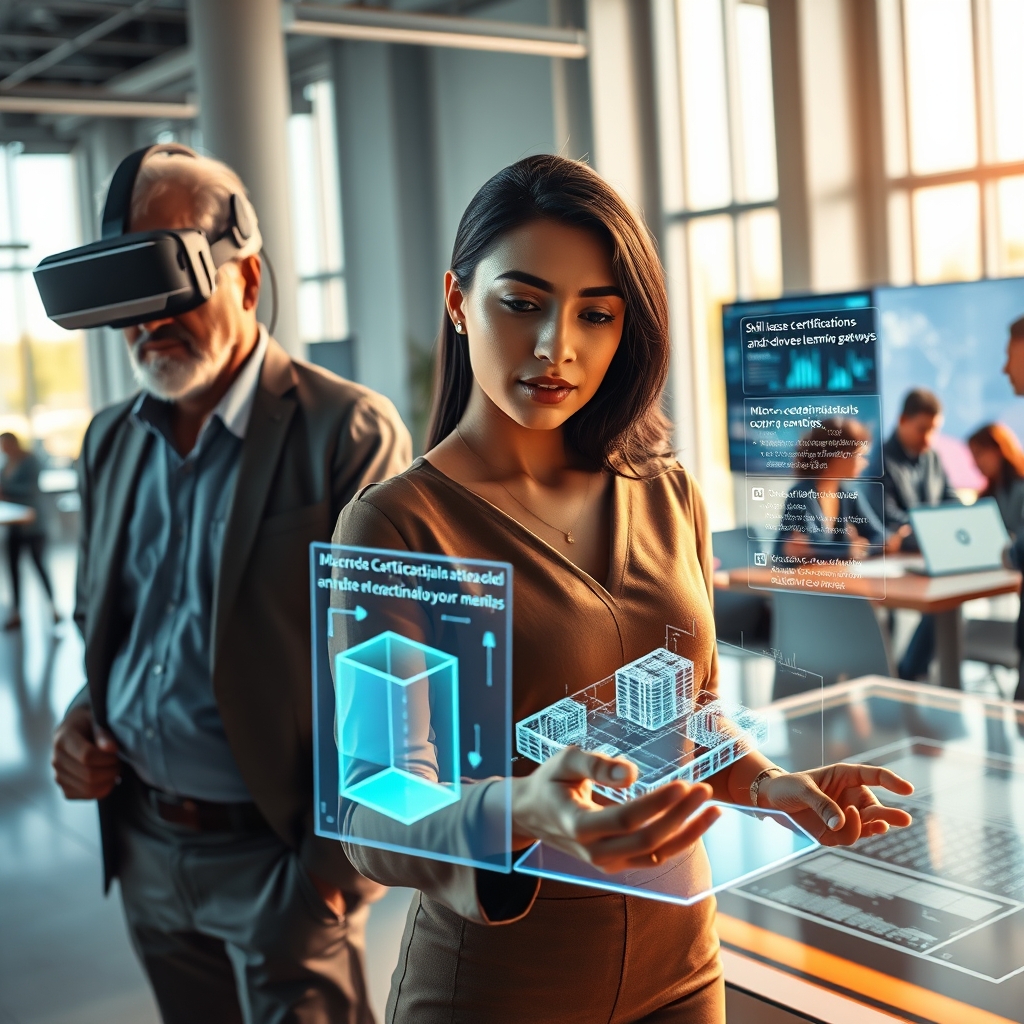
The modern workforce is undergoing a transformation so profound that it mirrors the seismic shifts of the Renaissance—a period where art, science, and human potential were redefined. Today, the catalyst for this change is not the printing press or the brushstroke of a master painter, but the convergence of artificial intelligence (AI) and skill-based certifications. Together, they are dismantling the rigid structures of traditional education and replacing them with a dynamic, fluid ecosystem where learning is continuous, personalized, and directly tied to professional growth. This is not just an evolution; it is a digital renaissance of how we acquire, validate, and apply knowledge in the 21st century.
The Deconstruction of Traditional Credentials
For decades, the pathway to career success was linear and predictable: earn a degree, secure a job, and climb the corporate ladder. Degrees served as the gold standard of qualification, a one-size-fits-all solution that often prioritized theoretical knowledge over practical skills. However, the rapid pace of technological advancement has exposed the limitations of this model. A degree earned five years ago may already be outdated, and the skills it imparted may no longer align with the demands of today’s job market. Enter skill-based certifications—a paradigm shift that emphasizes what you can do over what you know.
These certifications are not merely digital badges or participation trophies. They are rigorous, competency-based validations of specific skills, often developed in collaboration with industry leaders. Platforms like Coursera, Udacity, and LinkedIn Learning offer certifications in high-demand fields such as data science, cloud computing, and digital marketing, where the curriculum is designed to be immediately applicable. Unlike traditional degrees, which can take years to complete, these certifications can be earned in weeks or months, making them ideal for professionals who need to upskill quickly to stay relevant.
The Role of AI in Personalizing Skill Development
While skill-based certifications provide the framework for workforce evolution, AI is the engine that powers it. Adaptive learning platforms, such as Duolingo for language acquisition or Khan Academy for STEM subjects, use AI to tailor educational experiences to the individual learner. These systems analyze performance in real-time, identifying strengths and weaknesses and adjusting the difficulty and focus of content accordingly. For example, if a learner struggles with a particular concept in a data science certification, the AI might provide additional resources, alternative explanations, or even connect them with a virtual tutor for one-on-one support.
AI also plays a critical role in bridging the gap between learning and application. Tools like IBM’s Watson and Google’s AI-powered career coaching platforms can analyze job descriptions, compare them to a learner’s existing skills, and recommend specific certifications or courses to fill the gaps. This level of personalization ensures that professionals are not just learning for the sake of learning but are acquiring skills that directly enhance their employability and career trajectory. The result is a workforce that is agile, adaptable, and always one step ahead of the curve.
The Rise of Micro-Credentials and Stackable Learning
One of the most exciting developments in this digital renaissance is the rise of micro-credentials—small, focused certifications that validate mastery of a specific skill or tool. Unlike traditional degrees, which often require a significant time and financial investment, micro-credentials are designed to be stackable. This means learners can combine multiple micro-credentials to build a comprehensive skill set tailored to their career goals. For instance, a professional in digital marketing might earn micro-credentials in SEO, content strategy, and social media advertising, stacking them to create a robust portfolio of expertise.
This modular approach to learning is particularly valuable in industries where skills become obsolete quickly. Technology, healthcare, and finance are just a few sectors where micro-credentials allow professionals to stay current without committing to lengthy degree programs. Moreover, employers are increasingly recognizing the value of these credentials. A 2023 report by the World Economic Forum found that 60% of employers now consider micro-credentials as valuable as traditional degrees when evaluating candidates, a trend that is only expected to grow.
The Corporate Training Revolution
While individuals are leveraging AI and skill-based certifications to advance their careers, corporations are also embracing these tools to future-proof their workforces. Traditional corporate training programs, often characterized by one-size-fits-all workshops and outdated materials, are being replaced by AI-driven, personalized learning experiences. Companies like Amazon, Google, and Microsoft have invested heavily in internal learning platforms that use AI to recommend courses, track progress, and even predict future skill gaps within their organizations.
For example, Amazon’s Upskilling 2025 initiative is a $700 million commitment to provide training and certifications to 100,000 employees in high-demand fields such as cloud computing and machine learning. The program uses AI to identify employees who would benefit most from upskilling and tailors the learning experience to their current roles and career aspirations. Similarly, Microsoft’s LinkedIn Learning platform offers AI-powered course recommendations based on an employee’s job title, skills, and career goals, ensuring that training is both relevant and impactful.
The Future of Lifelong Learning
The digital renaissance is not just about acquiring new skills; it is about fostering a culture of lifelong learning. In a world where the half-life of skills is shrinking—some estimates suggest that technical skills become obsolete in as little as two to five years—continuous learning is no longer optional. AI and skill-based certifications are making lifelong learning accessible, affordable, and engaging. Virtual tutors, interactive ebooks, and gamified learning platforms are transforming education from a chore into an immersive, enjoyable experience.
Consider the example of a mid-career professional in the healthcare industry. With the rise of telemedicine and AI-driven diagnostics, their role is evolving rapidly. Instead of returning to school for another degree, they can earn micro-credentials in digital health, AI applications in medicine, or patient data management. These certifications can be completed online, at their own pace, and without the financial burden of traditional education. As they stack these credentials, they not only enhance their expertise but also future-proof their career in an industry that is constantly changing.
The fusion of AI and skill-based certifications is not just reshaping the workforce; it is redefining what it means to be a professional in the 21st century. No longer are careers confined to linear trajectories or static skill sets. Instead, they are dynamic, evolving journeys where learning is a continuous process and adaptability is the most valuable currency. As we stand on the brink of this digital renaissance, one thing is clear: the future of work belongs to those who embrace the power of AI-driven, skill-based learning. The question is no longer whether you can afford to upskill, but whether you can afford not to.



