
Beyond the Classroom Walls: How Place-Based Learning Nurtures Eco-Conscious Citizens
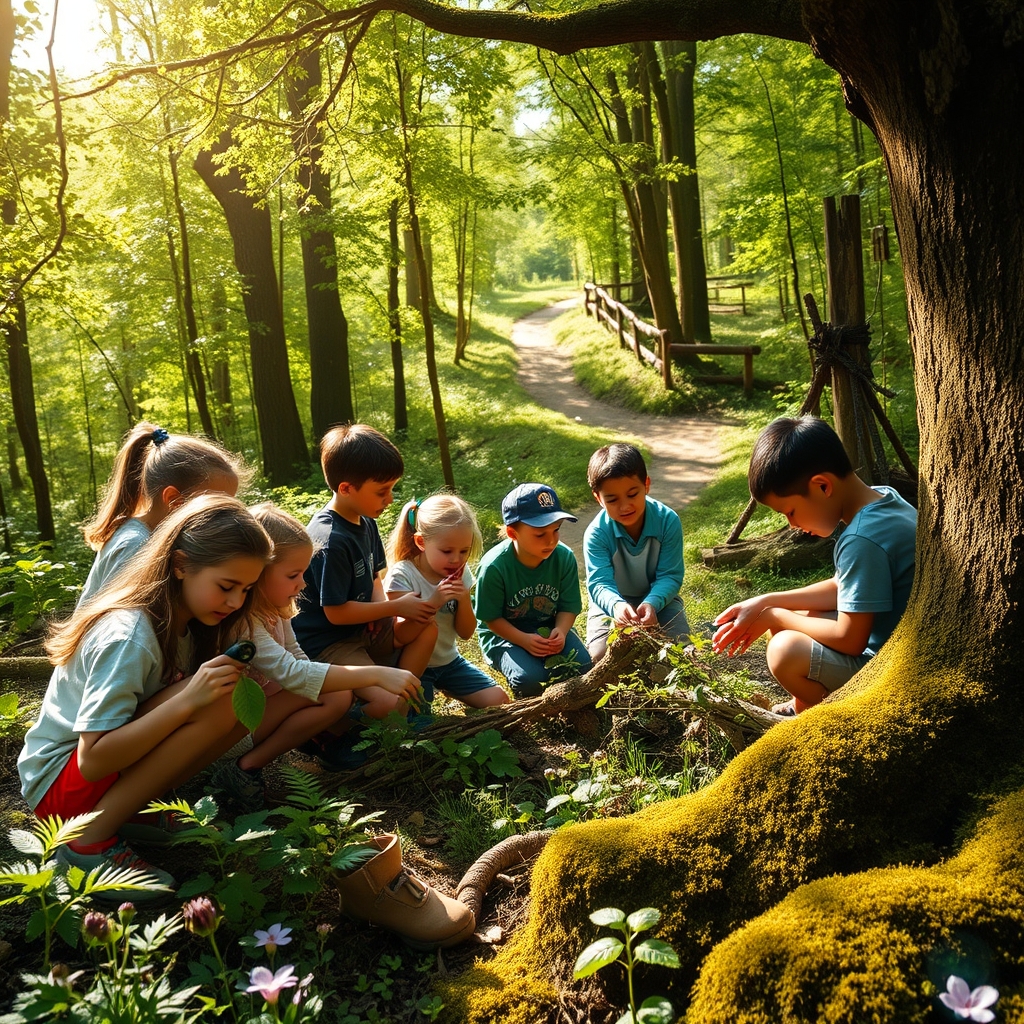
In an era where screens dominate attention and concrete jungles replace green spaces, a quiet revolution is taking root in education—one that trades four walls for forests, textbooks for trails, and standardized tests for the unpredictable lessons of the natural world. Place-based learning, an educational philosophy that immerses students in their local environment, is reshaping how we think about teaching and learning. By grounding education in the ecosystems, cultures, and histories of a community, this approach doesn’t just teach about nature; it fosters a deep, lasting connection to it.
The Philosophy Behind Place-Based Learning
At its core, place-based learning is about context. Instead of abstract concepts delivered in isolation, students engage with subjects through the lens of their surroundings. A math lesson might involve calculating the growth rate of local trees, while a history class could explore the indigenous stories tied to nearby rivers. This methodology aligns with the principles of experiential education, where learning is active, hands-on, and deeply personal. Research suggests that when students see the relevance of their education in their own backyards, engagement soars, and retention improves.
One of the most compelling aspects of place-based learning is its ability to dissolve the artificial boundaries between disciplines. In a traditional classroom, science, art, and social studies often exist in silos. But in a forest school or outdoor experiential program, these subjects intertwine naturally. A student sketching a bird’s nest might later research its ecological role, write a poem about its fragility, and debate conservation policies—all within the same project. This interdisciplinary approach mirrors the complexity of the real world, where problems and solutions rarely fit neatly into a single subject area.
Forest Kindergartens: Where Play and Learning Grow Wild
Nowhere is the power of place-based learning more evident than in forest kindergarten programs. Originating in Scandinavia, these early childhood initiatives prioritize unstructured play in natural settings over rigid indoor curricula. Children spend their days climbing trees, building forts, and splashing in puddles, all under the watchful eyes of educators who see the forest as their primary classroom. The results are striking: studies show that children in forest kindergartens develop stronger motor skills, greater creativity, and enhanced problem-solving abilities compared to their peers in traditional preschools.
But the benefits extend beyond academics. Forest kindergartens cultivate something even more vital: a sense of wonder. In a world where children are increasingly disconnected from nature, these programs offer a counterbalance, allowing kids to experience the joy of discovery firsthand. Whether it’s watching a caterpillar metamorphose or feeling the crunch of leaves underfoot, these small moments build a foundation of curiosity and care for the natural world. As one forest kindergarten teacher put it, “We’re not just teaching children about nature; we’re teaching them to love it.”
Wilderness Survival Skills: More Than Just a Lesson in Bushcraft
For older students, place-based learning often takes the form of wilderness survival skills and bushcraft. These programs teach practical abilities like fire-building, shelter construction, and plant identification, but their true value lies in the intangible lessons they impart. Students learn resilience as they navigate challenges, teamwork as they collaborate on projects, and self-reliance as they master new skills. These experiences build confidence in ways that no classroom lecture ever could.
Moreover, wilderness survival programs foster a deep understanding of ecological interdependence. When students learn to identify edible plants or track animals, they begin to see themselves as part of a larger web of life. This perspective is critical in an age of environmental crises. As one educator noted, “You can’t protect what you don’t understand. By teaching kids to survive in nature, we’re also teaching them to value it.”
Eco-Literacy: Reading the Book of Nature
Eco-literacy—the ability to understand the language of the natural world—is a cornerstone of place-based learning. It’s about more than memorizing facts about ecosystems; it’s about developing the skills to observe, question, and interpret the environment. In outdoor experiential education, students might track the migration patterns of birds, monitor water quality in local streams, or study the impact of invasive species. These activities turn abstract concepts like biodiversity and climate change into tangible, local realities.
Programs like these also emphasize systems thinking, helping students see the connections between their actions and the health of the planet. For example, a project on plastic pollution might start with a beach cleanup but evolve into a discussion about corporate responsibility, policy change, and individual habits. By framing environmental issues within a local context, place-based learning makes them feel urgent and actionable rather than distant and overwhelming.
Sustainable Education Models: Building Schools That Give Back
The principles of place-based learning are also reshaping the physical spaces where education happens. Green school initiatives are cropping up worldwide, designed to minimize environmental impact while maximizing opportunities for outdoor learning. These schools often feature solar panels, rainwater harvesting systems, and gardens that double as classrooms. Some even incorporate biophilic design—architectural elements that connect students to nature, such as living walls or outdoor learning pavilions.
But sustainability in education isn’t just about infrastructure; it’s about culture. Schools that embrace place-based learning often adopt a “living curriculum” that evolves with the seasons and the needs of the community. For instance, a school in a coastal town might focus on marine biology during the summer and shift to stormwater management in the fall. This flexibility ensures that education remains relevant and responsive to the world outside the school gates.
The Ripple Effect: How Place-Based Learning Shapes Communities
One of the most exciting aspects of place-based learning is its potential to extend beyond the classroom. When students engage with their local environment, they often become advocates for it. A project on air quality might lead to a student-led campaign for cleaner public transit, while a study of local wildlife could inspire a community conservation effort. These real-world applications of learning demonstrate that education isn’t just about preparing students for the future—it’s about empowering them to shape it.
Moreover, place-based learning fosters a sense of belonging. When students see their communities as classrooms, they develop a deeper connection to the people and places around them. This connection can be particularly transformative for students who struggle in traditional academic settings. For many, the outdoors becomes a space where they can excel, where their curiosity is valued, and where their voices are heard. In this way, place-based learning doesn’t just teach about nature; it nurtures a generation of engaged, empathetic citizens.
As the world grapples with complex environmental and social challenges, the need for education that fosters connection, curiosity, and care has never been greater. Place-based learning offers a path forward—one that roots education in the places we call home and empowers students to become stewards of their communities. It reminds us that the most profound lessons aren’t always found in textbooks; sometimes, they’re waiting just beyond the classroom door, in the rustling leaves, the flowing rivers, and the endless possibilities of the natural world.



