
The Healing Power of Forest Kindergartens: Cultivating Resilience Through Wild Play
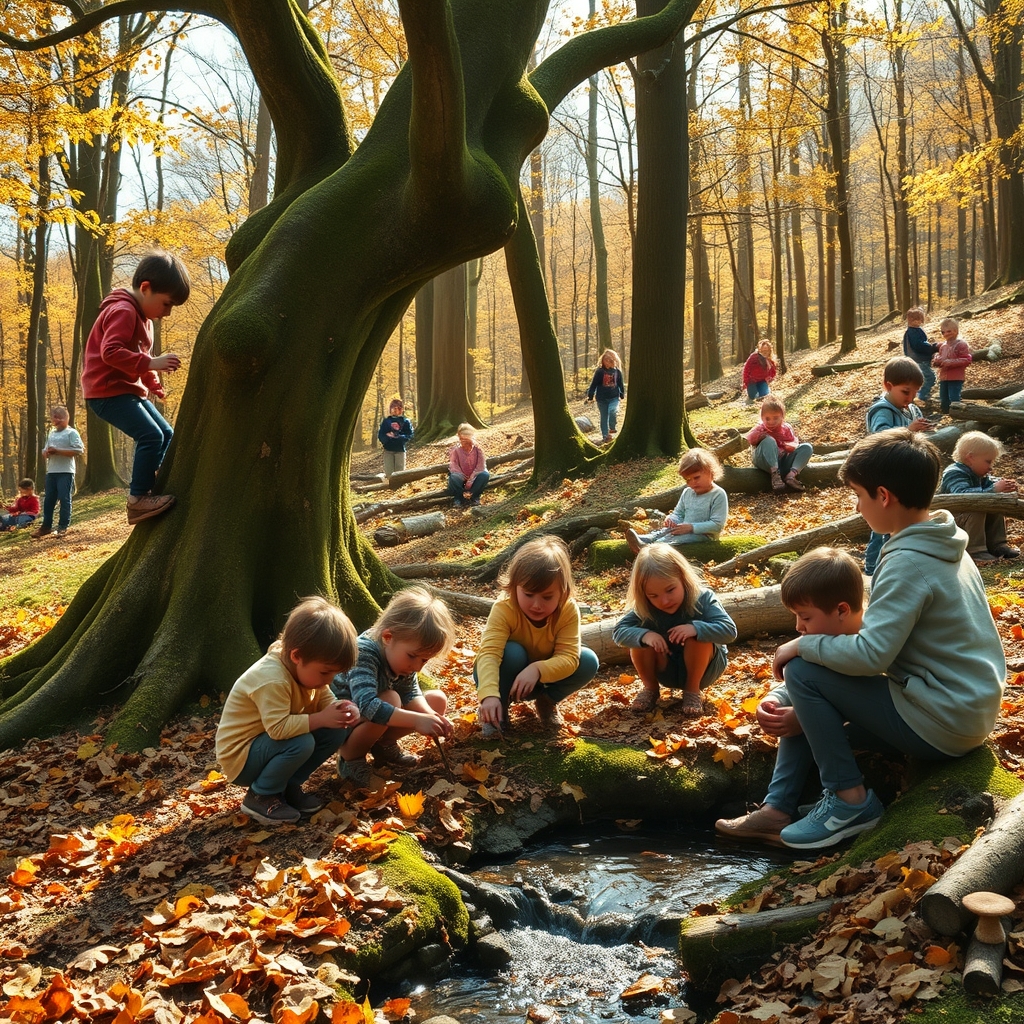
In a world where screens dominate attention and concrete jungles replace green ones, a quiet revolution is taking root—one that trades fluorescent-lit classrooms for dappled sunlight filtering through leaves, and rigid lesson plans for the unscripted magic of mud, sticks, and open skies. Forest kindergartens, also known as nature preschools, are redefining early childhood education by immersing children in the wild, where learning unfolds through curiosity, movement, and unstructured play. These programs are not just about teaching children to identify trees or build forts; they are about nurturing resilience, creativity, and a deep, enduring connection to the natural world.
The Philosophy Behind Forest Kindergartens
At the heart of forest kindergarten programs lies a simple yet radical idea: children learn best when they are free to explore their environment with all their senses. Unlike traditional classrooms, where learning is often confined to desks and worksheets, forest kindergartens embrace the Forest School Methodology, a pedagogical approach that prioritizes child-led, experiential learning in natural settings. Originating in Scandinavia in the 1950s, this model has since spread globally, with programs now flourishing in countries like Germany, the UK, Canada, and the United States.
The core principles of forest kindergartens include regular, repeated access to the same natural space, the use of loose parts (sticks, stones, leaves) for open-ended play, and the presence of trained educators who act as facilitators rather than directors. This approach aligns with Place-Based Learning, where the local environment becomes the primary classroom, and lessons are drawn from the land itself. Whether it’s tracking animal prints in the snow, listening to the rustle of leaves in the wind, or feeling the texture of bark, every moment is an opportunity for discovery.
Building Resilience Through Wild Play
One of the most profound benefits of forest kindergartens is their ability to cultivate resilience in young children. In a society that often prioritizes safety and risk aversion, these programs intentionally expose children to manageable challenges—climbing trees, balancing on logs, navigating uneven terrain—under the watchful eye of skilled educators. This Adventure Education approach helps children develop physical coordination, problem-solving skills, and emotional regulation, all while building confidence in their own abilities.
Research has shown that children who engage in regular outdoor play demonstrate higher levels of creativity, focus, and social skills compared to their peers in traditional settings. The absence of rigid structures and the presence of natural elements encourage imaginative play, collaboration, and conflict resolution. For example, a group of children building a dam in a stream must negotiate roles, share tools, and adapt to the unpredictable flow of water—skills that are far more valuable than memorizing facts from a textbook.
The Role of Risk in Learning
Risk is often seen as something to be avoided, especially when it comes to children. However, forest kindergartens reframe risk as an essential component of learning. When children are allowed to take calculated risks—such as climbing a rocky slope or using real tools to carve wood—they learn to assess danger, make decisions, and cope with failure. These experiences teach them that mistakes are not setbacks but opportunities for growth, a lesson that extends far beyond the forest.
Educators in these programs are trained to distinguish between hazards (genuine dangers like unstable cliffs) and risks (challenges that children can navigate with guidance, such as crossing a shallow creek). By allowing children to engage with risk in a controlled environment, forest kindergartens help them develop a healthy relationship with uncertainty, a skill that is increasingly vital in an unpredictable world.
Eco-Literacy and the Development of Stewards
Beyond physical and emotional growth, forest kindergartens play a crucial role in fostering Eco-Literacy Development. By spending time in nature, children develop a sense of wonder and respect for the living world, laying the foundation for environmental stewardship. Activities like planting seeds, observing wildlife, and learning about local ecosystems help children understand their place within the larger web of life. This Conservation-Focused Learning is not just about acquiring knowledge; it’s about cultivating empathy and a sense of responsibility toward the planet.
In forest kindergartens, science is not confined to textbooks. Instead, children engage in Hands-On Nature Study, where they might dissect owl pellets to learn about food chains, measure rainfall to understand the water cycle, or track the growth of a sapling over the seasons. These experiences make abstract concepts tangible and memorable, fostering a lifelong love of learning and a deep connection to the natural world.
Nature as a Co-Teacher
The natural world is the most dynamic and engaging teacher a child could ask for. In forest kindergartens, educators often step back and allow nature to take the lead. A sudden rainstorm becomes a lesson in weather patterns; a fallen log transforms into a habitat for insects; a bird’s nest sparks a discussion about life cycles. This Holistic Outdoor Teaching approach ensures that learning is not just about facts but about relationships—between the child and the environment, between curiosity and discovery, and between play and growth.
Sustainable Education for a Changing World
As the climate crisis intensifies, the need for Sustainable Education Models has never been more urgent. Forest kindergartens are at the forefront of this movement, demonstrating how education can be a force for environmental and social change. By integrating Green School Initiatives—such as composting, gardening, and renewable energy projects—these programs teach children that sustainability is not just a subject to study but a way of life.
Moreover, forest kindergartens challenge the traditional notion of what education should look like. They prove that learning does not require four walls, a whiteboard, or a standardized test. Instead, it thrives in the messiness of the outdoors, where children are free to move, explore, and make mistakes. This model is not just about preparing children for school; it’s about preparing them for life, equipping them with the skills, values, and resilience they need to navigate an uncertain future.
The magic of forest kindergartens lies in their simplicity. They remind us that children do not need elaborate toys or digital distractions to learn and grow. All they need is the freedom to play, the space to explore, and the guidance of adults who trust in their innate curiosity. In a world that often feels disconnected from nature, these programs offer a powerful antidote—a return to the wild, where learning is not just something that happens in a classroom but something that unfolds in every leaf, every breeze, and every moment of unscripted wonder.



