
Unlocking Potential: How Adaptive Learning Technologies Are Personalizing Education for Every Student
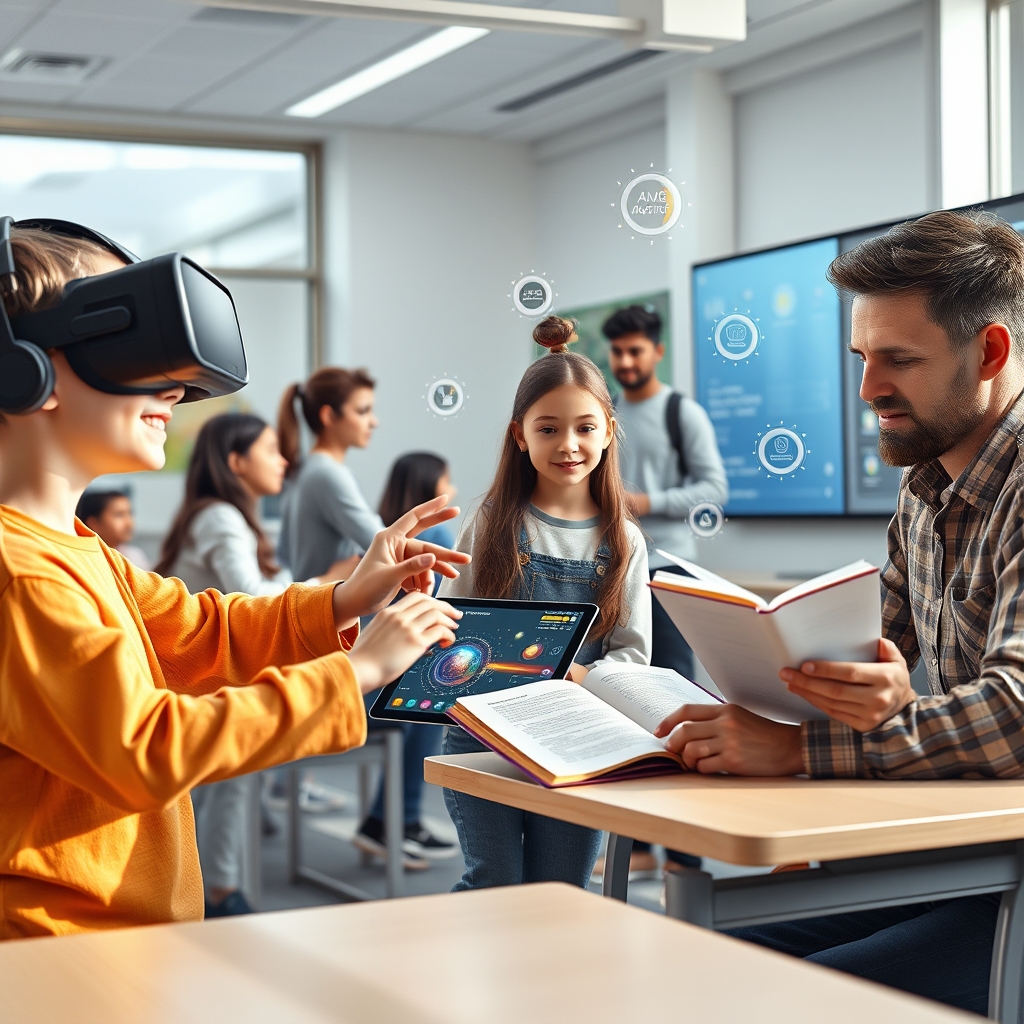
Education is no longer confined to the rigid structures of traditional classrooms. As technology evolves, so too does the way we learn, with adaptive learning technologies leading the charge in creating personalized educational experiences. These innovations are not just changing the game—they are rewriting the rules entirely, ensuring that every student, regardless of their background or learning style, has the opportunity to thrive.
The Rise of Adaptive Teaching Software
At the heart of this transformation is adaptive teaching software, a dynamic tool that adjusts content in real-time based on a learner’s performance. Unlike static textbooks or one-size-fits-all lectures, these systems use algorithms to analyze a student’s strengths and weaknesses, tailoring lessons to their unique needs. For example, if a student struggles with algebraic concepts, the software might provide additional practice problems or alternative explanations until mastery is achieved. Conversely, if a learner excels in a particular area, the system can accelerate their progress, introducing more advanced material to keep them engaged.
This level of personalization was once a distant dream for educators, but today, platforms like DreamBox, Knewton, and Smart Sparrow are making it a reality. By leveraging artificial intelligence, these tools create a feedback loop that continuously refines the learning experience, ensuring that no student is left behind or held back by the pace of the class.
Gamification: Turning Learning into an Adventure
Another powerful trend in adaptive learning is the integration of gamification. By incorporating game-like elements such as points, badges, leaderboards, and interactive challenges, educators can transform even the most mundane subjects into engaging, motivating experiences. Gamification taps into the natural human desire for achievement and competition, making learning feel less like a chore and more like an adventure.
Platforms like Duolingo and Kahoot! have demonstrated the effectiveness of this approach, particularly in language learning and STEM education. Students are more likely to retain information when it is presented in a fun, interactive format, and gamification provides immediate feedback, reinforcing positive behaviors and encouraging persistence. For corporate training programs, gamified learning can boost employee engagement and knowledge retention, making it a valuable tool for professional development as well.
Microlearning and Digital Badges: Bite-Sized Education for a Busy World
In today’s fast-paced world, finding time for traditional education can be a challenge. This is where microlearning and digital badges come into play. Microlearning breaks down complex topics into small, digestible chunks, often delivered through mobile learning apps or short videos. These bite-sized lessons can be completed in minutes, making it easier for learners to fit education into their busy schedules.
Digital badges and micro-credentials complement microlearning by providing tangible proof of skill acquisition. Unlike traditional degrees, which can take years to earn, micro-credentials can be obtained in weeks or even days, allowing learners to demonstrate proficiency in specific areas. Platforms like Coursera, Udacity, and LinkedIn Learning offer a wide range of micro-credentials, from coding bootcamps to project management certifications, making it easier than ever to upskill or reskill in a rapidly changing job market.
The Role of Virtual and Augmented Reality in Immersive Learning
While adaptive software and gamification are powerful tools, nothing quite compares to the immersive experience offered by virtual reality (VR) and augmented reality (AR) classrooms. These technologies transport learners to entirely new environments, allowing them to explore historical events, conduct virtual science experiments, or even practice surgical procedures in a risk-free setting. For subjects that require hands-on experience, such as medicine, engineering, or architecture, VR and AR provide an unparalleled opportunity to learn by doing.
Companies like zSpace and Labster are already leveraging these technologies to create virtual labs and interactive simulations that bring abstract concepts to life. In K-12 education, AR apps like Google Expeditions enable students to take virtual field trips to places they might never visit in person, from the depths of the ocean to the surface of Mars. By engaging multiple senses, VR and AR make learning more memorable and impactful, bridging the gap between theory and practice.
Hybrid Learning Models: The Best of Both Worlds
The COVID-19 pandemic accelerated the adoption of hybrid learning models, which blend traditional classroom instruction with online education. While the initial shift was driven by necessity, many educators and students have since recognized the benefits of this flexible approach. Hybrid learning allows for greater customization, enabling students to learn at their own pace while still benefiting from face-to-face interactions with instructors and peers.
For working professionals, hybrid learning models make it possible to pursue advanced degrees or certifications without sacrificing their careers. Online degree programs from institutions like the University of London and Arizona State University offer the same rigor and accreditation as their on-campus counterparts, but with the added convenience of remote learning. This flexibility is particularly valuable for lifelong learners, who may need to balance education with family responsibilities or other commitments.
The Future of Education: A Lifelong Journey
As adaptive learning technologies continue to evolve, the possibilities for personalized education are virtually limitless. From AI-powered virtual tutors to interactive ebooks that adapt to a reader’s comprehension level, the tools at our disposal are making learning more accessible, engaging, and effective than ever before. These innovations are not just enhancing education—they are democratizing it, breaking down barriers and creating opportunities for learners of all ages and backgrounds.
Yet, with all these advancements, one thing remains clear: the future of education is not about replacing teachers or traditional classrooms. Instead, it is about empowering educators with the tools they need to meet the diverse needs of their students, and giving learners the freedom to explore their passions in ways that suit their individual styles. Whether through gamified lessons, immersive VR experiences, or flexible hybrid models, the goal is the same—to unlock the potential within every student and make lifelong learning a reality for all.



