
The Rhythm of the Wild: How Outdoor Sensory Play and Place-Based Learning Harmonize to Build Eco-Literacy
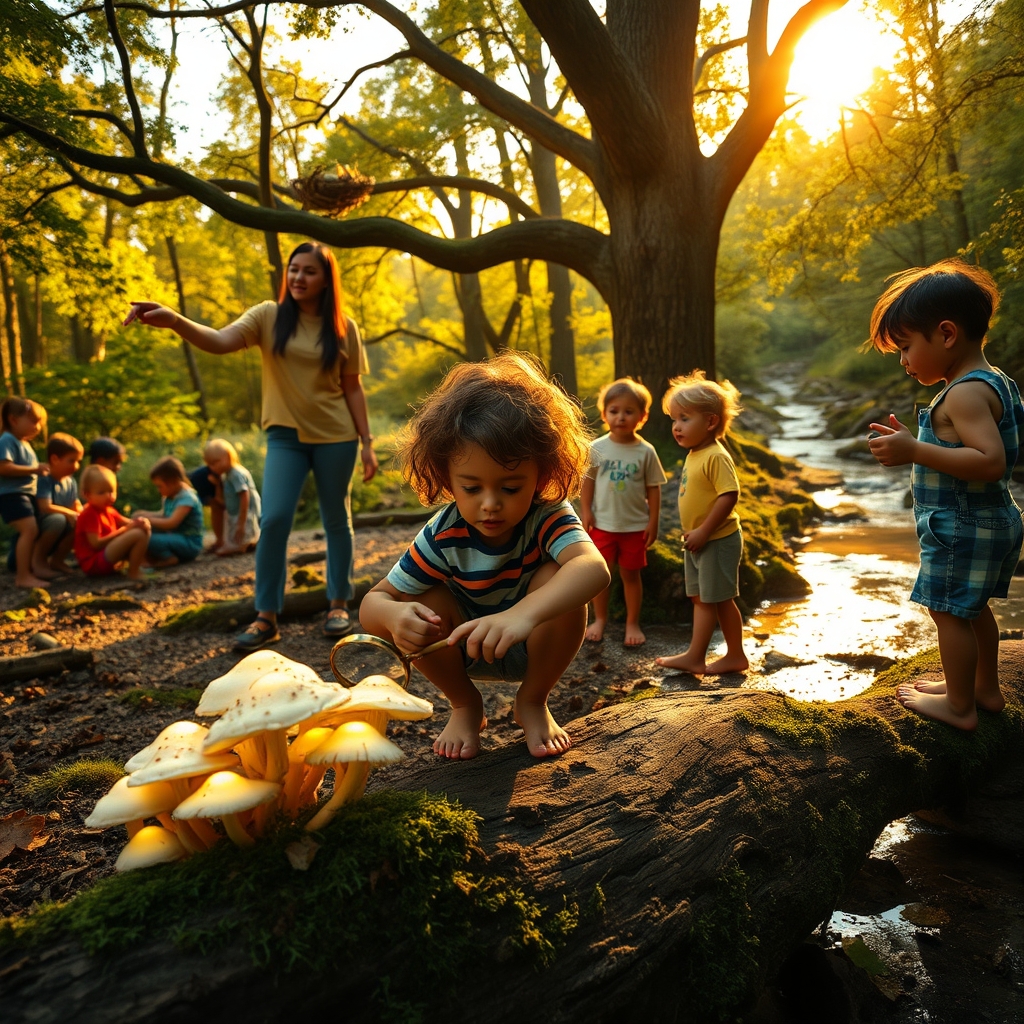
There is a quiet magic in the way children move through a forest—how their fingers trace the grooves of bark, how their laughter mingles with the rustle of leaves, how their curiosity unfurls like a fern in the morning light. This is the essence of outdoor sensory play, a cornerstone of modern nature-based education that transcends traditional learning by immersing young minds in the living, breathing classroom of the natural world. Unlike conventional methods that prioritize rote memorization or abstract concepts, sensory play in nature invites children to engage with their environment through touch, sound, sight, and even scent, fostering a deep, intuitive connection to the earth.
The Science Behind Sensory Engagement
Research in developmental psychology and neuroscience underscores the profound impact of sensory experiences on learning. When children squish mud between their toes, listen to the chorus of birds at dawn, or balance on a fallen log, their brains form intricate neural pathways that enhance memory, problem-solving, and emotional regulation. These experiences are not merely recreational; they are foundational to eco-literacy—the ability to understand, appreciate, and advocate for the environment. A study published in the Journal of Environmental Psychology found that children who regularly engage in outdoor sensory play demonstrate higher levels of environmental awareness and pro-ecological behaviors later in life. This is because sensory immersion creates a visceral bond with nature, one that textbooks or screens simply cannot replicate.
Place-Based Learning: Anchoring Education in the Local Landscape
While sensory play awakens the senses, place-based learning grounds education in the unique ecology, culture, and history of a child’s immediate surroundings. This approach transforms a nearby stream, urban park, or patch of woodland into a dynamic textbook, where lessons in science, history, and art unfold organically. For example, a class studying watersheds might visit a local river to test water quality, interview community members about its history, and create art inspired by its ecosystem. This method not only makes learning relevant but also instills a sense of stewardship, as children come to see themselves as caretakers of the places they inhabit.
Place-based education also bridges the gap between classroom theory and real-world application. In a traditional setting, a lesson on photosynthesis might involve diagrams and equations, but in a nature school, children observe the process firsthand by tracking the growth of a sunflower, measuring its leaves, and documenting its response to sunlight. This hands-on approach not only deepens understanding but also cultivates critical thinking, as students learn to ask questions, make observations, and draw connections between their actions and the environment.
The Role of Educators: Guides, Not Gatekeepers
In this model, teachers become facilitators rather than authoritarian figures, guiding children through open-ended exploration rather than dictating outcomes. This shift is pivotal, as it empowers students to take ownership of their learning. A skilled educator might pose a question like, “Why do you think the leaves change color in autumn?” and then step back, allowing children to hypothesize, experiment, and discover answers for themselves. This approach nurtures independence and creativity, qualities that are essential for fostering eco-literacy in an era of environmental challenges.
Moreover, educators in nature-based programs often employ storytelling to weave lessons into the fabric of the landscape. A tale about the life cycle of a salmon, for instance, becomes more vivid when told beside a river where children can see the fish leaping upstream. Stories like these not only captivate young imaginations but also embed ecological concepts in a memorable, emotional context.
Integrating Bushcraft and Survival Skills
Beyond sensory play and place-based learning, many nature schools incorporate bushcraft and wilderness survival skills into their curricula. These skills—such as building shelters, identifying edible plants, or navigating by the stars—serve a dual purpose. On one hand, they equip children with practical knowledge that fosters self-reliance and resilience. On the other, they deepen their connection to the natural world by revealing its intricacies and interdependencies. When a child learns to start a fire using friction, they are not just mastering a survival technique; they are gaining an appreciation for the properties of wood, the science of combustion, and the patience required to work with nature’s rhythms.
Bushcraft also demystifies the wild, transforming it from a place of fear or indifference into one of familiarity and respect. Children who might once have seen a forest as a backdrop for play come to understand it as a complex, living system that sustains them. This shift in perspective is at the heart of eco-literacy, as it encourages children to see themselves as part of—not separate from—the natural world.
Sustainable Education Models: A Blueprint for the Future
The integration of sensory play, place-based learning, and bushcraft reflects a broader movement toward sustainable education models. These models prioritize experiential, interdisciplinary learning that prepares children to navigate an uncertain future with creativity, adaptability, and a deep sense of responsibility. Schools like the Forest School Association in the UK or the Wilderness Awareness School in the U.S. exemplify this approach, blending academic rigor with hands-on, nature-based experiences. Their success lies in their ability to meet children where they are—both literally and figuratively—by grounding education in the real world rather than confining it to four walls.
Sustainable education also extends beyond the classroom, encompassing community partnerships, regenerative practices, and a commitment to social and environmental justice. For instance, a school might collaborate with local farmers to teach children about sustainable agriculture, or partner with Indigenous communities to learn about traditional ecological knowledge. These collaborations enrich the curriculum while fostering a sense of global citizenship, as children come to understand that their actions have ripple effects far beyond their immediate surroundings.
The Ripple Effect of Eco-Literacy
The benefits of this approach extend far beyond individual students. Eco-literate children grow into adults who are more likely to advocate for environmental policies, support sustainable businesses, and raise their own children with a deep respect for nature. They become the architects of a more just and sustainable world, one where the rhythm of human life harmonizes with the rhythm of the wild. This is not a lofty ideal but a tangible outcome of education that values experience, connection, and stewardship above all else.
As the sun dips below the horizon and the forest hums with the sounds of dusk, a group of children gather around a fire they built themselves. They share stories of the day’s discoveries—a nest of baby birds, a mushroom that glows in the dark, the way the wind carries seeds across the meadow. In this moment, they are not just learning about nature; they are becoming part of it, their young minds and hearts woven into the fabric of the earth. This is the promise of outdoor sensory play and place-based learning: an education that does not just teach children about the world but invites them to love it, protect it, and carry its lessons with them for a lifetime.



