
Where the Wild Things Teach: How Adventure Education Courses Are Redefining Eco-Literacy for the Next Generation
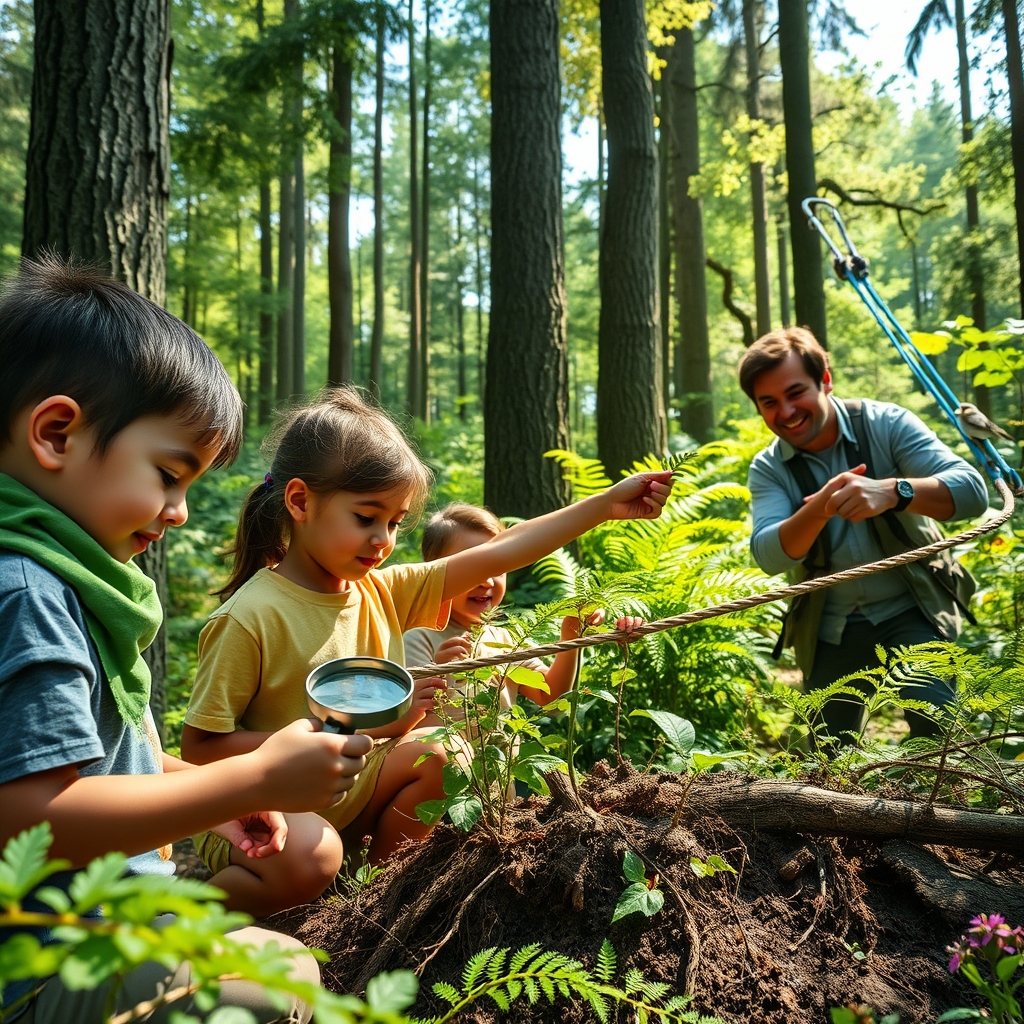
In an era where screens dominate attention and concrete jungles replace green ones, a quiet revolution is taking root in education. Adventure education courses are emerging as a powerful antidote to indoor learning, blending the thrill of exploration with the depth of ecological understanding. These programs don’t just teach children about nature—they immerse them in it, turning forests, rivers, and mountains into living classrooms where every leaf, rock, and gust of wind becomes a lesson in eco-literacy.
The Philosophy Behind the Adventure
At the heart of adventure education lies a simple yet radical idea: learning is most transformative when it’s experiential. Unlike traditional classrooms, where knowledge is often abstract and disconnected from real-world applications, these courses prioritize hands-on engagement. Students don’t just read about the water cycle—they trek to a nearby stream, test its pH, and observe how pollution alters its flow. They don’t memorize the names of local flora; they forage for edible plants, learn to identify them by touch and scent, and understand their role in the ecosystem.
This approach is rooted in the belief that eco-literacy isn’t just about facts—it’s about fostering a deep, emotional connection to the natural world. When children build shelters from fallen branches, track animal prints in the mud, or sit silently to listen to bird calls, they develop a sense of belonging to the environment. This connection is the foundation of lifelong stewardship, as studies show that people are far more likely to protect what they love and understand.
From Survival Skills to Sustainability
Adventure education courses often weave wilderness survival skills into their curricula, but the goal extends beyond teaching children how to start a fire or navigate by the stars. These skills are gateways to broader lessons about sustainability, resilience, and interdependence. For example, learning to build a debris hut isn’t just about shelter—it’s an exercise in resourcefulness, teaching students to use what the land provides without depleting it. Similarly, foraging for wild edibles becomes a lesson in biodiversity, seasonal cycles, and the importance of ethical harvesting.
Programs like these also introduce children to the concept of leave no trace, a set of principles that emphasize minimizing human impact on nature. Through activities like packing out waste, using biodegradable soap, and respecting wildlife habitats, students internalize the idea that conservation isn’t just a theoretical ideal—it’s a daily practice. These lessons are particularly potent in an age where climate anxiety is on the rise, offering children tangible ways to feel empowered rather than overwhelmed.
The Role of Risk and Resilience
One of the most controversial—and valuable—aspects of adventure education is its embrace of managed risk. Climbing trees, crossing streams, and navigating unfamiliar terrain are all activities that come with inherent challenges, and that’s precisely the point. By facing these challenges in a supportive environment, children learn to assess risk, problem-solve, and build confidence in their abilities. These experiences cultivate resilience, a trait that’s increasingly rare in a world where many children grow up with overprotective safety nets.
Research supports the idea that exposure to nature reduces stress and improves mental health, but adventure education takes this a step further. The thrill of overcoming obstacles in the wild—whether it’s scaling a rock face or identifying a venomous snake—releases dopamine and fosters a sense of accomplishment. These moments of triumph don’t just build self-esteem; they create lasting memories that reinforce the value of perseverance and adaptability.
Bridging the Gap Between Classroom and Wild
While adventure education courses are often associated with summer camps or weekend programs, they’re increasingly being integrated into formal school curricula. Schools that adopt this model often blend traditional academics with outdoor learning, ensuring that eco-literacy isn’t confined to a single unit or field trip. For instance, a math lesson might involve calculating the age of a tree by measuring its rings, while a history class could explore how indigenous communities have sustainably managed local ecosystems for generations.
This place-based approach to learning ensures that education is relevant to students’ lives. When children study the watershed they live in or the migratory patterns of birds that pass through their town, they see how their actions—whether it’s reducing plastic use or planting native species—directly impact their environment. This localized focus makes abstract concepts like climate change feel immediate and actionable, rather than distant and overwhelming.
Cultivating the Next Generation of Eco-Leaders
The long-term impact of adventure education extends far beyond individual growth. By nurturing eco-literacy, these programs are shaping the next generation of environmental leaders, scientists, and advocates. Children who grow up with a deep connection to nature are more likely to pursue careers in conservation, sustainable design, or environmental policy. They’re also more likely to adopt eco-friendly habits, from reducing waste to supporting renewable energy, that ripple outward into their communities.
Perhaps most importantly, adventure education fosters a sense of wonder—a quality that’s often eroded by the relentless pace of modern life. When children spend hours observing a spider weaving its web or tracking the slow growth of a sapling, they develop patience, curiosity, and a sense of awe for the natural world. These qualities are the bedrock of eco-literacy, reminding us that the most profound lessons aren’t always found in textbooks, but in the quiet, wild spaces where the earth speaks for itself.
The shift toward adventure-based eco-literacy isn’t just a trend—it’s a return to the way humans have learned for millennia. Before classrooms and standardized tests, knowledge was passed down through storytelling, hands-on experimentation, and direct experience. In a world that’s increasingly disconnected from nature, these courses offer a way to reconnect, not just with the environment, but with the innate curiosity and resilience that define what it means to be human. The wild isn’t just a place to visit; it’s a teacher, a mentor, and a mirror reflecting back the lessons we’ve forgotten we needed to learn.



