
Whispers of the Wild: Fostering Eco-Literacy Through Sensory Exploration and Bushcraft in Nature Schools
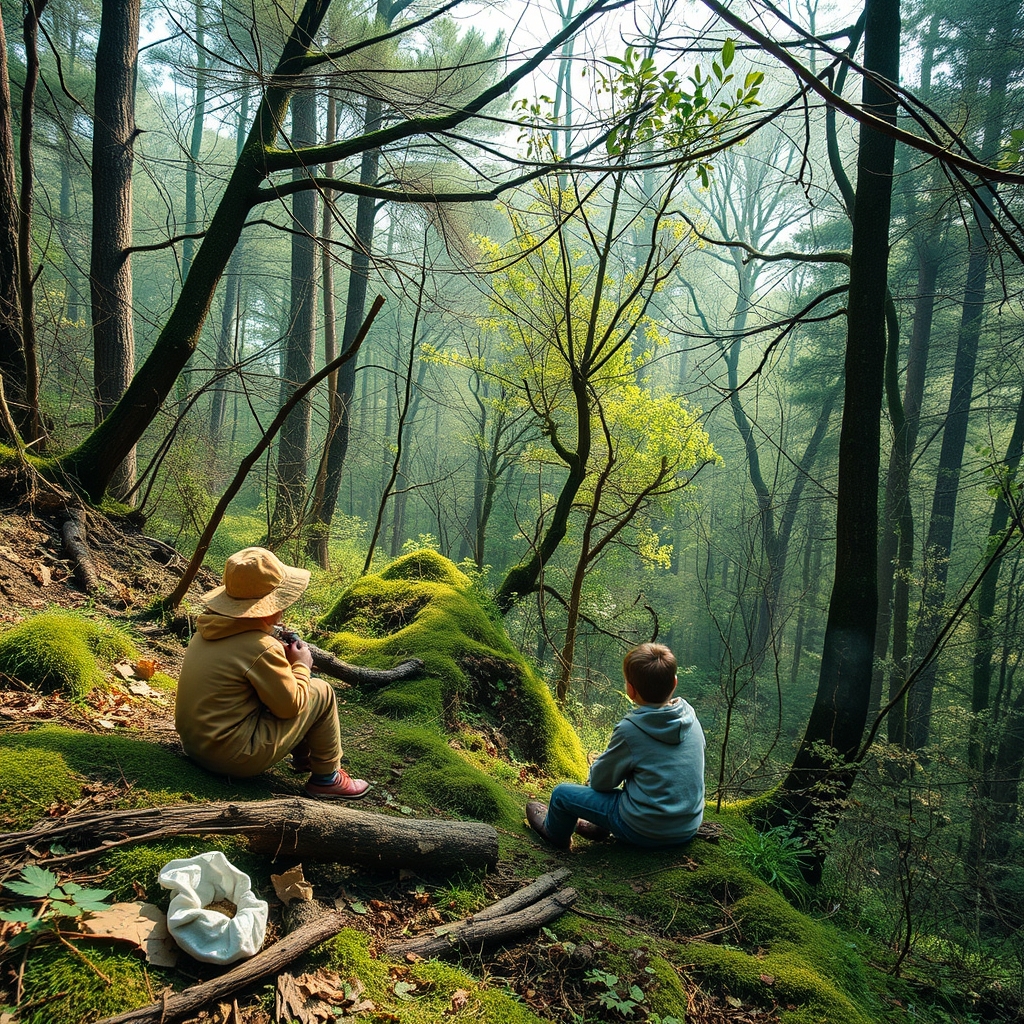
In a world increasingly dominated by screens and structured indoor environments, the call of the wild has never been more vital for young minds. Nature school curricula, particularly those rooted in forest kindergarten programs and outdoor experiential education, offer a transformative approach to learning—one that engages the senses, nurtures curiosity, and fosters a deep connection to the natural world. These programs are not merely about spending time outdoors; they are about reimagining education as an immersive, hands-on journey where the environment itself becomes the classroom.
The Philosophy of Place-Based Learning
At the heart of nature school curricula lies the principle of place-based learning, an educational philosophy that anchors lessons in the local environment. Unlike traditional classrooms, where learning is often abstract and disconnected from real-world contexts, place-based education invites students to explore the ecosystems, cultures, and histories of their immediate surroundings. Whether it’s studying the life cycle of a nearby stream, identifying native plant species, or learning about indigenous land stewardship, this approach makes education tangible and relevant.
Forest kindergarten programs, for example, take this philosophy to its most organic form. Children spend the majority of their day outdoors, regardless of weather, engaging in unstructured play and guided activities that align with the rhythms of nature. The absence of rigid schedules and conventional classroom structures allows for spontaneous discovery—children might stumble upon a bird’s nest, track animal footprints in the mud, or witness the changing colors of leaves in autumn. These moments are not just incidental; they are the foundation of eco-literacy development, where learning is driven by wonder rather than worksheets.
Bushcraft and Wilderness Survival: Skills for a Lifetime
Beyond play and exploration, nature schools often incorporate bushcraft and wilderness survival skills into their curricula, equipping children with practical knowledge that fosters self-reliance and environmental respect. Learning to build a shelter from natural materials, start a fire safely, or navigate using the sun and stars are not just survival techniques—they are lessons in problem-solving, teamwork, and resilience. These skills also cultivate a sense of responsibility toward the environment, as children learn to interact with nature in ways that are sustainable and mindful.
For instance, a lesson on fire-building might begin with a discussion on the ecological role of fire in forest ecosystems, followed by hands-on practice using friction-based methods. Children learn not only how to create fire but also when and where it is appropriate to do so, emphasizing the importance of conservation and safety. Such activities bridge the gap between theoretical knowledge and real-world application, making environmental science classrooms come alive in ways that textbooks never could.
Sensory Play and Holistic Development
One of the most powerful aspects of outdoor experiential education is its emphasis on sensory play. In a forest kindergarten, children are encouraged to touch, smell, listen, and observe their surroundings in ways that stimulate cognitive, emotional, and physical growth. The crunch of leaves underfoot, the scent of pine needles, the texture of bark—these sensory experiences create neural pathways that enhance memory, creativity, and emotional regulation. Research has shown that time spent in nature reduces stress and anxiety in children, while also improving focus and attention span.
Sensory play is not limited to passive observation; it often involves hands-on activities like mud kitchen play, where children mix soil, water, and natural materials to create



