
The Invisible Thread: How AI and Skill-Based Certifications Are Weaving the Future of Workforce Development
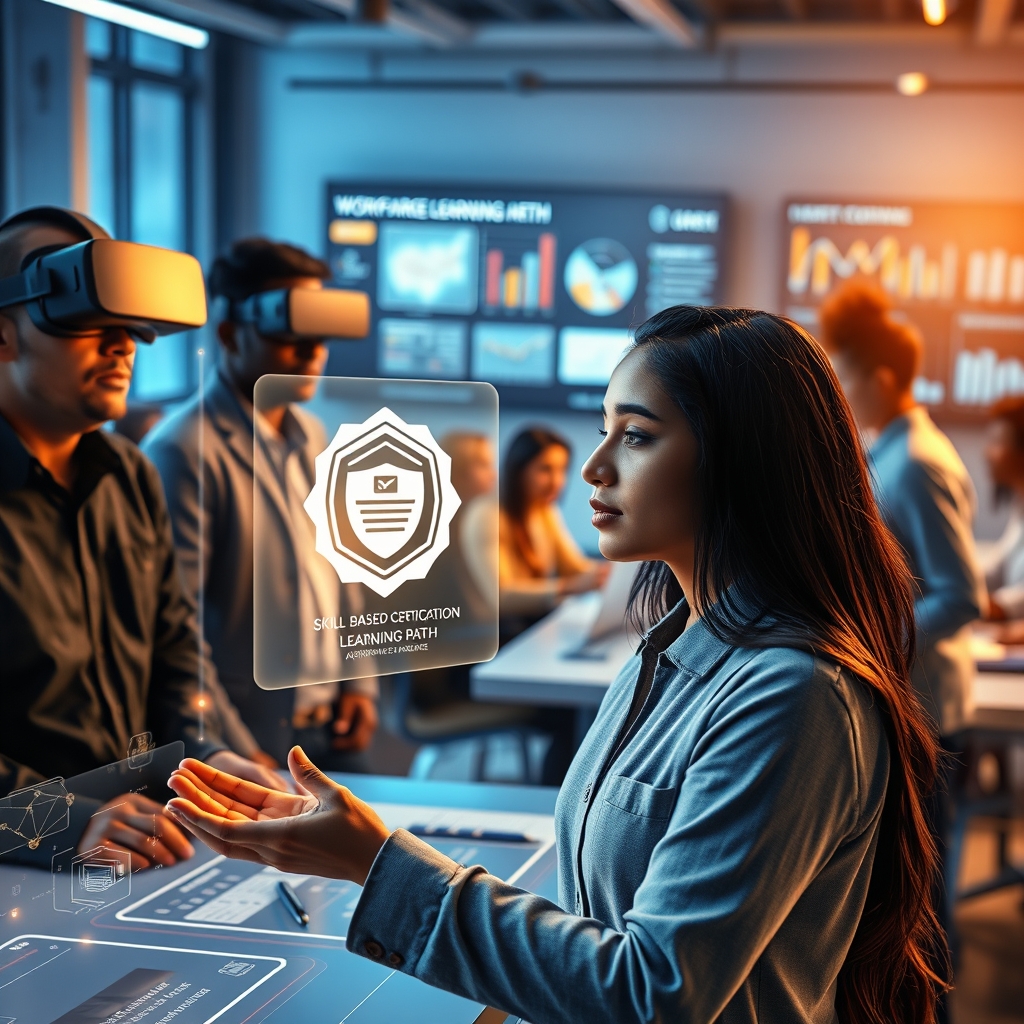
The modern workforce is evolving at an unprecedented pace, driven by technological advancements and shifting economic demands. Traditional education models, once the cornerstone of career preparation, are struggling to keep up with the rapid emergence of new skills and industries. In this dynamic landscape, a quiet revolution is underway—one where artificial intelligence (AI) and skill-based certifications are redefining how professionals learn, grow, and prove their expertise. This transformation is not just about acquiring knowledge; it’s about creating a seamless, adaptive ecosystem where learning and career advancement are intertwined.
The Rise of Skill-Based Certifications
Gone are the days when a college degree alone could guarantee career success. Today, employers are increasingly prioritizing demonstrable skills over formal qualifications. Skill-based certifications, often represented by digital badges or micro-credentials, have emerged as a powerful tool for validating expertise in specific areas. These certifications are not just a trend; they are a response to the growing need for agility in the workforce. They allow professionals to upskill or reskill quickly, ensuring they remain relevant in an ever-changing job market.
Platforms like Coursera, Udacity, and LinkedIn Learning have pioneered this shift, offering courses that culminate in certifications recognized by industry leaders. These credentials are often stackable, meaning professionals can combine multiple certifications to build a comprehensive skill set tailored to their career goals. The flexibility of these programs makes them accessible to a broader audience, from recent graduates to seasoned professionals looking to pivot into new fields.
AI as the Catalyst for Personalized Learning
At the heart of this transformation is AI, which is playing a pivotal role in making learning more personalized and efficient. Adaptive teaching software, powered by AI, analyzes a learner’s strengths, weaknesses, and preferences to create customized learning paths. This technology ensures that each individual receives the right content at the right time, maximizing engagement and retention. For example, AI-driven platforms like Duolingo and Khan Academy use algorithms to adjust difficulty levels in real-time, providing a tailored experience that evolves with the learner.
AI is also enhancing the way certifications are earned. By leveraging data analytics, AI can identify skill gaps and recommend targeted courses or microlearning modules to address them. This not only accelerates the learning process but also ensures that certifications are aligned with real-world demands. For corporate training programs, AI-powered systems can track employee progress, suggest relevant certifications, and even predict future skill requirements, enabling organizations to stay ahead of the curve.
The Role of Microlearning in Workforce Development
In a world where time is a precious commodity, microlearning has emerged as a game-changer. These bite-sized, focused learning modules allow professionals to acquire new skills in short bursts, making it easier to integrate learning into their busy schedules. Microlearning courses are often delivered through mobile learning apps, which provide on-the-go access to content, quizzes, and interactive exercises. This approach is particularly effective for corporate training, where employees can quickly upskill without disrupting their workflow.
Microlearning is also closely tied to skill-based certifications. Many platforms offer micro-credentials that can be earned by completing a series of microlearning modules. These credentials are highly specific, allowing professionals to demonstrate expertise in niche areas. For example, a software developer might earn a micro-credential in a new programming language, while a marketing professional could certify their proficiency in a cutting-edge analytics tool. This granularity makes micro-credentials an invaluable asset for career advancement.
Blending Technology and Human Expertise
While AI and digital certifications are transforming workforce development, they are not replacing human expertise. Instead, they are augmenting it. Virtual tutors, for instance, provide personalized guidance and support, bridging the gap between automated learning and human interaction. These AI-driven tutors can answer questions, provide feedback, and even simulate real-world scenarios, creating a more immersive learning experience.
Hybrid learning models, which combine online and in-person instruction, are another example of how technology and human expertise can coexist. These models offer the flexibility of digital learning while preserving the benefits of face-to-face interaction. For example, a corporate training program might use AI-powered modules for foundational knowledge, followed by in-person workshops where employees can apply what they’ve learned in a collaborative setting. This blend of technology and human touch ensures a well-rounded learning experience.
The Future of Workforce Development
The integration of AI and skill-based certifications is not just a passing trend; it is the foundation of a new era in workforce development. As industries continue to evolve, the ability to learn and adapt will be the most valuable skill of all. AI-powered learning systems and micro-credentials are democratizing education, making it more accessible, flexible, and relevant to the needs of today’s professionals. They are breaking down the barriers of traditional education, allowing individuals to take control of their careers and pursue lifelong learning with confidence.
This shift is also empowering organizations to build more agile and resilient workforces. By leveraging AI and digital certifications, companies can ensure their employees are equipped with the skills needed to thrive in an unpredictable future. The result is a workforce that is not only more skilled but also more engaged and motivated, driving innovation and growth in ways previously unimaginable. The invisible thread of AI and skill-based certifications is weaving a future where learning and career advancement are not just connected but inseparable, creating a world where everyone has the opportunity to succeed.



