
Hybrid Horizons: How Blended Learning and AI Are Crafting the Classroom of Tomorrow
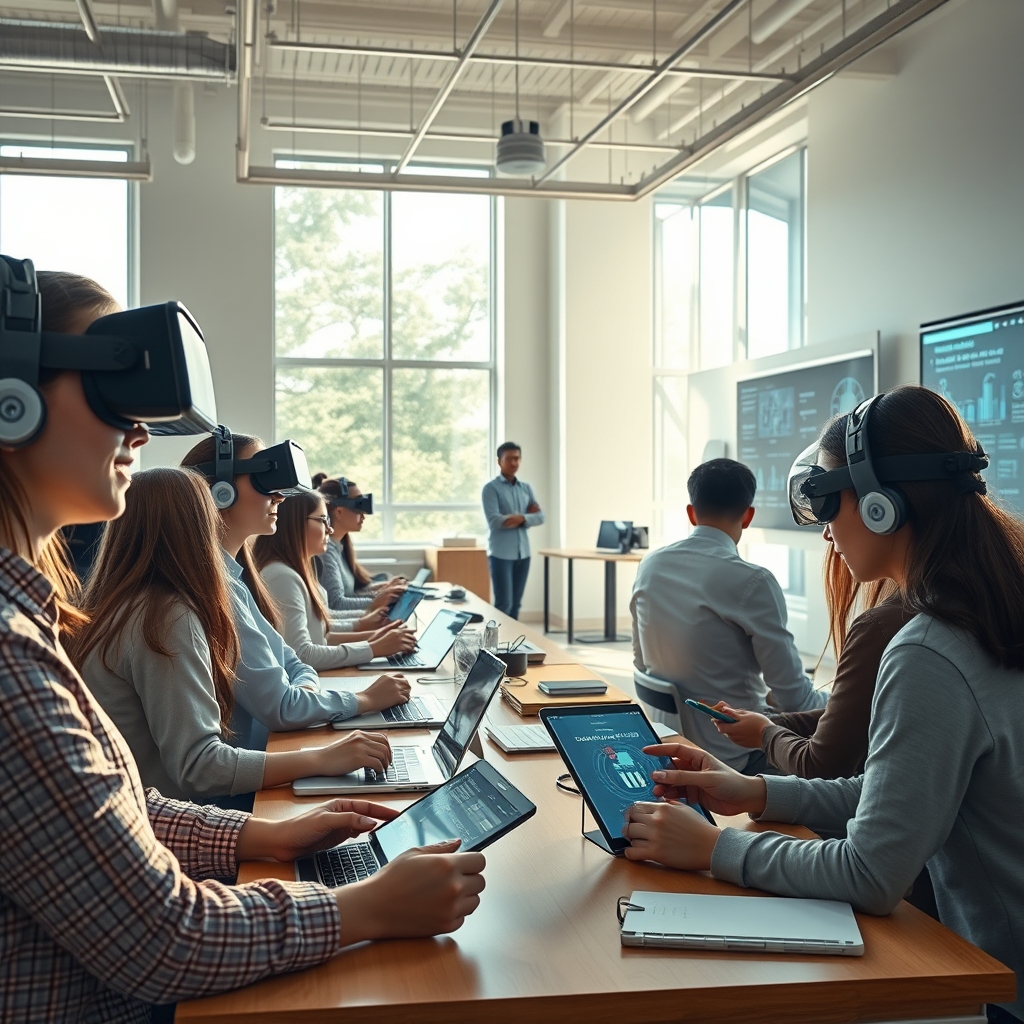
The traditional boundaries of education are dissolving as technology and pedagogy intertwine to create dynamic, responsive learning environments. At the heart of this transformation lies the fusion of hybrid learning models and artificial intelligence, a combination that is redefining how knowledge is acquired, applied, and assessed. This evolution is not merely about digitizing old methods but about reimagining education as a fluid, personalized, and lifelong journey.
The Rise of Hybrid Learning Models
Hybrid learning, often referred to as blended learning, merges the best of in-person instruction with the flexibility of digital platforms. This model has gained traction for its ability to cater to diverse learning styles while accommodating the demands of modern life. Students no longer need to choose between the structure of a classroom and the convenience of online learning—they can have both. For instance, a university course might include weekly in-person seminars supplemented by interactive online modules, discussion forums, and virtual group projects. This approach not only enhances accessibility but also fosters a deeper engagement with the material, as learners can revisit concepts at their own pace.
Corporate training programs have also embraced hybrid models, recognizing that employees thrive when given the autonomy to learn in ways that suit their schedules and preferences. A sales team, for example, might attend a live workshop to practice negotiation skills, then reinforce those lessons through microlearning courses delivered via a mobile app. The result is a more agile workforce, equipped with skills that are both current and practical.
AI-Powered Personalization: The Engine of Modern Learning
While hybrid learning provides the framework, artificial intelligence is the engine that powers personalization within these models. Adaptive teaching software, such as those used in platforms like Duolingo or Khan Academy, analyzes a learner’s performance in real-time and adjusts the difficulty, pace, and content accordingly. This ensures that no student is left behind or held back by a one-size-fits-all curriculum. For example, a high school math student struggling with algebra might receive additional practice problems and explanatory videos, while a peer who masters the material quickly is challenged with advanced concepts or real-world applications.
AI-driven personalization extends beyond K-12 and higher education. In corporate settings, adaptive learning platforms can identify skill gaps in employees and recommend targeted microlearning courses or digital badges to bridge those gaps. This not only boosts individual performance but also aligns workforce development with organizational goals. Imagine a marketing team where each member receives tailored training based on their role, experience, and career aspirations—this is the promise of AI-powered learning.
The Role of Virtual and Augmented Reality
No discussion of modern learning would be complete without addressing the immersive potential of virtual reality (VR) and augmented reality (AR). These technologies are transforming abstract concepts into tangible experiences, making learning more engaging and memorable. In a VR classroom, medical students can perform virtual surgeries, while history students can walk through ancient civilizations as if they were there. AR, on the other hand, overlays digital information onto the physical world, allowing engineering students to visualize complex machinery or architecture students to explore 3D models of buildings.
These tools are not limited to academic settings. Corporate training programs use VR to simulate high-stakes scenarios, such as emergency response drills or customer service interactions, without the risks or costs associated with real-world training. The result is a workforce that is better prepared, more confident, and capable of applying their knowledge in practical settings.
Micro-Credentials and the Future of Skill Validation
As the job market evolves, so too does the way we validate skills and knowledge. Traditional degrees are no longer the sole measure of competence, and employers are increasingly turning to micro-credentials and digital badges to assess candidates. These bite-sized certifications, often earned through online courses or corporate training programs, provide a flexible and affordable way to demonstrate proficiency in specific skills. For example, a software developer might earn a digital badge in cybersecurity, while a project manager could complete a micro-credential in agile methodologies.
The beauty of micro-credentials lies in their accessibility and relevance. They allow learners to upskill or reskill quickly, keeping pace with industry demands without the time or financial commitment of a full degree program. Platforms like Coursera, edX, and LinkedIn Learning have capitalized on this trend, offering a plethora of courses that culminate in digital badges or certificates. This shift toward skill-based validation is democratizing education, making it possible for anyone, anywhere, to acquire the credentials they need to advance their careers.
The Lifelong Learning Imperative
In an era where technological advancements and economic shifts can render skills obsolete in a matter of years, lifelong learning is no longer a luxury—it’s a necessity. The integration of hybrid learning models, AI-powered personalization, and immersive technologies is making it easier than ever for individuals to embrace continuous education. Whether through mobile learning apps, microlearning courses, or virtual tutors, the tools to learn and grow are at our fingertips.
For educators and institutions, this means rethinking traditional structures and embracing innovation. The classroom of tomorrow is not confined by walls or schedules; it is a dynamic, interconnected ecosystem where learners of all ages can explore, create, and adapt. The question is no longer whether technology will transform education, but how quickly we can harness its potential to create a future where learning is as natural and essential as breathing. As we stand on the brink of this new era, one thing is clear: the fusion of technology and education is not just changing how we learn—it’s redefining what it means to be educated.



