
Branching Out: How Hands-On Nature Study Transforms Environmental Science Classrooms
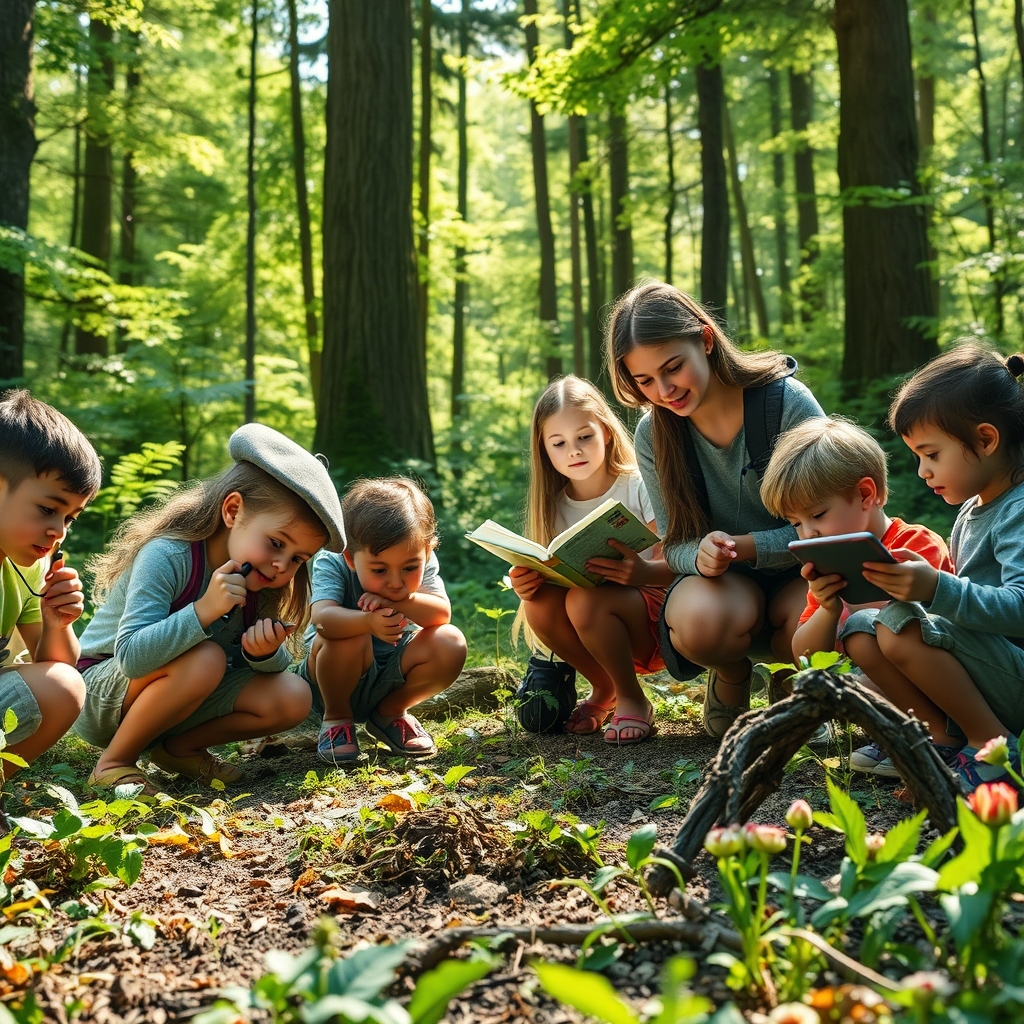
In an era where screens dominate attention and concrete jungles replace green spaces, the call to reconnect children with nature has never been more urgent. Environmental science classrooms are evolving beyond textbooks and lab experiments, embracing hands-on nature study as a cornerstone of modern education. This shift isn’t just about teaching facts—it’s about fostering a deep, personal relationship with the natural world that inspires curiosity, empathy, and action.
The Limitations of Traditional Environmental Education
For decades, environmental science has been taught through diagrams of ecosystems, memorization of biomes, and occasional field trips that feel more like obligatory outings than meaningful learning experiences. While these methods impart knowledge, they often fail to cultivate the emotional and ethical connections necessary for true eco-literacy. Students may learn about deforestation but never feel the texture of bark or hear the rustle of leaves in the wind. They might study climate change but never witness the delicate balance of a pond ecosystem firsthand.
This disconnect is where hands-on nature study steps in, transforming passive learning into an immersive, multisensory experience. By stepping outside the classroom, students engage with the environment in ways that textbooks simply cannot replicate. The scent of damp earth after rain, the sight of a spider weaving its web, or the sound of birds calling at dawn—these experiences awaken a sense of wonder that no lecture can evoke.
Core Principles of Hands-On Nature Study
At its heart, hands-on nature study is about observation, inquiry, and interaction. It encourages students to ask questions, make predictions, and test hypotheses in real-world settings. For example, rather than reading about the water cycle, students might track rainfall in their schoolyard, measure evaporation rates, and observe how plants respond to moisture. These activities not only reinforce scientific concepts but also develop critical thinking and problem-solving skills.
Another key principle is place-based learning, which grounds education in the local environment. Students explore the ecosystems, history, and culture of their own communities, fostering a sense of stewardship for the land they inhabit. A classroom in a coastal town might focus on marine biology and ocean conservation, while one in a forested region could delve into forest ecology and sustainable logging practices. This localized approach makes learning relevant and personal, ensuring that students see themselves as active participants in their environment rather than distant observers.
Integrating Technology Without Losing Touch
Some might argue that technology and nature are at odds, but hands-on nature study proves they can coexist harmoniously. Digital tools like apps for identifying plants and animals, GPS devices for mapping trails, or cameras for documenting wildlife can enhance outdoor learning without detracting from the experience. For instance, students might use a tablet to record observations in a digital journal, then analyze their data back in the classroom. These tools bridge the gap between the natural world and the digital one, preparing students for a future where both are integral to their lives.
Building Eco-Literacy Through Experience
Eco-literacy goes beyond understanding environmental issues—it’s about developing the skills and values needed to live sustainably. Hands-on nature study cultivates this literacy by immersing students in the rhythms and cycles of the natural world. They learn to recognize patterns, such as the seasonal changes in plant life or the migration habits of birds, and understand their role in these systems. This awareness fosters a sense of responsibility, as students begin to see how their actions—whether it’s reducing waste or planting a tree—can have a tangible impact.
Programs like forest kindergartens and bushcraft courses take this a step further by teaching wilderness survival skills. Children learn to build shelters, start fires, and forage for food, gaining confidence and self-reliance while deepening their connection to nature. These skills are not just practical; they instill a sense of resilience and adaptability that serves students well beyond the classroom. When children know how to navigate the natural world, they develop a sense of agency that empowers them to tackle challenges, both environmental and personal.
The Role of Sensory Play in Learning
Sensory play is a powerful tool in hands-on nature study, particularly for younger learners. Activities like digging in the soil, splashing in puddles, or collecting leaves engage multiple senses, creating rich, memorable experiences. These activities are not just fun—they lay the foundation for scientific inquiry by encouraging children to explore, experiment, and discover. A child who spends an afternoon observing ants marching in a line may later develop an interest in entomology, while one who plants seeds and watches them grow might become passionate about botany or agriculture.
Sensory play also supports holistic development, nurturing emotional and social skills alongside academic ones. Outdoor environments provide a space for children to collaborate, communicate, and resolve conflicts, whether they’re building a fort together or negotiating who gets to hold the magnifying glass next. These interactions build empathy and cooperation, qualities that are essential for addressing the complex environmental challenges of the future.
Sustainable Education Models for the Future
As schools seek to adopt more sustainable practices, hands-on nature study offers a model that aligns education with environmental values. Green school initiatives, such as installing solar panels, creating school gardens, or implementing zero-waste policies, provide real-world contexts for learning. Students don’t just study sustainability—they live it, seeing firsthand how their school can reduce its ecological footprint. These initiatives also create opportunities for interdisciplinary learning, where science, math, and social studies intersect in meaningful ways.
For example, a school garden project might involve calculating the area of planting beds (math), studying the life cycles of plants (science), and researching the cultural significance of the crops being grown (social studies). These projects teach students that environmental issues are not isolated but interconnected, requiring a multifaceted approach to solve. By participating in these initiatives, students gain the skills and mindset needed to become leaders in sustainability.
Overcoming Challenges in Implementation
Despite its benefits, integrating hands-on nature study into the curriculum is not without challenges. Schools may face logistical hurdles, such as limited access to natural spaces, safety concerns, or resistance from stakeholders who view outdoor learning as less rigorous than traditional methods. However, these challenges can be overcome with creativity and planning. Urban schools, for instance, can transform rooftops, courtyards, or even window sills into green spaces for exploration. Partnerships with local parks, nature reserves, or environmental organizations can provide access to larger ecosystems for field trips and projects.
Teacher training is another critical factor. Educators need support to design and facilitate outdoor learning experiences that align with curriculum standards while fostering a love for nature. Professional development programs that focus on place-based education, outdoor pedagogy, and eco-literacy can equip teachers with the tools they need to bring the classroom outside. When educators feel confident and inspired, they can pass that enthusiasm on to their students.
As the world grapples with environmental crises, the need for eco-literate citizens has never been greater. Hands-on nature study offers a pathway to cultivate this literacy, transforming environmental science classrooms into dynamic spaces where learning is alive, relevant, and deeply personal. By stepping outside, students don’t just gain knowledge—they develop a relationship with the natural world that will guide them for a lifetime. In the process, they become not just observers of nature, but active participants in its preservation, ensuring that the lessons they learn today will shape a more sustainable tomorrow.



