
The Pulse of Progress: How AI-Driven Personalization and Immersive Tech Are Sculpting the Future of Learning
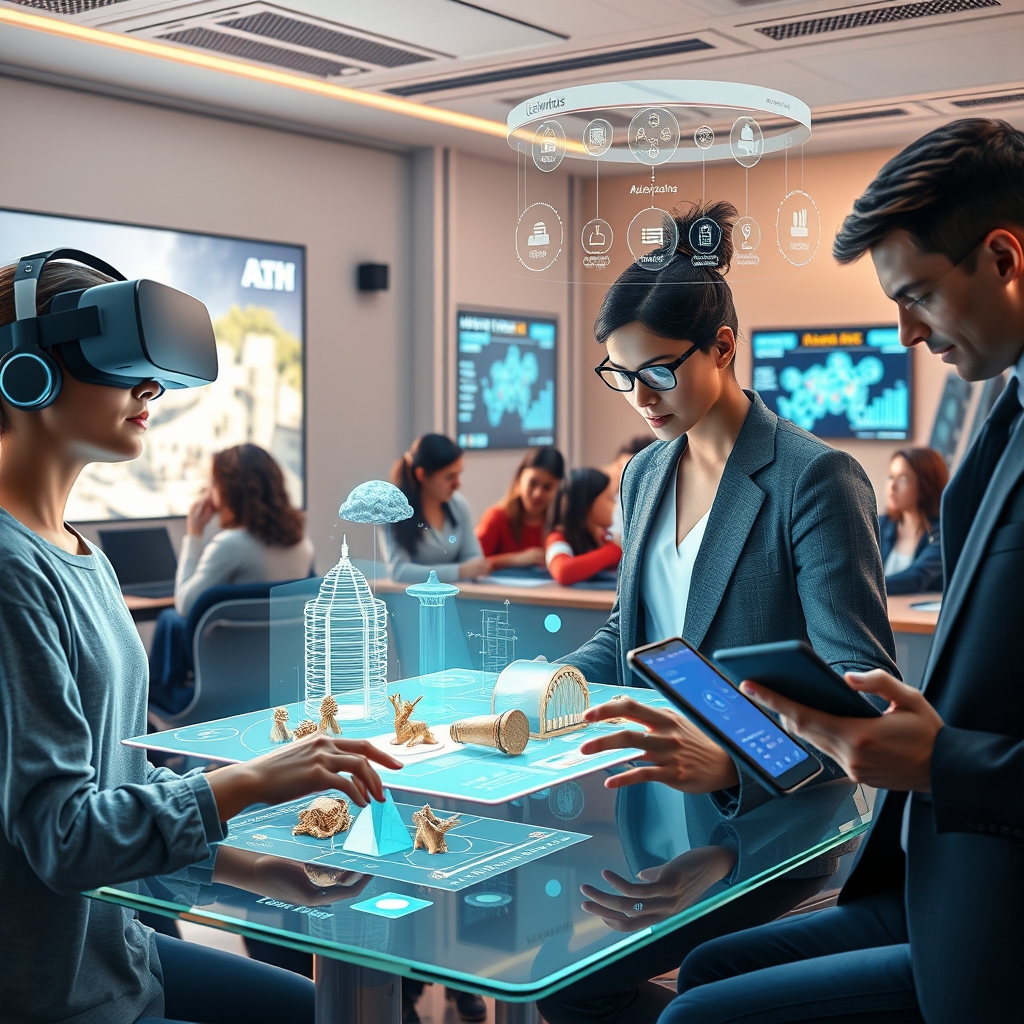
The landscape of education is undergoing a seismic shift, driven by the relentless march of technology and the evolving needs of learners. At the heart of this transformation lies a powerful duo: artificial intelligence and immersive technologies. Together, they are not just reshaping how we learn but redefining what it means to acquire knowledge in a world that demands agility, adaptability, and lifelong curiosity. The classroom of the future is no longer confined to four walls—it is a dynamic, borderless ecosystem where learning adapts to the individual, not the other way around.
The Rise of AI-Powered Personalization
Imagine a learning environment that understands your strengths, identifies your weaknesses, and tailors its approach to fit your unique cognitive fingerprint. This is no longer the stuff of science fiction but the reality of AI-powered personalized learning systems. These intelligent platforms leverage machine learning algorithms to analyze a learner’s interactions, performance, and even emotional responses, adjusting content delivery in real-time to optimize engagement and retention. For instance, adaptive teaching software can dynamically modify the difficulty of quizzes, suggest supplementary resources, or even alter the pacing of lessons based on a student’s progress. The result? A learning experience that feels less like a one-size-fits-all curriculum and more like a bespoke journey crafted just for you.
Companies like Duolingo and Khan Academy have already harnessed the power of AI to create personalized learning paths that evolve with the user. Duolingo’s AI-driven language courses, for example, adapt to a learner’s proficiency, introducing new vocabulary and grammar rules at just the right moment to prevent overwhelm while maintaining challenge. Similarly, Khan Academy’s AI tutors provide instant feedback and hints, ensuring that students grasp concepts before moving forward. These systems are not replacing teachers but augmenting their capabilities, freeing educators to focus on mentorship, creativity, and the human elements of learning that machines cannot replicate.
Immersive Tech: Stepping Into the Learning Experience
While AI personalizes the learning journey, immersive technologies like virtual reality (VR) and augmented reality (AR) are revolutionizing how we interact with knowledge. Virtual reality classrooms transport students to ancient Rome, the surface of Mars, or the depths of the ocean, turning abstract concepts into tangible, memorable experiences. AR, on the other hand, overlays digital information onto the physical world, transforming a simple textbook into an interactive gateway to deeper understanding. Imagine dissecting a virtual frog in biology class or walking through a 3D model of the human heart—these are the kinds of experiences that make learning visceral and unforgettable.
In corporate training, VR is being used to simulate high-stakes environments, from medical surgeries to emergency response scenarios, allowing employees to practice and refine their skills in a risk-free setting. Companies like Walmart and Boeing have adopted VR training programs to prepare their workforce for real-world challenges, reducing errors and improving confidence. Meanwhile, AR is enhancing on-the-job learning by providing workers with real-time guidance and information. For example, a technician repairing complex machinery can use AR glasses to overlay step-by-step instructions onto their field of vision, streamlining the learning process and reducing downtime.
The Gamification of Learning
Gamification is another powerful tool in the modern educator’s arsenal, leveraging the inherent human love of play to make learning more engaging and effective. By incorporating game-like elements such as points, badges, leaderboards, and challenges into educational content, gamification taps into our natural desire for achievement and competition. This approach is particularly effective in mobile learning apps and microlearning courses, where bite-sized lessons and instant feedback keep learners motivated and on track.
Platforms like Kahoot! and Quizlet have successfully gamified learning, turning quizzes and flashcards into interactive, social experiences. In corporate settings, gamification is being used to boost employee engagement in training programs. For example, Deloitte’s leadership training program incorporates gamified elements to encourage participation and track progress, resulting in higher completion rates and improved knowledge retention. The key to successful gamification lies in striking the right balance between challenge and reward, ensuring that learners remain motivated without feeling overwhelmed.
Micro-Credentials and the Future of Skill Validation
As the pace of technological change accelerates, the traditional model of education—where learning is front-loaded into the early years of life—is becoming increasingly outdated. Enter micro-credentials and digital badges, a flexible and modular approach to skill validation that allows learners to acquire and demonstrate expertise in specific areas as needed. These credentials are particularly valuable in industries where skills evolve rapidly, such as technology, healthcare, and digital marketing. By breaking down learning into smaller, more manageable chunks, micro-credentials enable professionals to upskill or reskill without committing to lengthy degree programs.
Platforms like Coursera, Udacity, and edX offer micro-credentials in partnership with universities and industry leaders, providing learners with recognized certifications that can enhance their career prospects. For example, Google’s IT Support Professional Certificate, offered through Coursera, equips learners with in-demand skills in less than six months, opening doors to entry-level IT jobs. Digital badges, meanwhile, serve as portable, verifiable proof of skills and achievements, allowing learners to showcase their expertise on platforms like LinkedIn or personal portfolios. This shift toward skill-based certifications reflects a broader trend in education: the move from degrees to competencies, where what you know matters more than where or how you learned it.
Hybrid Learning: The Best of Both Worlds
The COVID-19 pandemic accelerated the adoption of online learning, but it also highlighted the limitations of a purely digital approach. Enter hybrid learning models, which blend the flexibility of online education with the engagement of in-person instruction. These models leverage technology to create seamless learning experiences that adapt to the needs of students, whether they are in a classroom, at home, or on the go. Hybrid learning is not just about mixing online and offline elements—it’s about creating a cohesive, integrated experience where technology enhances rather than replaces human interaction.
For example, flipped classrooms invert the traditional learning model by delivering instructional content online, freeing up in-person class time for discussion, collaboration, and hands-on activities. This approach allows students to learn at their own pace while benefiting from the guidance and support of their peers and instructors. Similarly, blended learning solutions combine synchronous and asynchronous elements, giving learners the flexibility to access content when and where it suits them while still providing opportunities for real-time interaction and feedback.
The Role of Mobile Learning in a Connected World
In an era where smartphones are ubiquitous, mobile learning apps are democratizing access to education, making it possible for anyone with a device and an internet connection to learn anytime, anywhere. These apps cater to the modern learner’s need for flexibility, offering bite-sized lessons, interactive content, and on-the-go access to resources. Whether it’s learning a new language with Duolingo, mastering coding with SoloLearn, or preparing for exams with Quizlet, mobile learning apps are putting education literally in the palm of our hands.
Corporate training programs are also embracing mobile learning to deliver just-in-time training to employees. For example, sales teams can access product training modules on their phones before client meetings, while field technicians can use mobile apps to troubleshoot issues on the spot. The rise of microlearning—short, focused lessons that can be completed in minutes—has further enhanced the effectiveness of mobile learning, making it easier for busy professionals to fit education into their schedules.
The future of learning is not a distant dream but a present reality, unfolding before our eyes in classrooms, boardrooms, and living rooms around the world. As AI-driven personalization, immersive technologies, and flexible learning models continue to evolve, they are breaking down the barriers of traditional education, making learning more accessible, engaging, and effective than ever before. The question is no longer whether these innovations will transform education but how quickly we can adapt to harness their full potential. In this new era, the only limit to what we can learn is the depth of our curiosity and the willingness to embrace change.



