
The Evolution of Learning: How Open Schools and Adaptive Strategies Are Cultivating Lifelong Learners
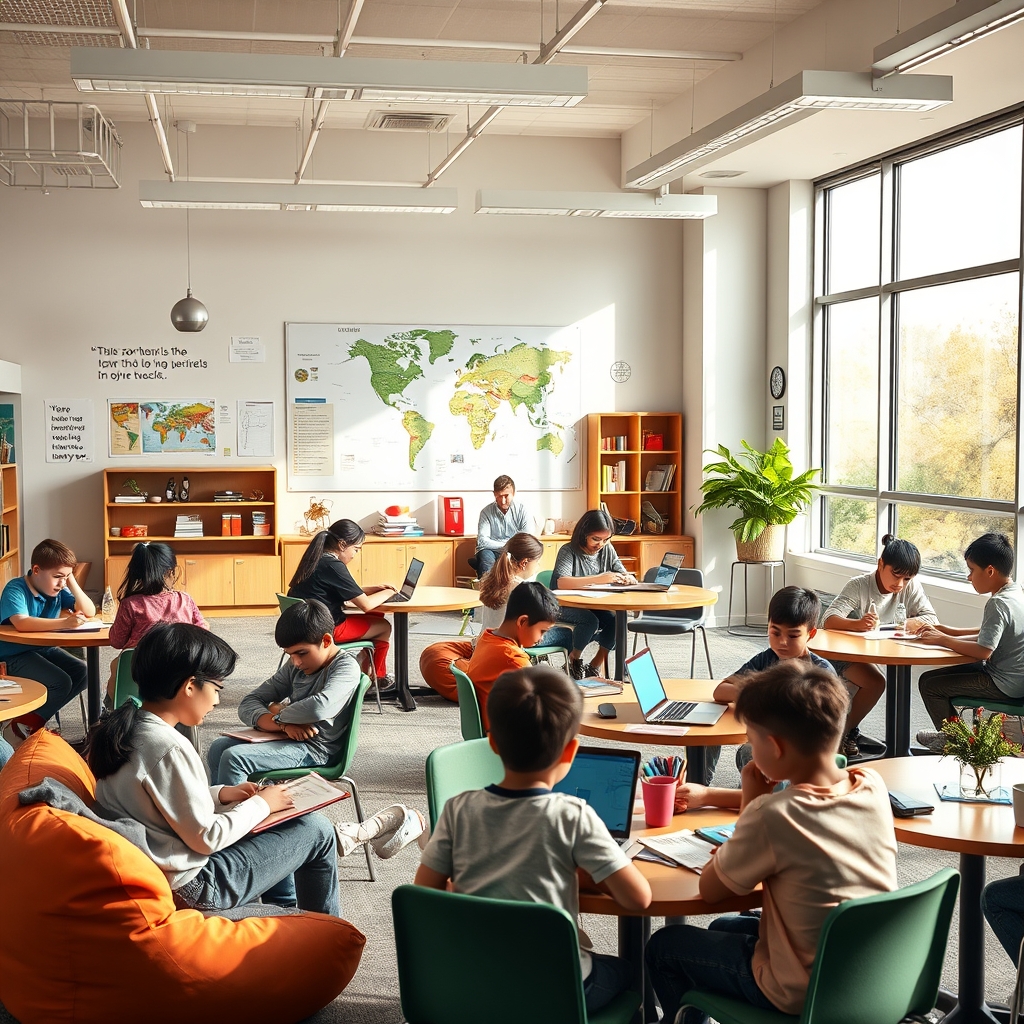
Education is no longer confined to rigid structures and one-size-fits-all approaches. As society evolves, so too does the way we think about learning, with open schools and adaptive teaching strategies leading the charge toward a more inclusive, dynamic, and student-centered future. These models are not just alternatives to traditional education—they are redefining what it means to learn, grow, and thrive in an ever-changing world.
The Core Philosophy of Open Schools
At the heart of open schools lies a fundamental belief: education should be as unique as the individuals it serves. Unlike conventional systems that prioritize standardized testing and uniform curricula, open schools embrace flexibility, autonomy, and personalization. The open school definition extends beyond physical spaces—it represents a mindset that values curiosity, critical thinking, and self-directed exploration. Students are encouraged to take ownership of their learning, guided by educators who act as facilitators rather than authoritarian figures.
This approach is particularly powerful in fostering lifelong learning skills. When students are given the freedom to pursue their interests and learn at their own pace, they develop intrinsic motivation—a key driver of continuous growth. Open schools often integrate open educational resources (OER), which provide accessible, high-quality materials that students can engage with independently or in collaborative settings. This democratization of knowledge ensures that learning is not limited by financial or geographical barriers.
Flexible Curriculum and Self-Paced Education: A Perfect Pair
One of the most transformative aspects of open schooling is its flexible curriculum. Unlike traditional models that follow a linear, time-bound progression, open schools allow students to move through material at a pace that suits their individual needs. This self-paced education model is especially beneficial for learners who may struggle with the constraints of a fixed schedule, whether due to learning differences, personal circumstances, or simply a desire to dive deeper into certain subjects.
For example, a student passionate about environmental science might spend weeks exploring experiential learning projects in their community, while another might focus on mastering foundational math skills before advancing. This adaptability ensures that no student is left behind or held back by arbitrary timelines. It also aligns with competency-based progression, where advancement is tied to mastery rather than seat time. This shift not only boosts confidence but also prepares students for real-world challenges where adaptability and problem-solving are paramount.
Student-Centered Learning in Action
Student-centered learning is more than a buzzword—it’s a paradigm shift that places the learner at the center of the educational experience. In open schools, this manifests through personalized study plans, which are co-created by students and educators to reflect individual goals, strengths, and areas for growth. These plans often incorporate a mix of independent study programs, collaborative group work, and autonomous student research, allowing learners to explore topics in ways that resonate with them.
Take democratic schooling, for instance, where students have a say in the rules, curriculum, and governance of their learning environment. This model fosters a sense of responsibility and agency, as students learn to navigate decision-making processes and advocate for their needs. Similarly, hybrid learning spaces blend physical and digital environments, offering flexibility for students to engage with material in ways that suit their learning styles—whether through hands-on projects, virtual simulations, or community-based initiatives.
Inclusive Classroom Design and Holistic Development
Open schools are also redefining what it means to create an inclusive classroom. Traditional education often struggles to accommodate diverse learning needs, but open schools prioritize inclusive classroom design by removing barriers to participation. This might involve flexible seating arrangements, sensory-friendly spaces, or the integration of assistive technologies. The goal is to create an environment where every student feels seen, supported, and empowered to succeed.
Beyond academics, open schools emphasize holistic student development. This means nurturing not just cognitive skills but also social-emotional growth, creativity, and practical life skills. Community-based education plays a key role here, as students engage with local organizations, mentors, and real-world challenges. Whether through internships, service-learning projects, or interdisciplinary collaborations, these experiences help students connect their learning to the world around them, fostering a sense of purpose and belonging.
The Role of Educators in Adaptive Teaching Strategies
In open schools, educators wear many hats—mentor, guide, facilitator, and co-learner. Their role is not to dictate knowledge but to cultivate an environment where curiosity can flourish. This requires a deep understanding of adaptive teaching strategies, which involve tailoring instruction to meet the diverse needs of students. Techniques such as differentiated instruction, scaffolding, and formative assessment ensure that every learner receives the support they need to thrive.
For example, an educator might use project-based learning to help students explore a topic through hands-on inquiry, or they might leverage open educational resources to provide multiple entry points for a lesson. The focus is on process over product, with an emphasis on reflection, iteration, and growth. This approach not only enhances academic outcomes but also builds resilience and a love for learning that extends far beyond the classroom.
As education continues to evolve, open schools and adaptive strategies offer a compelling vision for the future—one where learning is personalized, inclusive, and deeply connected to the world. By embracing flexibility, autonomy, and student-centered principles, these models are not just preparing students for the challenges ahead but empowering them to shape the future themselves. The journey of learning is no longer a straight path but an open road, rich with possibilities and guided by the unique passions and potential of every learner.



