
The Heart of Open Schooling: Where Autonomy Meets Adaptive Learning for Every Student
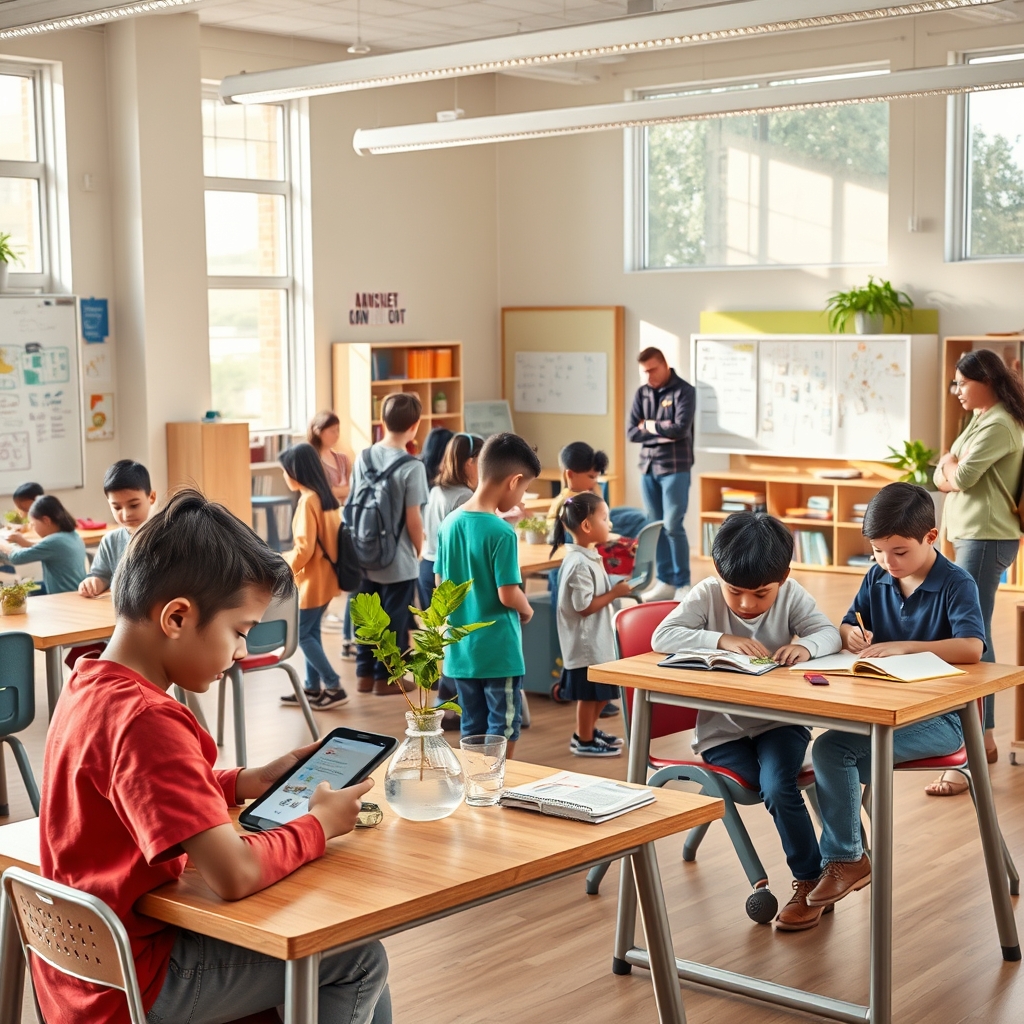
Education is no longer confined to rigid schedules, standardized tests, or one-size-fits-all lesson plans. The rise of open schooling models has ushered in a new era where learning is as unique as the students themselves. At the core of this transformation lies a simple yet profound idea: education should adapt to the learner, not the other way around. Open schools are redefining what it means to learn by prioritizing flexible curriculum, self-paced education, and student-centered learning, creating environments where every individual can thrive on their own terms.
The Philosophy Behind Open Schooling
Open schooling is more than just an alternative to traditional education—it’s a philosophy that challenges the very foundations of how we perceive learning. Unlike conventional models that emphasize uniformity, open schools operate on the principle that education should be personalized, inclusive, and autonomous. This approach is rooted in the belief that students are not empty vessels to be filled with information but active participants in their own growth. By shifting the focus from teaching to learning, open schools empower students to take ownership of their education, fostering a sense of agency that extends far beyond the classroom.
The open school definition varies across institutions, but common threads include democratic schooling, where students have a voice in decision-making, and competency-based progression, where mastery—not time spent in a seat—determines advancement. These models often incorporate experiential learning projects, allowing students to apply knowledge in real-world contexts, and collaborative group work, which builds essential social and emotional skills. The result is a dynamic, responsive educational experience that meets students where they are, rather than forcing them into a predetermined mold.
Designing Flexible and Inclusive Learning Spaces
One of the most striking features of open schools is their commitment to inclusive classroom design. Traditional classrooms, with their rows of desks and fixed schedules, often struggle to accommodate diverse learning needs. In contrast, open schools prioritize hybrid learning spaces that blend physical and digital environments, offering students the freedom to learn in ways that suit them best. Whether through independent study programs, autonomous student research, or community-based education, these spaces are designed to be adaptable, accessible, and engaging for all.
For example, a student with a passion for environmental science might spend part of their week conducting fieldwork in a local park, another part collaborating with peers on a sustainability project, and the remainder diving into open educational resources (OER) to deepen their understanding. Meanwhile, a student who thrives in a quieter, more structured setting might work through a personalized study plan at their own pace, with the support of mentors and adaptive tools. This flexibility ensures that learning is not just inclusive but also deeply personal, catering to individual strengths, interests, and needs.
The Role of Educators in an Open School
In open schooling, the role of educators shifts from that of a traditional instructor to a facilitator, guide, and co-learner. Teachers in these environments are less concerned with delivering content and more focused on nurturing lifelong learning skills—such as critical thinking, creativity, and resilience—that students will carry with them long after they leave the classroom. This requires a mastery of adaptive teaching strategies, where educators tailor their approach to each student’s evolving needs, rather than adhering to a rigid curriculum.
For instance, an educator might use project-based learning to help students explore a topic in depth, or they might leverage competency-based progression to ensure that students fully grasp a concept before moving on. They might also encourage autonomous student research, where learners pursue questions that ignite their curiosity, or facilitate collaborative group work to build teamwork and communication skills. In this way, educators become partners in the learning process, helping students navigate their educational journey with confidence and purpose.
Beyond the Classroom: The Impact of Open Schooling
The benefits of open schooling extend far beyond academic achievement. By prioritizing holistic student development, these models help students cultivate the emotional, social, and practical skills needed to navigate an increasingly complex world. Students in open schools often report higher levels of engagement, motivation, and self-efficacy, as they are given the freedom to explore their passions and learn in ways that resonate with them. This sense of ownership over their education fosters a love of learning that persists long after graduation.
Moreover, open schools often serve as hubs for community-based education, bridging the gap between the classroom and the real world. Whether through partnerships with local organizations, internships, or service-learning projects, students gain firsthand experience in applying their knowledge to solve real-world problems. This not only enriches their learning but also strengthens their connection to the community, reinforcing the idea that education is not just about personal growth but also about contributing to something greater than oneself.
The Future of Learning: A Shift Toward Autonomy and Adaptability
As the world continues to evolve at a rapid pace, the demand for educational models that can keep up has never been greater. Open schools represent a bold step toward a future where learning is not just a means to an end but a lifelong journey of discovery. By embracing flexible curriculum, self-paced education, and student-centered learning, these models are proving that education can—and should—be as unique as the individuals it serves. The shift toward autonomy and adaptability is not just a trend but a necessary evolution, one that holds the promise of unlocking the full potential of every learner, regardless of where they begin.
In a world where change is the only constant, the ability to learn, unlearn, and relearn is perhaps the most valuable skill of all. Open schools are not just preparing students for the future; they are helping them shape it, one personalized, adaptive, and empowering learning experience at a time. The question is no longer whether education can adapt to the needs of students, but how quickly we can embrace models that make this a reality for all.



