
The Silent Revolutionaries: How AI, Microlearning, and Virtual Reality Are Crafting the Future of Corporate Upskilling
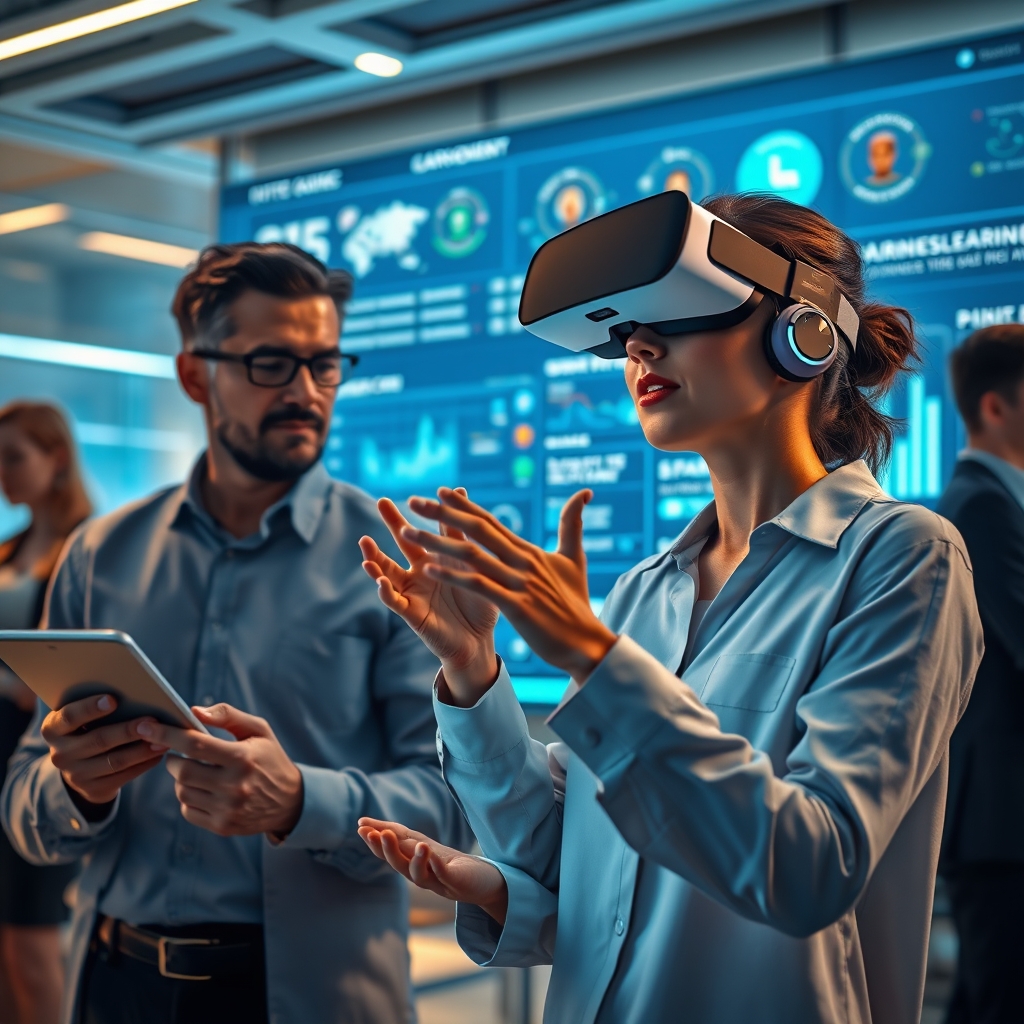
The corporate world is undergoing a seismic shift, one where the traditional models of employee training are being dismantled and rebuilt with the precision of a master craftsman. At the heart of this transformation lies a trio of silent revolutionaries: artificial intelligence, microlearning, and virtual reality. These technologies are not just enhancing the way employees learn; they are redefining the very fabric of corporate upskilling, making it more agile, personalized, and immersive than ever before.
The AI-Powered Paradigm Shift
Artificial intelligence has emerged as the cornerstone of modern corporate training, acting as the invisible hand that guides employees through their learning journeys. Unlike the one-size-fits-all approach of yesteryears, AI-powered learning systems analyze individual performance, preferences, and knowledge gaps to deliver tailored content. This adaptive teaching software ensures that no two learning paths are identical, allowing employees to progress at their own pace while focusing on areas that need the most attention.
For instance, AI-driven platforms can identify when an employee struggles with a particular concept and automatically adjust the difficulty level or provide additional resources. This level of personalization not only boosts engagement but also significantly improves retention rates. Companies like IBM and Google have already integrated AI into their training programs, reporting a marked increase in employee productivity and job satisfaction.
Microlearning: Bite-Sized Wisdom for the Modern Workforce
In an era where attention spans are shrinking and workloads are expanding, microlearning has emerged as a game-changer. This approach breaks down complex topics into bite-sized, easily digestible modules that can be completed in minutes. Whether it’s a short video, an interactive quiz, or a quick simulation, microlearning fits seamlessly into the busy schedules of today’s professionals.
The beauty of microlearning lies in its flexibility. Employees can access these modules on their mobile learning apps during a coffee break, a commute, or even between meetings. This on-demand access ensures that learning is not confined to a classroom or a specific time slot but is instead woven into the fabric of daily work life. Moreover, microlearning aligns perfectly with the principles of spaced repetition, a technique proven to enhance long-term retention.
Virtual Reality: Stepping Into the Future of Training
While AI and microlearning address the “what” and “how” of learning, virtual reality (VR) transforms the “where.” VR classrooms are no longer a futuristic concept but a tangible reality that is revolutionizing corporate training. By simulating real-world scenarios, VR allows employees to practice and hone their skills in a risk-free environment. Whether it’s a surgeon rehearsing a complex procedure, a salesperson practicing a pitch, or a technician troubleshooting machinery, VR provides an unparalleled level of immersion.
Companies like Walmart and Boeing have already adopted VR for employee training, reporting not only improved performance but also a reduction in training costs. The ability to replicate high-stakes situations without real-world consequences makes VR an invaluable tool for industries where precision and safety are paramount. Furthermore, VR’s gamified elements—such as earning points or unlocking achievements—add a layer of engagement that traditional training methods simply cannot match.
The Synergy of Hybrid Learning Models
The true power of these technologies lies in their synergy. Hybrid learning models, which blend AI, microlearning, and VR, are creating dynamic and flexible learning paths that cater to the diverse needs of the modern workforce. For example, an employee might start their day with a microlearning module on their mobile app, attend a VR simulation in the afternoon, and receive AI-driven feedback on their performance by evening. This seamless integration ensures that learning is continuous, engaging, and deeply personalized.
Hybrid models also bridge the gap between theoretical knowledge and practical application. While microlearning provides the foundational concepts, VR allows employees to apply what they’ve learned in realistic scenarios. AI, in turn, acts as the glue that binds these experiences together, offering insights and recommendations to further refine skills. This holistic approach not only accelerates learning but also fosters a culture of continuous improvement within organizations.
Digital Badges and Micro-Credentials: The New Currency of Skill Validation
As the corporate training landscape evolves, so too does the way we validate and recognize skills. Digital badges and micro-credentials have emerged as the new currency of professional development, offering a tangible way to showcase expertise. Unlike traditional degrees or certifications, which can take years to earn, micro-credentials can be obtained in a matter of weeks or even days, making them ideal for the fast-paced corporate world.
Platforms like Coursera, LinkedIn Learning, and Udacity have embraced this trend, offering micro-credentials in everything from data science to project management. These badges are not just symbols of achievement; they are verifiable credentials that can be shared on professional networks, resumes, and even social media. For employers, they provide a clear and concise way to assess an employee’s skills, while for employees, they offer a pathway to career advancement and lifelong learning.
The Role of Gamification in Corporate Training
Gamification is another silent revolutionary that is transforming corporate training. By incorporating game-like elements—such as leaderboards, badges, and challenges—into learning programs, companies can boost engagement and motivation. Gamification taps into the innate human desire for competition and achievement, making learning feel less like a chore and more like an adventure.
For example, a sales team might compete in a virtual leaderboard to see who can close the most deals in a simulated environment. The top performers could earn digital badges or even real-world rewards, such as bonuses or promotions. This approach not only makes training more enjoyable but also fosters a sense of camaraderie and healthy competition among employees.
The future of corporate upskilling is not a distant dream but a present reality, shaped by the silent revolutionaries of AI, microlearning, and virtual reality. These technologies are not just tools but catalysts for change, enabling organizations to create learning experiences that are as dynamic and diverse as the workforce they serve. As companies continue to embrace these innovations, the line between learning and working will blur, giving rise to a new era where upskilling is not just a requirement but a natural and continuous part of professional growth. The question is no longer whether these technologies will reshape corporate training but how quickly organizations can adapt to harness their full potential.



