
Breathing Lessons: How Eco-Literacy Development Flourishes in the Heart of the Wild
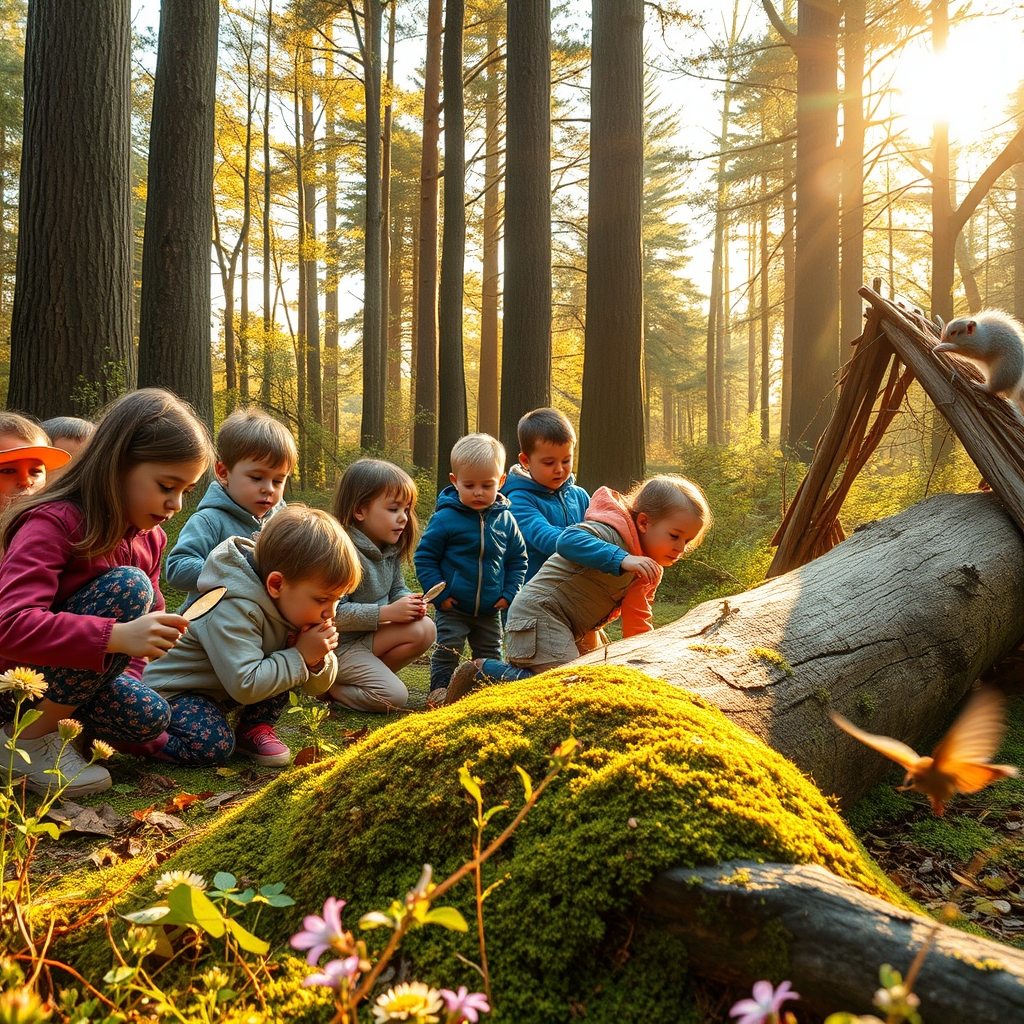
There is a quiet revolution unfolding in the dappled light of woodlands and along the meandering banks of streams, where the boundaries of traditional education dissolve into the vast, untamed classroom of the natural world. Here, children are not merely learning about ecosystems—they are becoming part of them, their senses awakened by the rustle of leaves, the scent of damp earth, and the distant call of a bird. This is the essence of eco-literacy development, a journey that transcends textbooks and standardized tests, inviting young minds to engage with the environment in ways that are as profound as they are playful.
The Roots of Eco-Literacy: More Than Just Science
Eco-literacy is often mistaken for a branch of environmental science, confined to the study of food chains, carbon cycles, or the anatomy of a leaf. Yet, its true depth lies in the ability to perceive the interconnectedness of all living things—a web of relationships that extends beyond facts and figures. Nature school curricula and forest kindergarten programs are redefining this concept by integrating outdoor experiential education into the very fabric of learning. Children who once memorized the stages of photosynthesis now kneel in the soil, tracing the veins of a leaf with their fingers, feeling the pulse of life beneath their fingertips.
This shift from abstract knowledge to embodied understanding is at the heart of place-based learning. When a child plants a seed and watches it sprout, they are not just observing growth—they are forming a relationship with the earth. They learn patience as they wait for rain, responsibility as they tend to their tiny sapling, and awe as they witness the first unfurling of a leaf. These are the lessons that textbooks cannot teach, the ones that linger long after the school bell rings.
The Forest as a Living Laboratory
Imagine a classroom where the walls are towering oaks, the ceiling is a canopy of shifting light, and the curriculum is written in the language of wind and water. Forest school methodology transforms the natural world into a dynamic laboratory, where every rock, stream, and creature becomes a teacher. Children in these programs are not passive recipients of information; they are active participants in their own education, their curiosity fueled by the endless mysteries of the wild.
Wilderness survival skills, for instance, are not taught as isolated drills but as a means of deepening connection to the land. A child learning to build a shelter from fallen branches is not just mastering a practical skill—they are learning to listen to the forest, to understand its rhythms, and to respect its resources. Similarly, wildlife observation skills become a gateway to empathy, as children track the movements of a fox or the flight of a butterfly, stepping into the lives of creatures they might otherwise overlook. These experiences cultivate a sense of stewardship, a recognition that the health of the planet is intertwined with their own.
The Alchemy of Sensory Play
In a world dominated by screens and structured schedules, outdoor sensory play offers a radical alternative—a return to the unstructured, immersive experiences that shaped human development for millennia. Forest kindergartens, with their emphasis on free exploration, allow children to engage with the natural world on their own terms. A puddle becomes a portal to another world, a stick transforms into a magic wand, and a pile of leaves is a treasure trove waiting to be discovered. These moments of unscripted play are not frivolous; they are the building blocks of creativity, problem-solving, and emotional resilience.
Sensory play also lays the foundation for eco-literacy by sharpening a child’s ability to observe and interpret the world around them. The texture of bark, the sound of a brook, the taste of a wild berry—these sensory inputs create a rich tapestry of experiences that deepen a child’s understanding of their environment. Over time, this awareness evolves into a form of ecological intelligence, a way of thinking that recognizes the delicate balance of ecosystems and the role humans play within them.
From Awareness to Action: The Ripple Effect of Eco-Literacy
The ultimate goal of eco-literacy development is not just to create informed individuals but to nurture a generation of changemakers—children who see themselves as part of the solution rather than the problem. Green school initiatives and conservation-focused learning are designed to bridge the gap between knowledge and action, empowering students to apply what they’ve learned in meaningful ways. Whether it’s organizing a school-wide recycling program, restoring a local wetland, or advocating for policies that protect endangered species, these young eco-literates are proving that education can be a catalyst for real-world impact.
One of the most powerful tools in this transformation is storytelling. When children share their experiences—whether through art, writing, or conversation—they reinforce their connection to the natural world and inspire others to see it with fresh eyes. A child who has spent hours tracking deer in the forest might return to the classroom and write a poem about the quiet grace of the animal, or create a painting that captures the play of light through the trees. These creative expressions not only deepen their own understanding but also ripple outward, touching the hearts of peers, teachers, and even parents.
The Role of Educators: Guides, Not Gatekeepers
The success of nature-based education hinges on the role of educators, who must shift from being the sole source of knowledge to becoming facilitators of discovery. In the wild, there are no lesson plans set in stone, no rigid timelines to follow. Instead, teachers must cultivate a sense of wonder, guiding children toward their own insights rather than dictating what they should learn. This requires a deep trust in the natural world as a teacher, a willingness to embrace uncertainty, and a commitment to fostering curiosity over compliance.
Holistic outdoor teaching also demands a certain humility, an acknowledgment that the educator is a learner too. A teacher who kneels beside a child to examine a mushroom, or who admits they don’t know the name of a bird, models a growth mindset that values exploration over expertise. In this way, the classroom becomes a collaborative space, where knowledge is co-created rather than handed down.
The magic of eco-literacy development lies in its ability to transform the way children see the world—and themselves within it. It is not a subject to be mastered but a way of being, a lens through which every experience is filtered. When a child learns to read the stories written in the land, they begin to understand that they, too, are part of that narrative. The forest is no longer a place to visit but a home to cherish, a living entity that speaks in whispers and wonders. And in that quiet revelation, the seeds of a more sustainable future are sown, one curious mind at a time.



