
The Synergy of Tomorrow: How AI, Virtual Reality, and Micro-Credentials Are Crafting the Next-Gen Learning Experience
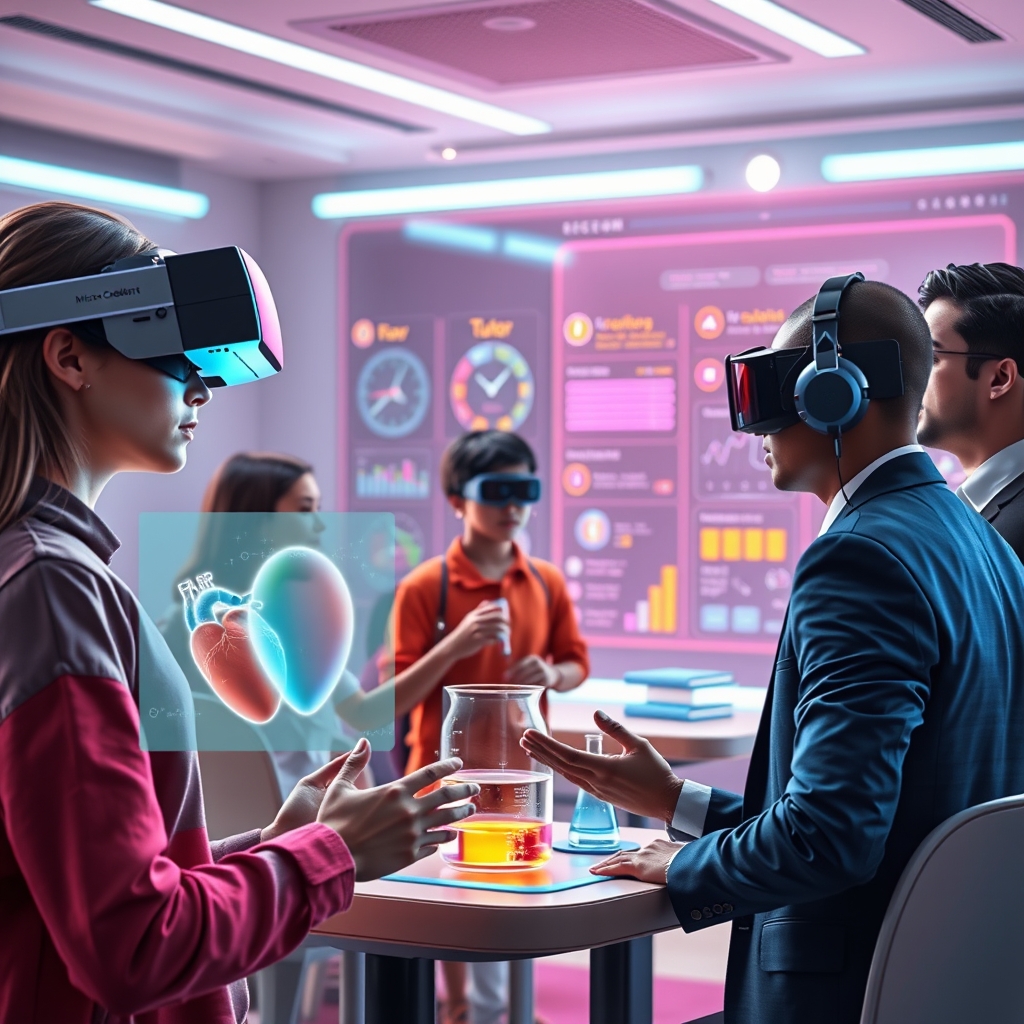
The landscape of education is undergoing a seismic shift, propelled by the convergence of artificial intelligence (AI), virtual reality (VR), and micro-credentials. These innovations are not merely enhancing traditional learning methods but are fundamentally reimagining how knowledge is acquired, validated, and applied. As we stand on the precipice of this transformation, it’s essential to explore how these technologies are intertwining to create a learning ecosystem that is as dynamic as it is inclusive.
The Rise of Immersive Learning Environments
Virtual reality classrooms are no longer a futuristic concept but a tangible reality reshaping the educational experience. By simulating real-world environments, VR allows learners to engage with complex subjects in ways that were previously unimaginable. Imagine a medical student performing virtual surgeries, an architect walking through a 3D model of their design, or a history student exploring ancient civilizations as if they were there. These immersive experiences transcend the limitations of textbooks and lectures, fostering deeper understanding and retention.
Augmented reality (AR) further complements this by overlaying digital information onto the physical world. Whether it’s a biology student dissecting a virtual frog on their desk or an engineer visualizing the inner workings of a machine, AR bridges the gap between theory and practice. Together, VR and AR are creating a new paradigm where learning is not just observed but experienced.
The Power of AI-Driven Personalization
At the heart of this educational revolution is AI, which is enabling personalized learning systems to adapt to the unique needs of each learner. Unlike the one-size-fits-all approach of traditional education, AI-powered platforms analyze a student’s strengths, weaknesses, and learning pace to tailor content accordingly. This adaptive teaching software ensures that no learner is left behind, whether they need additional support or are ready to accelerate their progress.
Virtual tutors, powered by AI, are another game-changer. These digital mentors provide real-time feedback, answer questions, and even anticipate areas where a student might struggle. By offering 24/7 support, they democratize access to quality education, making it possible for learners in remote or underserved regions to receive the same level of guidance as those in urban centers. The result is a more equitable learning environment where potential is unlocked, not constrained by geography or resources.
The Validation of Skills Through Micro-Credentials
As the demand for lifelong learning grows, so does the need for flexible and recognized validation of skills. Enter micro-credentials and digital badges, which are revolutionizing how achievements are measured and acknowledged. Unlike traditional degrees, which often take years to complete, micro-credentials focus on specific competencies and can be earned in a matter of weeks or months. This modular approach allows learners to build their expertise incrementally, aligning their education with the evolving demands of the workforce.
Digital badges, in particular, are gaining traction as a portable and verifiable way to showcase skills. Backed by blockchain technology, these badges provide a tamper-proof record of a learner’s accomplishments, making them valuable assets in a competitive job market. For employers, they offer a clear and efficient way to assess a candidate’s capabilities, reducing the reliance on outdated metrics like GPAs or years of experience.
Gamification: Making Learning Engaging and Effective
Gamification is another powerful tool transforming education by making learning interactive and enjoyable. By incorporating elements like points, leaderboards, and challenges, educational platforms are tapping into the innate human desire for achievement and competition. This approach not only boosts engagement but also enhances motivation, as learners are rewarded for their progress in real time.
Interactive ebooks and mobile learning apps are leveraging gamification to create immersive learning experiences. For instance, language learning apps use gamified exercises to reinforce vocabulary and grammar, while corporate training programs employ simulations to teach complex skills. The result is a learning process that feels less like a chore and more like an adventure, where every milestone is celebrated and every setback is an opportunity to improve.
The Future of Corporate Training and Lifelong Learning
The corporate world is also embracing these innovations to upskill and reskill their workforce. Online degree programs and hybrid learning models are providing employees with the flexibility to balance work and education, while microlearning courses deliver bite-sized lessons that can be consumed on the go. This shift is particularly crucial in industries where skills become obsolete quickly, such as technology and healthcare.
Lifelong learning programs are no longer a luxury but a necessity in today’s fast-paced world. AI-driven platforms and immersive technologies are making it easier than ever for professionals to stay ahead of the curve, whether they’re learning a new programming language, mastering data analytics, or developing leadership skills. The future of work is not just about what you know but how quickly you can adapt—and these tools are ensuring that learners are always prepared for the next challenge.
The fusion of AI, VR, and micro-credentials is not just a trend but a fundamental reimagining of education. As these technologies continue to evolve, they will break down barriers, democratize access, and create opportunities for learners of all ages and backgrounds. The classroom of tomorrow is not confined by walls or limited by traditional structures; it is a boundless, adaptive, and deeply personal journey where every learner can thrive. In this new era, education is not just about acquiring knowledge but about unlocking potential, fostering curiosity, and empowering individuals to shape their own futures.



