
The Next Wave of EdTech: How AI, Virtual Tutors, and Micro-Credentials Are Crafting the Future of Lifelong Learning
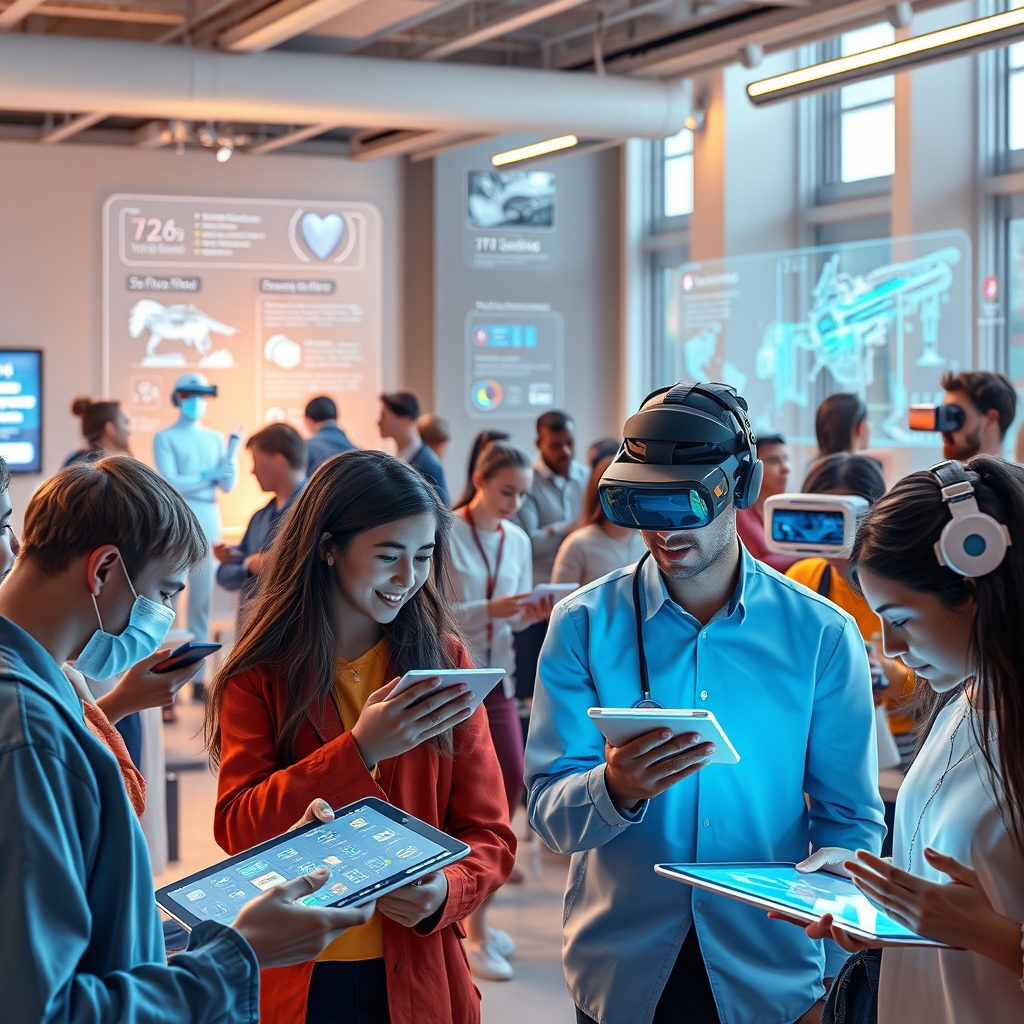
The landscape of education is undergoing a seismic shift, driven by rapid advancements in technology that are redefining how we acquire knowledge and skills. At the heart of this transformation lies the fusion of artificial intelligence, virtual tutors, and micro-credentials, a trio that is not only democratizing education but also making it more adaptive, engaging, and accessible than ever before. This evolution is not just about replacing traditional methods but enhancing them, creating a dynamic ecosystem where learning is continuous, personalized, and deeply integrated into the fabric of our daily lives.
The Rise of Virtual Tutors: AI as the New Educator
Imagine having a tutor available 24/7, one that understands your strengths, weaknesses, and learning pace with uncanny precision. This is no longer the stuff of science fiction but a reality shaped by AI-powered virtual tutors. These digital educators leverage machine learning algorithms to analyze a learner’s interactions, identify patterns, and tailor instruction in real-time. Whether it’s solving complex math problems, mastering a new language, or understanding intricate scientific concepts, virtual tutors provide instant feedback, adaptive challenges, and personalized guidance that traditional classrooms often struggle to deliver.
Platforms like Duolingo, Khan Academy, and ScribeSense have already integrated AI-driven tutors to enhance their offerings. These systems don’t just teach; they learn alongside the student, evolving with every interaction to ensure that the learning experience remains relevant and effective. The result is a more engaging, less intimidating environment where learners can progress at their own pace, free from the pressures of a one-size-fits-all curriculum.
Micro-Credentials: The Currency of Lifelong Learning
In a world where skills become obsolete almost as quickly as they are acquired, the traditional model of education—centered around degrees and diplomas—is increasingly being complemented by micro-credentials. These bite-sized certifications validate specific skills or knowledge areas, offering learners a way to demonstrate proficiency in niche topics without committing to lengthy, expensive programs. From coding bootcamps to digital marketing certifications, micro-credentials are becoming the new currency in the job market, prized for their flexibility and relevance.
AI plays a pivotal role in this shift by enabling the creation of dynamic, skill-based learning pathways. Adaptive algorithms can assess a learner’s current competencies and recommend micro-credentials that align with their career goals or personal interests. This approach not only makes education more accessible but also empowers individuals to take control of their learning journeys, stacking credentials like building blocks to construct a unique, ever-evolving skill set.
The Intersection of AI and Micro-Credentials: A Symbiotic Relationship
The synergy between AI and micro-credentials is perhaps most evident in platforms like Coursera, Udacity, and LinkedIn Learning. These platforms use AI to curate personalized learning experiences, suggesting courses and certifications based on a user’s profile, career aspirations, and past performance. For instance, an AI system might detect that a software developer is struggling with a particular programming language and recommend a micro-credential course to bridge the gap. This level of personalization ensures that learners are not just passive recipients of information but active participants in their educational journey.
Moreover, AI-driven analytics can track a learner’s progress across multiple micro-credentials, providing insights into their growth and areas needing improvement. This data can be invaluable for both learners and employers, offering a transparent, verifiable record of skills that traditional resumes often fail to capture. In this way, micro-credentials and AI are not just transforming education but also redefining how we measure and value knowledge in the modern world.
Gamification and Interactive Learning: Making Education Engaging
One of the most significant challenges in education has always been maintaining engagement. Here, too, AI and virtual tutors are making strides by incorporating gamification elements into the learning process. Badges, leaderboards, and interactive challenges turn education into an immersive experience, where learners are motivated by both intrinsic and extrinsic rewards. Platforms like Kahoot! and Quizlet have harnessed this approach to great effect, turning mundane study sessions into competitive, fun-filled activities that foster retention and enthusiasm.
Virtual reality (VR) and augmented reality (AR) are also playing a crucial role in this evolution, creating immersive environments where learners can practice skills in realistic scenarios. For example, medical students can perform virtual surgeries, while engineers can simulate complex machinery repairs. These technologies, combined with AI-driven feedback, provide a safe, controlled space for learners to experiment, fail, and ultimately master their craft without real-world consequences.
The Future of Corporate Training: Agility Through AI
The corporate world is not immune to this revolution. Companies are increasingly turning to AI-powered learning platforms to upskill their workforce, recognizing that agility and continuous learning are key to staying competitive. Virtual tutors and micro-credentials allow employees to acquire new skills on demand, whether it’s mastering a new software tool, understanding data analytics, or developing leadership capabilities. This just-in-time learning model ensures that organizations can adapt quickly to changing market demands, fostering a culture of innovation and resilience.
For example, a sales team might use an AI-driven platform to practice pitch techniques in virtual simulations, receiving real-time feedback on their performance. Meanwhile, micro-credentials can validate their proficiency in areas like negotiation or customer relationship management, providing tangible proof of their capabilities. This approach not only enhances individual performance but also drives organizational growth, creating a workforce that is both skilled and adaptable.
Lifelong Learning: A Mindset for the Future
The convergence of AI, virtual tutors, and micro-credentials is not just about technology; it’s about cultivating a mindset of lifelong learning. In an era where change is the only constant, the ability to continuously acquire new skills is no longer a luxury but a necessity. These innovations are breaking down the barriers of traditional education, making learning more accessible, affordable, and relevant to the needs of the modern world. Whether you’re a student, a professional, or simply someone with a thirst for knowledge, the tools are now at your fingertips, ready to guide you on a journey of endless discovery.
As we stand on the brink of this new era, it’s clear that the future of education is not confined to classrooms or textbooks. It’s a dynamic, ever-evolving ecosystem where technology and human curiosity intersect, creating opportunities for growth that were once unimaginable. The question is no longer whether we can adapt to this change but how quickly we can embrace it, leveraging these innovations to unlock our full potential and shape a future where learning knows no bounds.



