
The Gamified Mindset: How Interactive Learning and Digital Badges Are Redefining Motivation in Education
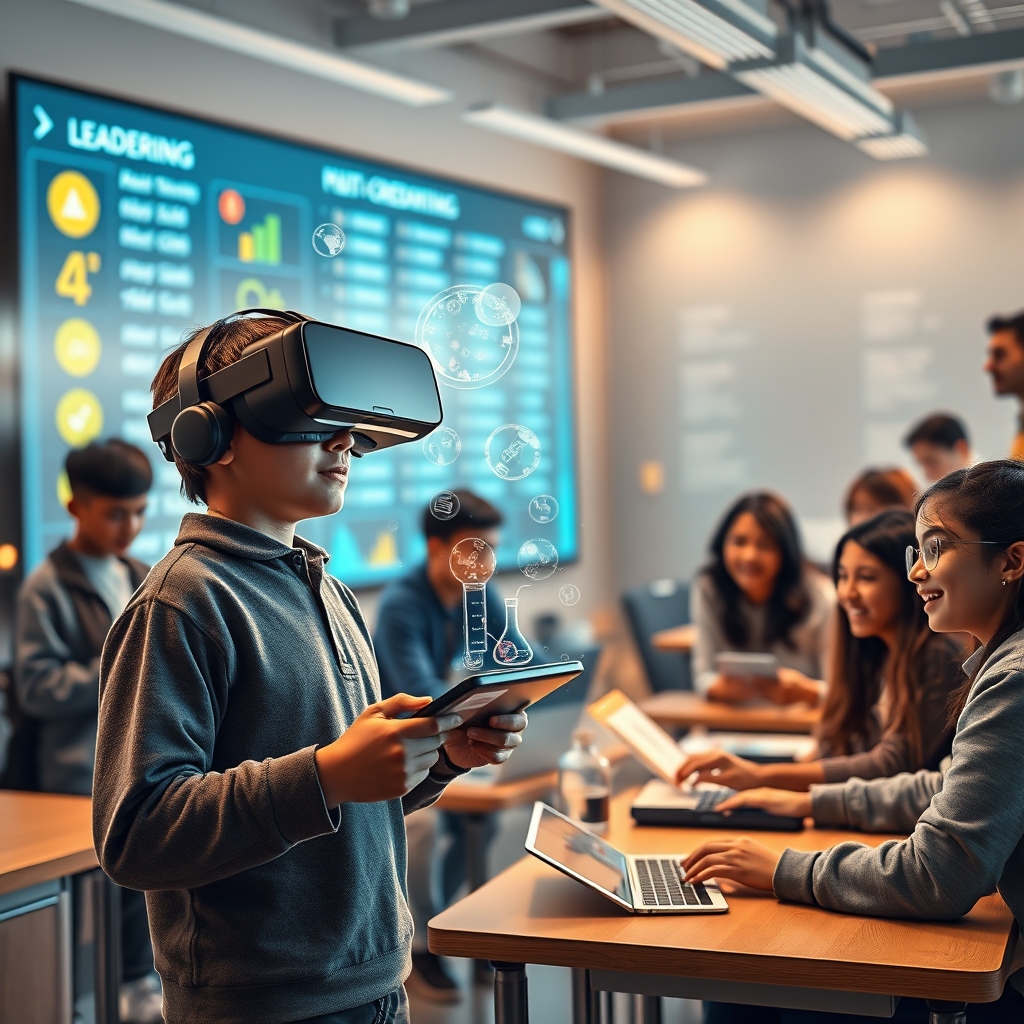
Imagine a classroom where every lesson feels like a game, where progress is rewarded with instant feedback, and where learners are not just passive recipients of information but active participants in their own education. This is not a distant fantasy—it is the reality of modern education, where gamification and digital badges are transforming how we engage with learning. By integrating game mechanics into educational experiences, educators and edtech innovators are unlocking new levels of motivation, persistence, and skill mastery.
The Psychology Behind Gamification
Gamification leverages the same psychological principles that make games so addictive: clear goals, immediate feedback, a sense of progression, and rewards. When applied to learning, these elements create an environment where students are more likely to stay engaged, overcome challenges, and retain information. Research has shown that gamified learning can increase motivation by up to 40%, as learners are driven by both intrinsic and extrinsic rewards. The dopamine hit from earning a badge or leveling up can be just as powerful as the satisfaction of mastering a new skill.
But gamification is not just about making learning fun—it’s about making it meaningful. By breaking down complex subjects into smaller, achievable tasks, learners can see their progress in real time. This sense of accomplishment fosters a growth mindset, where challenges are viewed as opportunities rather than obstacles. For example, language-learning apps like Duolingo use streaks, leaderboards, and virtual rewards to keep users coming back, turning the often tedious process of memorization into an engaging experience.
The Rise of Digital Badges and Micro-Credentials
While gamification makes learning more engaging, digital badges and micro-credentials provide tangible proof of skill acquisition. Unlike traditional degrees, which often take years to complete, micro-credentials offer bite-sized validation of specific competencies. These badges can be earned in a matter of weeks or even days, making them ideal for professionals looking to upskill quickly or students seeking to supplement their education with practical, job-ready skills.
Platforms like Credly, Badgr, and LinkedIn Learning have popularized digital badges by allowing learners to showcase their achievements on social media, resumes, and professional profiles. This visibility not only boosts confidence but also signals to employers that an individual is committed to continuous learning. For instance, a digital marketer might earn a badge in Google Analytics, while a software developer could showcase proficiency in a new programming language. These credentials are not just symbols—they are currency in the modern job market.
How Digital Badges Are Bridging the Skills Gap
The traditional education system often struggles to keep pace with the rapidly evolving demands of the workforce. Digital badges and micro-credentials fill this gap by providing flexible, accessible, and industry-aligned learning opportunities. Companies like IBM, Microsoft, and Google have embraced this trend by offering their own certification programs, which are recognized by employers worldwide. These programs allow learners to acquire in-demand skills without the time or financial commitment of a full degree.
Moreover, digital badges are stackable, meaning learners can combine multiple credentials to demonstrate expertise in a particular field. For example, a project manager might earn badges in Agile methodologies, risk management, and leadership, creating a comprehensive portfolio of skills. This modular approach to education empowers learners to tailor their learning journeys to their career goals, rather than following a one-size-fits-all curriculum.
The Role of Interactive Learning in Skill Mastery
Gamification and digital badges are just two pieces of the puzzle. The real magic happens when these elements are combined with interactive learning experiences, such as simulations, virtual labs, and augmented reality (AR) applications. These tools allow learners to apply their knowledge in real-world scenarios, reinforcing concepts through practice rather than memorization. For example, medical students can use VR simulations to practice surgical procedures, while engineering students can experiment with virtual prototypes before building physical models.
Interactive learning also fosters collaboration and competition, two powerful motivators in education. Multiplayer games and team-based challenges encourage learners to work together, share knowledge, and push each other to excel. Platforms like Kahoot! and Quizizz have capitalized on this by turning quizzes into competitive, social experiences that make learning feel like play. The result is a more dynamic and engaging educational environment, where learners are not just consumers of content but active creators of their own knowledge.
The Future of Gamified Learning
As technology continues to evolve, so too will the possibilities for gamified learning. Artificial intelligence (AI) is already being used to create adaptive learning experiences that personalize content based on a learner’s strengths and weaknesses. Imagine a system that adjusts the difficulty of a game in real time, ensuring that learners are always challenged but never overwhelmed. This level of personalization could make education more effective and accessible than ever before.
Augmented reality (AR) and virtual reality (VR) are also poised to revolutionize gamified learning by creating immersive environments where learners can interact with content in three dimensions. For example, history students could explore ancient civilizations in VR, while biology students could dissect virtual organisms in AR. These experiences make learning more memorable and engaging, bridging the gap between theory and practice.
The integration of gamification, digital badges, and interactive learning is not just a trend—it is a fundamental shift in how we approach education. By making learning more engaging, rewarding, and accessible, these innovations are empowering learners of all ages to take control of their educational journeys. Whether in a classroom, a corporate training program, or an online course, the gamified mindset is transforming education into an adventure where every challenge is an opportunity and every achievement is a step toward mastery. As we look to the future, one thing is clear: the learners who embrace this mindset will be the ones who thrive in an ever-changing world.



