
The Immersive Frontier: How Augmented Reality and AI Are Crafting the Next Generation of Interactive Ebooks
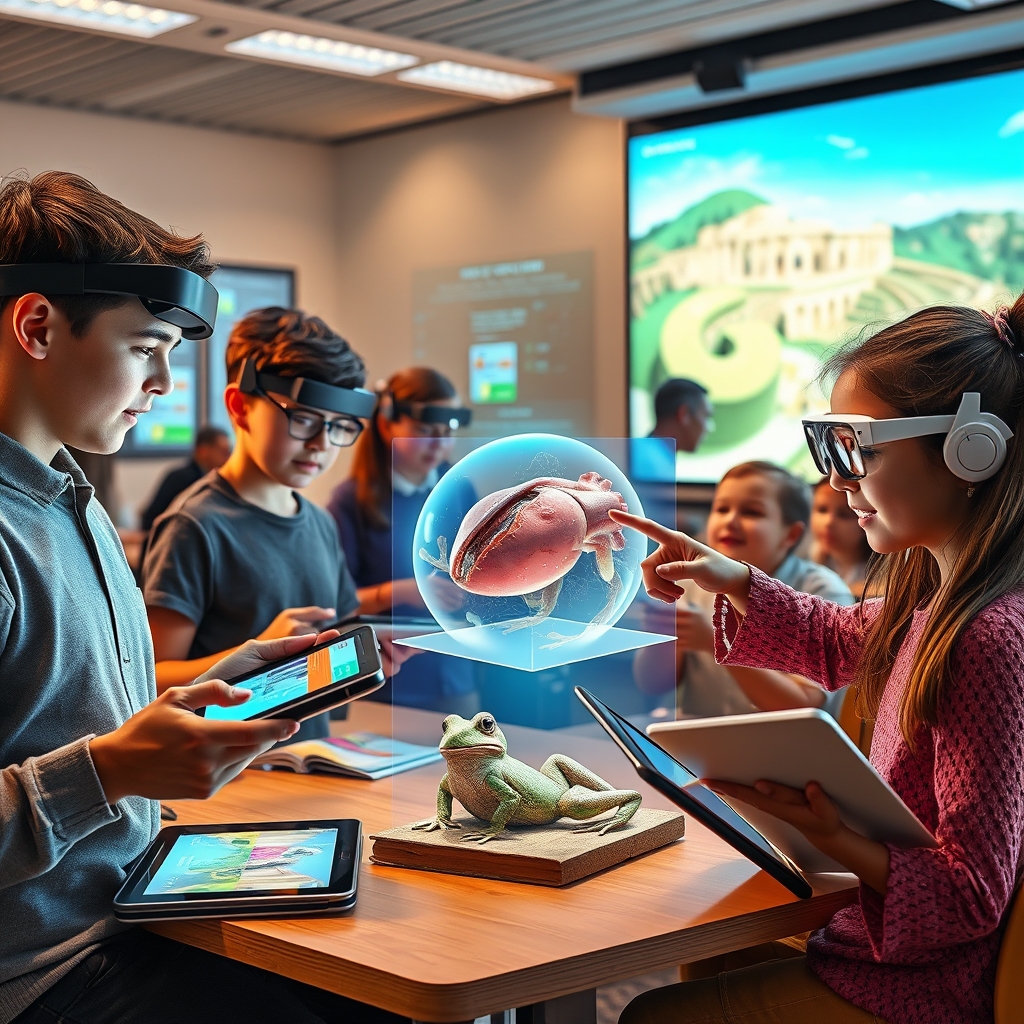
Imagine opening a textbook and watching as the illustrations leap off the page, transforming into a three-dimensional model that you can rotate, dissect, and explore from every angle. This is no longer the stuff of science fiction—it’s the reality of interactive ebooks powered by augmented reality (AR) and artificial intelligence (AI). As education continues to evolve, these technologies are breaking down the barriers between digital and physical learning, creating experiences that are as engaging as they are informative. The fusion of AR and AI is not just enhancing how we consume content; it’s redefining the very nature of learning itself.
The Rise of the Interactive Ebook
Traditional ebooks have long been a staple in digital learning, offering convenience and accessibility. However, they often lack the dynamic, hands-on engagement that many learners crave. Interactive ebooks, on the other hand, bridge this gap by integrating multimedia elements such as videos, quizzes, and animations. But when you add AR and AI into the mix, these ebooks become something far more powerful. Suddenly, a history book can transport you to ancient Rome, a biology textbook can let you explore the human body in 3D, and a language guide can bring vocabulary to life through immersive scenarios.
For example, consider an interactive ebook designed to teach anatomy. With AR, students can point their device at a page and see a fully rendered, interactive skeleton appear on their screen. They can zoom in on specific bones, rotate them, and even simulate movements to understand how joints function. AI enhances this experience by adapting the content in real-time based on the student’s interactions. If a learner struggles with identifying the bones of the hand, the AI can provide additional exercises, hints, or even connect them with a virtual tutor for further clarification. This level of personalization ensures that no two learning experiences are the same, catering to the unique needs of each individual.
The Role of AI in Personalizing the Experience
AI is the invisible force that makes interactive ebooks truly adaptive. By analyzing a learner’s behavior, preferences, and performance, AI can tailor the content to suit their specific needs. For instance, if a student repeatedly struggles with a particular concept, the AI can adjust the difficulty level, offer alternative explanations, or suggest supplementary resources. This adaptive learning approach ensures that students remain challenged but not overwhelmed, fostering a growth mindset and a love for learning.
Moreover, AI can facilitate collaborative learning experiences. Imagine a group of students working together on an interactive ebook project. The AI can act as a moderator, ensuring that each student contributes meaningfully while also providing real-time feedback. It can identify gaps in understanding and prompt discussions or activities to address them. This not only enhances the learning experience but also prepares students for the collaborative nature of the modern workforce.
Gamification: Making Learning Irresistible
One of the most exciting aspects of interactive ebooks is their ability to gamify learning. Gamification—incorporating game-like elements such as points, badges, and leaderboards—has been shown to boost engagement and motivation. When combined with AR and AI, these elements become even more compelling. For example, an interactive ebook for learning a new language might include AR scavenger hunts where students must find and interact with virtual objects in their environment to earn points. AI can then track their progress and adjust the difficulty of the challenges based on their performance.
This gamified approach is particularly effective for younger learners, who often struggle with traditional methods of education. By turning learning into a game, interactive ebooks make education feel less like a chore and more like an adventure. But the benefits extend beyond the classroom. Corporate training programs are also leveraging gamification to make professional development more engaging. Employees can earn digital badges for completing modules, compete with colleagues on leaderboards, and even participate in AR simulations that mimic real-world scenarios.
The Future of Interactive Ebooks: Beyond the Screen
As AR and AI technologies continue to advance, the possibilities for interactive ebooks are virtually limitless. We’re already seeing the emergence of mixed reality (MR) experiences, where digital and physical worlds blend seamlessly. In the near future, interactive ebooks could evolve into fully immersive environments where learners can step inside a story, conduct virtual science experiments, or even practice public speaking in front of a simulated audience. These experiences will not only make learning more engaging but also more effective, as they leverage the brain’s natural ability to retain information through experiential learning.
Another exciting development is the integration of AI-powered virtual tutors within interactive ebooks. These tutors can provide personalized guidance, answer questions, and even adapt their teaching style to match the learner’s preferences. For example, some students may prefer visual explanations, while others might benefit more from auditory or kinesthetic learning. An AI tutor can recognize these preferences and tailor its approach accordingly, ensuring that every student gets the support they need to succeed.
Challenges and Considerations
While the potential of interactive ebooks is immense, there are challenges that need to be addressed. One of the primary concerns is accessibility. Not all students have access to the devices or high-speed internet required to fully utilize AR and AI-powered ebooks. Educators and policymakers must work together to ensure that these technologies are accessible to all learners, regardless of their socioeconomic background. Additionally, there’s the question of screen time. While interactive ebooks can make learning more engaging, it’s important to strike a balance and ensure that students are not spending excessive amounts of time in front of screens.
Another consideration is the need for high-quality content. The effectiveness of interactive ebooks depends largely on the quality of the material they present. Poorly designed AR experiences or inaccurate AI responses can hinder learning rather than enhance it. Content creators must prioritize accuracy, engagement, and pedagogical soundness to ensure that these tools deliver on their promise.
As we stand on the brink of this new era in education, it’s clear that interactive ebooks are more than just a passing trend. They represent a fundamental shift in how we approach learning, blending the best of technology with the timeless principles of education. By harnessing the power of AR and AI, we can create learning experiences that are not only informative but also deeply engaging and personalized. The future of education is not just about consuming information—it’s about interacting with it, exploring it, and making it your own. And with interactive ebooks leading the way, that future is closer than we think.



