
The Fluid Future: How AI and Hybrid Learning Models Are Crafting Adaptive Education Landscapes
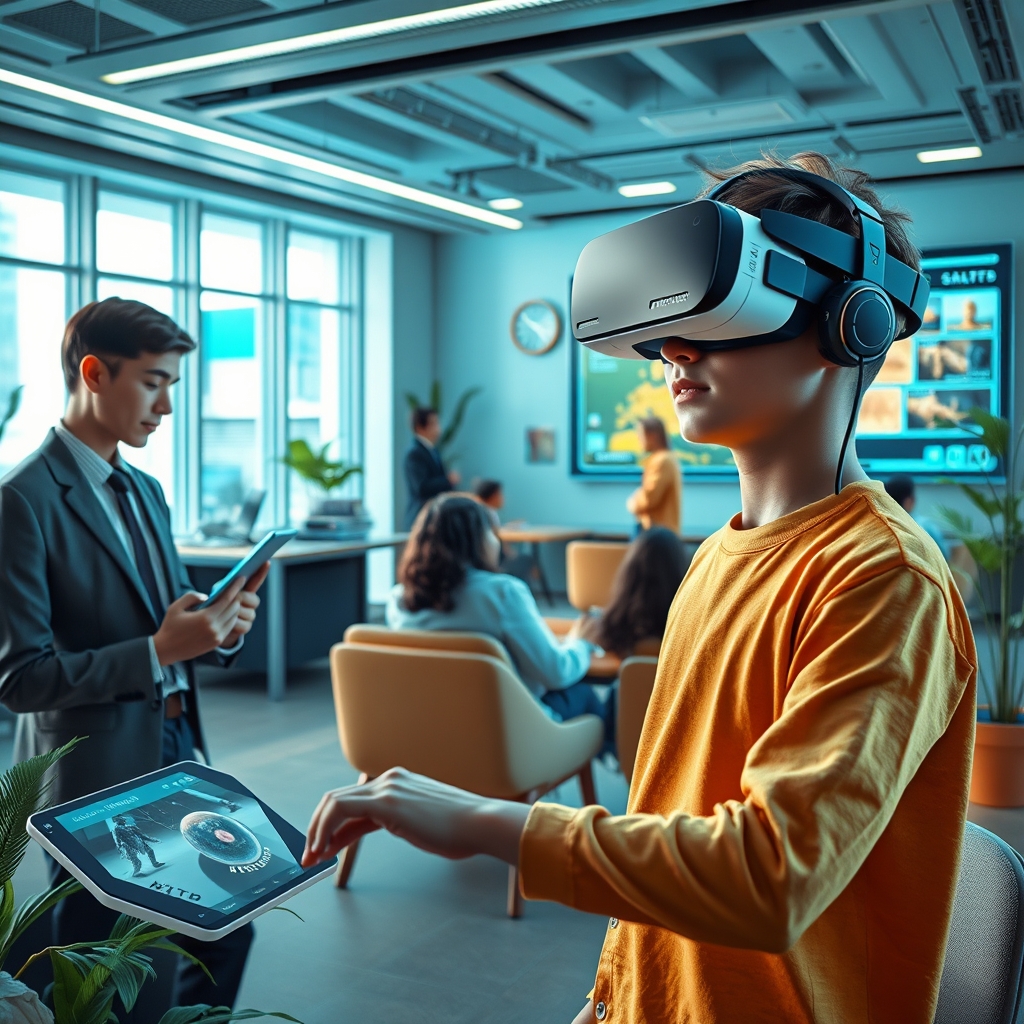
The traditional boundaries of education are dissolving, giving way to a dynamic, fluid learning environment where technology and pedagogy intertwine seamlessly. At the heart of this transformation lies the convergence of artificial intelligence (AI) and hybrid learning models, a synergy that is redefining how knowledge is acquired, applied, and validated. This evolution is not merely about digitizing existing frameworks but about creating adaptive ecosystems that respond to the unique needs of every learner, whether in a classroom, a corporate boardroom, or a living room halfway across the world.
The Rise of Hybrid Learning: A Symphony of Flexibility and Structure
Hybrid learning models have emerged as a cornerstone of modern education, blending the best of in-person instruction with the scalability and accessibility of online platforms. These models are not a compromise but a strategic fusion, designed to cater to diverse learning preferences and lifestyles. For instance, a student might attend a lecture in person one day and engage with interactive ebooks or microlearning modules the next, all while receiving real-time feedback from adaptive teaching software. This flexibility ensures that learning is not confined to a specific time or place but adapts to the rhythm of the learner’s life.
What sets today’s hybrid models apart is their ability to leverage AI to create personalized learning paths. Unlike the one-size-fits-all approach of traditional education, these systems analyze a learner’s progress, strengths, and areas for improvement to curate a bespoke educational journey. For example, an AI-powered platform might detect that a student excels in visual learning but struggles with theoretical concepts. In response, it could adjust the curriculum to include more augmented reality (AR) simulations or gamified quizzes, ensuring engagement and comprehension are optimized.
AI as the Invisible Architect of Personalized Learning
Artificial intelligence is the silent force driving the personalization revolution in education. By harnessing vast amounts of data, AI systems can identify patterns in a learner’s behavior, predict challenges, and suggest interventions before difficulties arise. Virtual tutors, powered by natural language processing and machine learning, provide instant support, answering questions, offering explanations, and even adapting their teaching style to match the learner’s pace. This level of personalization was once the domain of elite tutoring, but AI is democratizing it, making high-quality, adaptive education accessible to all.
Moreover, AI is transforming corporate training online by enabling skill-based certifications that are both rigorous and relevant. In a rapidly changing job market, professionals need to upskill continuously, and AI-driven platforms can deliver microlearning courses tailored to industry demands. These platforms not only teach new skills but also validate them through digital badges and micro-credentials, which are increasingly recognized by employers as proof of competency. This shift from traditional degrees to skill-based certifications is empowering learners to take control of their career trajectories, breaking free from the constraints of rigid academic structures.
The Role of Immersive Tech: Bridging the Gap Between Theory and Practice
While AI personalizes the learning experience, immersive technologies like virtual reality (VR) and augmented reality (AR) are making it more engaging and effective. VR classrooms transport learners to historical events, scientific phenomena, or even fictional worlds, allowing them to interact with content in ways that textbooks never could. For example, medical students can perform virtual surgeries, while engineering students can explore the inner workings of complex machinery, all without leaving their desks. AR, on the other hand, overlays digital information onto the physical world, enhancing real-world learning experiences. A biology student might use AR to dissect a virtual frog, or a language learner could practice vocabulary by pointing their device at objects around them.
These technologies are not just novelties; they are powerful tools for deep learning. Studies have shown that immersive experiences significantly improve retention and understanding, as they engage multiple senses and create emotional connections to the material. When combined with AI, immersive tech can adapt in real-time to a learner’s actions, providing feedback and adjusting the difficulty level to ensure optimal challenge and engagement.
Microlearning and Mobile Apps: Learning in the Palm of Your Hand
In a world where attention spans are shrinking and time is a precious commodity, microlearning has emerged as a game-changer. These bite-sized learning modules, often delivered through mobile learning apps, allow learners to absorb knowledge in short, focused bursts. Whether it’s a five-minute video on a new software tool or a quick quiz to reinforce a concept, microlearning fits seamlessly into busy schedules, making education more accessible than ever before.
Mobile learning apps are particularly transformative in corporate training, where employees often juggle multiple responsibilities. These apps enable just-in-time learning, allowing professionals to acquire new skills or refresh existing ones on the go. For example, a salesperson might use a mobile app to learn about a new product feature while commuting, or a manager could complete a microlearning module on leadership techniques during a lunch break. The convenience and flexibility of mobile learning are breaking down barriers to education, making lifelong learning a realistic goal for everyone.
The Future: A Lifelong Learning Ecosystem
The integration of AI, hybrid learning models, and immersive technologies is not just reshaping education; it is creating a lifelong learning ecosystem where the pursuit of knowledge is continuous and unbounded. In this ecosystem, learners are no longer passive recipients of information but active participants in their educational journeys. Adaptive teaching software, virtual tutors, and skill-based certifications provide the tools and support needed to navigate this landscape, while flexible learning paths ensure that education evolves alongside the learner’s needs and aspirations.
As we look to the future, the possibilities are limitless. Imagine a world where a student in a remote village can access the same quality of education as a peer in a bustling metropolis, or where a professional can pivot careers seamlessly by acquiring new skills through AI-driven platforms. This is not a distant dream but an emerging reality, one where technology and education converge to create a more equitable, dynamic, and empowering learning experience for all. The fluid future of education is here, and it is reshaping not just how we learn, but how we live, work, and grow.



