
The Unseen Architects: How AI and Immersive Tech Are Crafting the Next Generation of Lifelong Learners
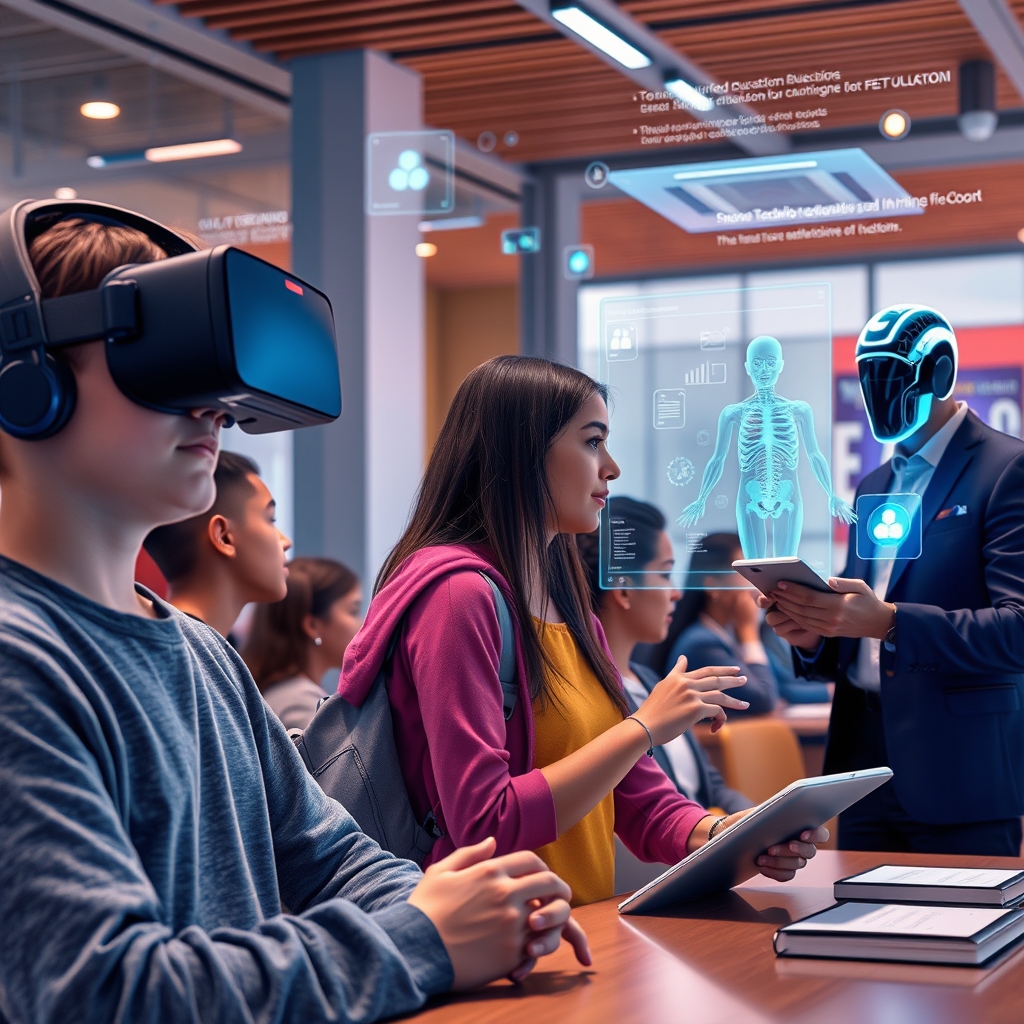
The landscape of education is undergoing a seismic shift, one that is quietly dismantling the rigid structures of traditional learning and replacing them with dynamic, fluid, and deeply personalized experiences. At the heart of this transformation are two powerful forces: artificial intelligence and immersive technologies. Together, they are not just reshaping how we learn but redefining what it means to be a lifelong learner in an era where knowledge is both infinite and instantly accessible.
The AI Revolution: Personalization at Scale
Imagine a classroom where every student receives instruction tailored to their unique strengths, weaknesses, and learning pace. This is no longer a distant dream but a reality being forged by adaptive teaching software and AI-powered learning platforms. These systems analyze vast amounts of data—from a student’s performance on quizzes to their engagement with interactive content—to create a learning path that evolves in real time. Unlike the one-size-fits-all approach of traditional education, AI-driven personalization ensures that no learner is left behind or held back by the pace of their peers.
Companies like Duolingo and Khan Academy have already demonstrated the power of AI in education. Duolingo’s language-learning app uses machine learning to adjust difficulty levels and suggest personalized exercises, while Khan Academy’s AI tutor, Khanmigo, provides real-time feedback and guidance. These tools are not just supplements to traditional learning; they are becoming the primary means through which millions of people acquire new skills and knowledge.
The Rise of Virtual and Augmented Reality Classrooms
While AI personalizes the learning experience, immersive technologies like virtual reality (VR) and augmented reality (AR) are transforming the very environment in which learning takes place. VR classrooms transport students to historical events, distant planets, or microscopic worlds, allowing them to interact with subjects in ways that textbooks never could. For instance, medical students can perform virtual surgeries, while history students can walk through ancient Rome as if they were there.
AR, on the other hand, overlays digital information onto the physical world, creating interactive experiences that blend the real and the virtual. Imagine a biology student using AR to dissect a virtual frog on their desk or an engineering student visualizing how a complex machine works by pointing their tablet at a physical model. These technologies make abstract concepts tangible, fostering deeper understanding and retention.
Gamification and Microlearning: The Power of Play and Bite-Sized Knowledge
Gamification in learning is not a new concept, but its integration with AI and immersive tech has taken it to new heights. By incorporating game-like elements such as points, badges, leaderboards, and challenges, educators can make learning more engaging and motivating. Platforms like Kahoot! and Classcraft have shown how gamification can turn even the most mundane subjects into exciting adventures. When combined with AI, these platforms can adapt the difficulty of challenges in real time, ensuring that students are always appropriately challenged without feeling overwhelmed.
Complementing gamification is the rise of microlearning—short, focused learning modules that deliver content in bite-sized chunks. Microlearning is particularly effective in corporate training and lifelong learning programs, where professionals need to acquire new skills quickly without disrupting their workflow. Apps like Coursera and Udemy offer microlearning courses that can be completed in minutes, making it easier than ever to fit learning into a busy schedule. Digital badges and micro-credentials further enhance this model by providing tangible proof of skill mastery, which can be shared on professional networks like LinkedIn.
Hybrid Learning: The Best of Both Worlds
The COVID-19 pandemic accelerated the adoption of hybrid learning models, but their benefits extend far beyond crisis response. Hybrid learning combines the flexibility of online education with the engagement of in-person instruction, creating a learning experience that is both adaptable and effective. AI plays a crucial role in hybrid models by analyzing student performance data to recommend when in-person sessions would be most beneficial or when online resources should be leveraged. This ensures that students receive the right type of instruction at the right time, maximizing their learning outcomes.
For example, a university might use AI to determine that a student struggling with calculus would benefit from a small-group in-person session, while a student excelling in literature could continue with self-paced online modules. This level of customization was unimaginable in traditional education but is now becoming the standard in forward-thinking institutions.
The Future of Corporate Training: Agility and Adaptability
In the corporate world, the need for continuous upskilling has never been greater. Rapid technological advancements and shifting market demands require employees to constantly update their skills. AI-powered corporate training platforms are meeting this need by offering personalized learning paths that align with both individual career goals and organizational objectives. These platforms use adaptive algorithms to identify skill gaps and recommend courses, ensuring that employees are always prepared for the next challenge.
Mobile learning apps have further democratized corporate training by making it accessible anytime, anywhere. Employees can complete microlearning modules during their commute, participate in VR simulations during lunch breaks, or earn digital badges for skills mastered on the job. This flexibility not only improves engagement but also ensures that learning becomes a continuous, integrated part of professional life.
Lifelong Learning: A Mindset for the Modern Age
The concept of lifelong learning is no longer optional; it is a necessity in a world where the half-life of skills is shrinking. AI and immersive technologies are making lifelong learning more accessible, engaging, and effective than ever before. Virtual tutors provide 24/7 support, adaptive software tailors content to individual needs, and micro-credentials offer a way to validate skills in real time. These tools are not just changing how we learn; they are changing our relationship with knowledge itself.
As we stand on the brink of this new era, it’s clear that the future of learning is not about memorizing facts or following a predetermined path. It’s about curiosity, adaptability, and the relentless pursuit of growth. The unseen architects of this transformation—AI, VR, AR, and gamification—are not just tools but partners in our journey, guiding us toward a future where learning is as natural and continuous as breathing. The question is no longer whether we can keep up with the pace of change but how we will embrace the opportunities it presents to become the best versions of ourselves.



