
The Future Unlocked: How AI and Augmented Reality Are Redefining Personalized Learning Paths
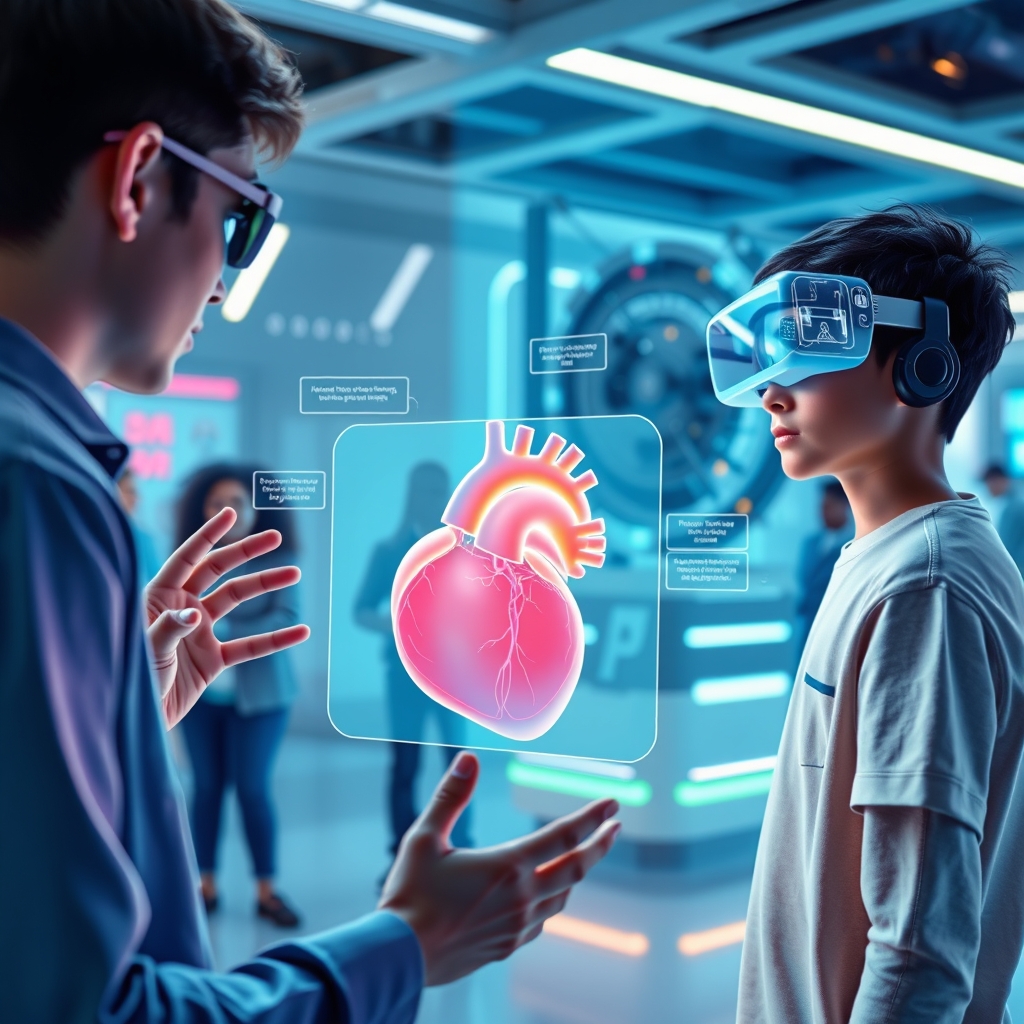
Education is no longer confined to the four walls of a classroom or the static pages of a textbook. The rapid evolution of technology has ushered in a new era where learning is dynamic, interactive, and deeply personalized. At the heart of this transformation are two groundbreaking forces: artificial intelligence (AI) and augmented reality (AR). Together, they are not just enhancing education—they are redefining what it means to learn, adapt, and grow in an ever-changing world.
The Rise of Personalized Learning Paths
Traditional education often follows a one-size-fits-all approach, where students progress at the same pace regardless of their individual strengths, weaknesses, or interests. This model, while efficient in some ways, fails to account for the unique learning styles and needs of each student. Enter AI-powered personalized learning systems, which are dismantling this outdated framework and replacing it with something far more adaptive and responsive.
These systems leverage machine learning algorithms to analyze a student’s performance in real-time, identifying patterns in their learning behavior. For instance, if a student struggles with a particular concept in mathematics, the AI can detect this and adjust the curriculum to provide additional resources, alternative explanations, or even gamified exercises to reinforce understanding. Conversely, if a student excels in a subject, the system can accelerate their learning path, introducing more advanced topics or challenges to keep them engaged. This level of customization ensures that no student is left behind or held back by the pace of their peers.
Augmented Reality: Bringing Learning to Life
While AI personalizes the learning experience, augmented reality (AR) transforms it into something tangible and immersive. AR overlays digital information onto the physical world, creating interactive experiences that bridge the gap between abstract concepts and real-world applications. Imagine a biology student dissecting a virtual frog on their desk, or a history student walking through ancient Rome as if they were there. These are not scenes from a sci-fi movie—they are the realities of modern education.
AR is particularly powerful in subjects that benefit from visualization and hands-on experience. For example, medical students can use AR to simulate surgeries, allowing them to practice procedures in a risk-free environment. Engineering students can manipulate 3D models of mechanical systems, gaining a deeper understanding of how they function. Even in corporate training, AR can be used to create realistic simulations for employees, such as customer service scenarios or equipment maintenance drills. By making learning more engaging and interactive, AR not only enhances comprehension but also retention.
The Synergy of AI and AR in Education
The true magic happens when AI and AR converge. AI can tailor AR experiences to the individual learner, ensuring that the content they interact with is aligned with their skill level and learning objectives. For example, an AI-powered AR app for language learning could adjust the difficulty of vocabulary exercises based on the user’s proficiency, or an AR history lesson could provide additional context or challenges for advanced students while simplifying concepts for beginners.
This synergy also extends to feedback and assessment. AI can analyze a student’s interactions with AR content, tracking their progress and identifying areas where they may need additional support. Teachers, in turn, can use this data to provide targeted guidance, creating a feedback loop that continuously refines the learning experience. The result is a dynamic, adaptive, and deeply engaging educational journey that evolves with the student.
The Role of Micro-Credentials and Digital Badges
As education becomes more personalized and skill-based, the way we recognize and validate learning is also evolving. Traditional degrees and certificates, while still valuable, are no longer the only markers of achievement. Enter micro-credentials and digital badges—compact, verifiable representations of specific skills or competencies that learners can earn as they progress through their educational journey.
AI plays a crucial role in this shift by enabling the creation of flexible learning paths that lead to these micro-credentials. For example, a professional looking to upskill in data analysis might complete a series of AI-curated microlearning courses, each focused on a specific tool or technique. Upon completion, they receive a digital badge that can be shared on professional networks like LinkedIn, signaling their expertise to potential employers. This system not only makes learning more accessible but also more relevant to the demands of the modern workforce.
Corporate Training and Lifelong Learning
The impact of AI and AR extends beyond traditional education into the realm of corporate training and lifelong learning. Companies are increasingly turning to these technologies to create more effective and engaging training programs. For instance, AI can analyze an employee’s job role and performance data to recommend personalized training modules, while AR can simulate real-world scenarios, such as customer interactions or equipment operation, to provide hands-on practice.
Lifelong learning, too, is being transformed by these innovations. With the rapid pace of technological change, the ability to continuously acquire new skills is more important than ever. AI-powered platforms can curate personalized learning paths for individuals based on their career goals, interests, and existing knowledge, while AR can make the learning process more immersive and enjoyable. Whether it’s learning a new language, mastering a software tool, or developing leadership skills, these technologies are making lifelong learning more accessible and effective.
The Challenges and Considerations
While the potential of AI and AR in education is immense, it is not without its challenges. One of the primary concerns is accessibility—ensuring that these technologies are available to all learners, regardless of their socioeconomic background. There is also the issue of data privacy, as AI systems rely on vast amounts of personal data to function effectively. Educators and policymakers must work together to establish ethical guidelines and safeguards to protect learners’ information.
Another consideration is the role of teachers in this new landscape. While AI and AR can enhance the learning experience, they cannot replace the human element of education. Teachers remain essential in providing mentorship, emotional support, and guidance, and their role will evolve to focus more on facilitating learning rather than delivering content. Professional development for educators will be crucial to help them integrate these technologies into their teaching practices effectively.
The fusion of AI and augmented reality is not just a technological advancement—it is a paradigm shift in how we approach education. By creating personalized, immersive, and adaptive learning experiences, these technologies are empowering learners of all ages to take control of their educational journeys. They are breaking down the barriers of traditional education, making learning more accessible, engaging, and relevant to the needs of the modern world. As we stand on the brink of this new era, one thing is clear: the future of learning is not just about acquiring knowledge—it is about unlocking potential, fostering curiosity, and preparing individuals to thrive in an ever-evolving landscape. The tools to make this a reality are already here; it is up to us to embrace them and shape the future of education for generations to come.



