
The Future of Education: How Virtual Reality Classrooms and Adaptive AI Are Crafting Immersive, Personalized Learning Journeys
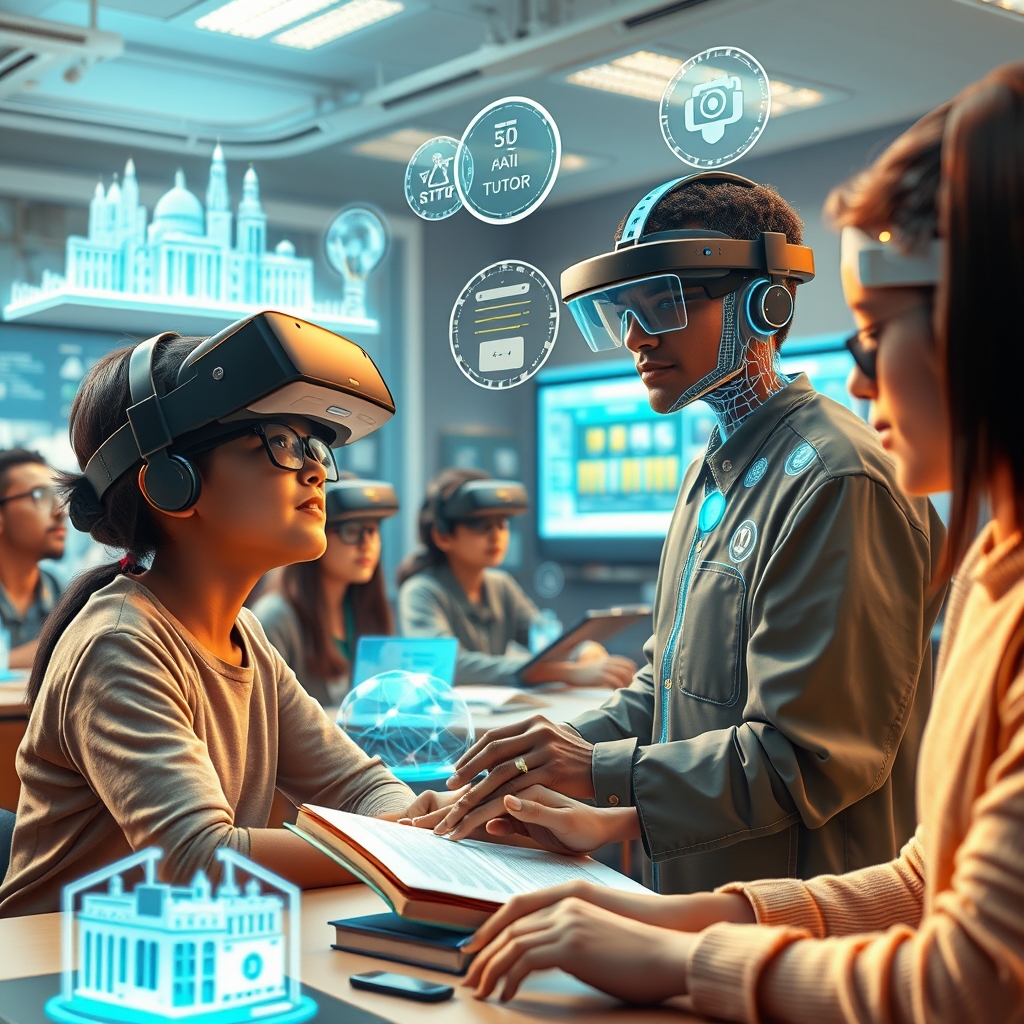
The landscape of education is undergoing a seismic shift, driven by technological advancements that are redefining how knowledge is acquired, processed, and applied. At the heart of this transformation lies the fusion of Virtual Reality (VR) classrooms and adaptive AI-powered learning systems, which together are crafting immersive, personalized learning experiences that were once the stuff of science fiction. These innovations are not merely enhancing traditional education—they are dismantling its limitations and rebuilding it from the ground up.
The Rise of Virtual Reality Classrooms
Imagine stepping into a classroom where the pyramids of Egypt materialize around you, or where you can dissect a virtual frog without the mess. Virtual Reality classrooms are making this a reality by transporting learners into fully immersive environments that engage multiple senses. Unlike passive learning through textbooks or videos, VR classrooms demand active participation, fostering deeper understanding and retention. Studies have shown that students in VR environments retain up to 75% more information compared to traditional methods, as the brain processes experiential learning more effectively than rote memorization.
Beyond K-12 and higher education, VR is revolutionizing corporate training online. Companies are leveraging VR to simulate high-stakes scenarios, such as emergency response drills or complex machinery operations, without the risks associated with real-world training. For instance, medical professionals can practice surgeries in a risk-free virtual space, while engineers can troubleshoot mechanical failures in a simulated factory. The result? A workforce that is better prepared, more confident, and capable of adapting to dynamic challenges.
Adaptive AI: The Personalized Learning Architect
While VR classrooms provide the stage for immersive learning, adaptive AI-powered learning systems act as the director, tailoring the experience to each learner’s unique needs. These systems analyze vast amounts of data—from learning pace and style to strengths and weaknesses—to create flexible learning paths that evolve in real time. Unlike the one-size-fits-all approach of traditional education, adaptive AI ensures that no learner is left behind or held back by the pace of the class.
For example, platforms like Duolingo and Khan Academy use AI to adjust difficulty levels, provide instant feedback, and offer targeted exercises to reinforce weak areas. In higher education, universities are adopting AI-driven adaptive teaching software to personalize coursework for students, ensuring that each individual masters the material before moving forward. This approach is particularly transformative for lifelong learning programs, where adults returning to education or upskilling for new careers can benefit from a system that adapts to their existing knowledge and goals.
The Role of Gamification and Micro-Credentials
Motivation is a critical factor in successful learning, and this is where gamification in learning shines. By incorporating game-like elements such as points, leaderboards, and digital badges, educational platforms make learning engaging and rewarding. Gamification taps into the brain’s reward system, releasing dopamine and fostering a sense of accomplishment that keeps learners coming back for more. This is especially effective in mobile learning apps, where bite-sized lessons and interactive challenges fit seamlessly into busy schedules.
Complementing gamification are micro-credentials and skill-based certifications, which provide tangible proof of mastery in specific areas. Unlike traditional degrees, which can take years to complete, micro-credentials offer a faster, more flexible way to demonstrate expertise. Platforms like Coursera, Udacity, and LinkedIn Learning are leading the charge, offering badges and certificates that are recognized by employers worldwide. This shift toward just-in-time education allows professionals to acquire new skills precisely when they need them, bridging the gap between education and the ever-evolving demands of the workforce.
Hybrid Learning Models: The Best of Both Worlds
The future of education is not an either/or proposition—it’s a blend of the best elements of traditional and digital learning. Hybrid learning models combine in-person instruction with online components, creating a dynamic, flexible framework that caters to diverse learning preferences. For instance, a student might attend a VR lecture on ancient history, complete an AI-driven quiz to reinforce their understanding, and then participate in a live discussion with peers and instructors. This model ensures that learners benefit from the social interaction of a classroom while leveraging the personalization and convenience of digital tools.
Hybrid models are also proving invaluable in corporate training online, where employees can access on-demand microlearning courses to upskill during their commute or lunch break, while still participating in hands-on workshops or team-building exercises. This flexibility is particularly crucial in today’s fast-paced work environment, where continuous learning is no longer optional but essential for career growth.
The Promise of Virtual Tutors and Interactive Ebooks
One of the most exciting developments in edtech is the rise of virtual tutors, AI-powered assistants that provide one-on-one support to learners. These tutors can answer questions, explain complex concepts, and even adapt their teaching style based on the learner’s mood or engagement level. For example, if a student is struggling with a math problem, a virtual tutor can break it down into simpler steps, offer hints, or provide additional practice problems until the concept clicks. This level of personalized attention was once only available to those who could afford private tutoring, but AI is democratizing access to high-quality education.
Complementing virtual tutors are interactive ebooks, which transform static text into dynamic, multimedia experiences. Imagine reading a history textbook where you can click on a map to explore a 3D reconstruction of a battle, or watch a video interview with a historian. Interactive ebooks engage learners through visuals, audio, and interactive elements, making complex subjects more accessible and enjoyable. When combined with AI, these ebooks can also adapt their content in real time, highlighting key concepts or offering additional resources based on the reader’s progress.
The Future Is Already Here
The integration of VR classrooms, adaptive AI, gamification, and hybrid learning models is not a distant dream—it’s happening now, and its impact is profound. These technologies are breaking down the barriers of time, location, and socioeconomic status, making education more accessible, engaging, and effective than ever before. Whether it’s a student in a rural village attending a VR lecture at a top university, a professional earning a micro-credential to advance their career, or a lifelong learner exploring a new passion through an interactive ebook, the possibilities are limitless.
As we stand on the brink of this educational revolution, one thing is clear: the future of learning is not about replacing teachers or traditional classrooms. It’s about augmenting them with tools that empower learners to take control of their education, adapt to their unique needs, and thrive in an ever-changing world. The question is no longer whether these innovations will shape the future of education, but how quickly we can embrace them to unlock the full potential of every learner.



