
The Future of Education: How AI and Emerging Technologies Are Reshaping Learning
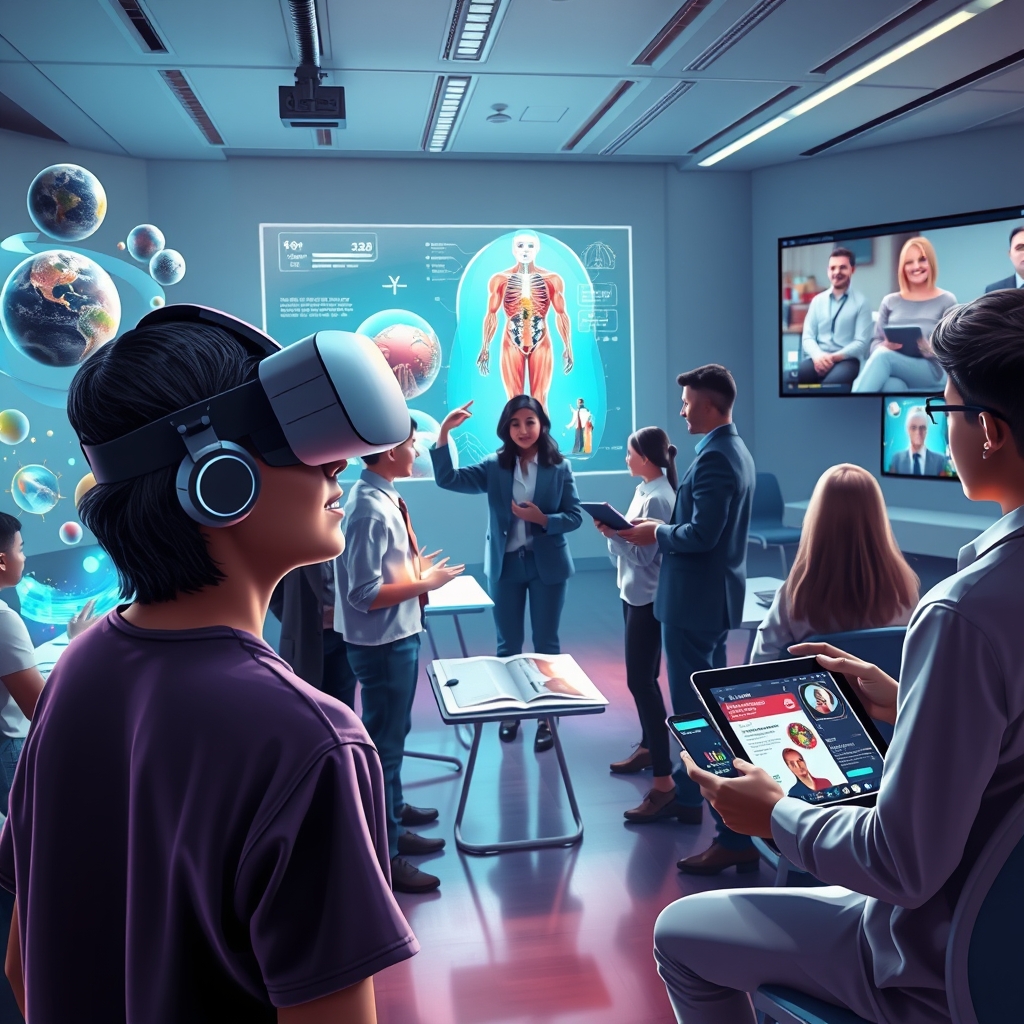
The landscape of education is undergoing a seismic shift, driven by rapid advancements in technology and a growing demand for flexible, personalized learning experiences. Gone are the days when traditional classrooms were the sole hubs of knowledge. Today, learners of all ages are embracing innovative tools and methodologies that cater to their unique needs, schedules, and learning styles. At the heart of this transformation lies a powerful synergy between artificial intelligence (AI), immersive technologies, and adaptive learning systems, all working together to create a more dynamic and inclusive educational ecosystem.
The Rise of AI-Powered Learning
Artificial intelligence is no longer a futuristic concept confined to science fiction; it is a tangible force reshaping how we acquire knowledge. AI-powered learning platforms leverage machine learning algorithms to analyze a learner’s strengths, weaknesses, and preferences, delivering customized content that evolves in real time. These systems can identify gaps in understanding, suggest targeted resources, and even adjust the difficulty of tasks to match the learner’s pace. For instance, adaptive teaching software like Duolingo or Khan Academy uses AI to personalize lessons, ensuring that students remain engaged and challenged without feeling overwhelmed.
Beyond personalization, AI is also enhancing the role of educators. Virtual tutors, powered by natural language processing (NLP), can provide instant feedback, answer questions, and guide students through complex concepts. These AI-driven assistants are available 24/7, breaking down barriers of time and location. They are particularly valuable in corporate training online, where employees can access on-demand support to upskill or reskill without disrupting their workflows. The integration of AI in education is not about replacing teachers but augmenting their capabilities, allowing them to focus on mentorship, creativity, and fostering critical thinking skills.
Immersive Technologies: Bridging the Gap Between Theory and Practice
While AI personalizes the learning experience, immersive technologies like virtual reality (VR) and augmented reality (AR) are revolutionizing how we interact with educational content. Virtual reality classrooms transport students to historical events, distant planets, or microscopic worlds, making abstract concepts tangible and memorable. Imagine a biology student dissecting a virtual frog or a history student walking through ancient Rome—these experiences go beyond textbooks, creating lasting impressions that traditional methods struggle to achieve.
Augmented reality education takes this a step further by overlaying digital information onto the physical world. AR apps can turn a simple worksheet into an interactive exploration, where students scan images to reveal 3D models, videos, or quizzes. For example, an AR-enabled anatomy app might allow medical students to visualize the human body in layers, rotating and zooming in on organs as they study. These technologies are not just gimmicks; they are powerful tools that enhance comprehension, retention, and engagement, particularly in subjects that benefit from hands-on learning.
Gamification: Making Learning Fun and Rewarding
One of the most exciting trends in modern education is the gamification of learning. By incorporating game-like elements such as points, badges, leaderboards, and challenges, educators can transform mundane tasks into engaging experiences. Gamification taps into the natural human desire for achievement and competition, motivating learners to progress through their studies with enthusiasm. Platforms like Kahoot! and Quizlet have successfully integrated gamification into their tools, turning quizzes and flashcards into interactive games that students eagerly participate in.
Digital badges and micro-credentials are another facet of gamification, providing learners with tangible recognition for their accomplishments. Unlike traditional degrees, which can take years to earn, micro-credentials focus on specific skills or knowledge areas, allowing learners to demonstrate proficiency in a shorter time frame. These badges are particularly valuable in the corporate world, where employers seek evidence of up-to-date skills. They also empower lifelong learners to continuously expand their expertise without committing to lengthy degree programs.
Flexible Learning Paths: Education on Your Terms
The rigid structure of traditional education is giving way to flexible learning paths that accommodate diverse lifestyles and goals. Hybrid learning models, which blend online and in-person instruction, offer the best of both worlds— the convenience of remote learning and the social interaction of a classroom. This approach is especially beneficial for working professionals, parents, or individuals with other commitments, as it allows them to balance education with their personal and professional lives.
Mobile learning apps and microlearning courses are further democratizing education by breaking down content into bite-sized, easily digestible modules. These tools enable learners to study on the go, whether during a commute, a lunch break, or while waiting in line. The rise of online degree programs has also made higher education more accessible, removing geographical and financial barriers that once limited opportunities. Institutions like Coursera, edX, and Udacity partner with top universities to offer courses and degrees in fields ranging from computer science to business, often at a fraction of the cost of traditional programs.
Interactive Ebooks and Skill-Based Certifications
Static textbooks are becoming a relic of the past as interactive ebooks take center stage. These digital resources incorporate multimedia elements such as videos, animations, quizzes, and hyperlinks, creating a richer and more engaging learning experience. Interactive ebooks can adapt to the reader’s pace, offering additional explanations or examples when needed. They are particularly effective in subjects like science and engineering, where visual aids and simulations can clarify complex concepts.
Skill-based certifications are another critical component of the modern learning landscape. Unlike traditional degrees, which often focus on theoretical knowledge, these certifications validate practical, job-ready skills. Platforms like LinkedIn Learning, Google Certificates, and Microsoft Learn offer courses and certifications in high-demand fields such as data analysis, cybersecurity, and digital marketing. These credentials are highly valued by employers, as they demonstrate a candidate’s ability to perform specific tasks and stay current with industry trends.
As we look to the future, it’s clear that education is no longer confined to the four walls of a classroom or the pages of a textbook. The fusion of AI, immersive technologies, gamification, and flexible learning models is creating a dynamic, learner-centric ecosystem that empowers individuals to take control of their educational journeys. Whether you’re a student, a professional, or a lifelong learner, these innovations offer unprecedented opportunities to acquire knowledge, develop skills, and achieve your goals on your own terms. The key to success lies in embracing these tools, staying curious, and remaining adaptable in an ever-evolving world of learning.



