
The Alchemy of Engagement: How Gamification and AI Are Crafting the Next Frontier of Personalized Learning
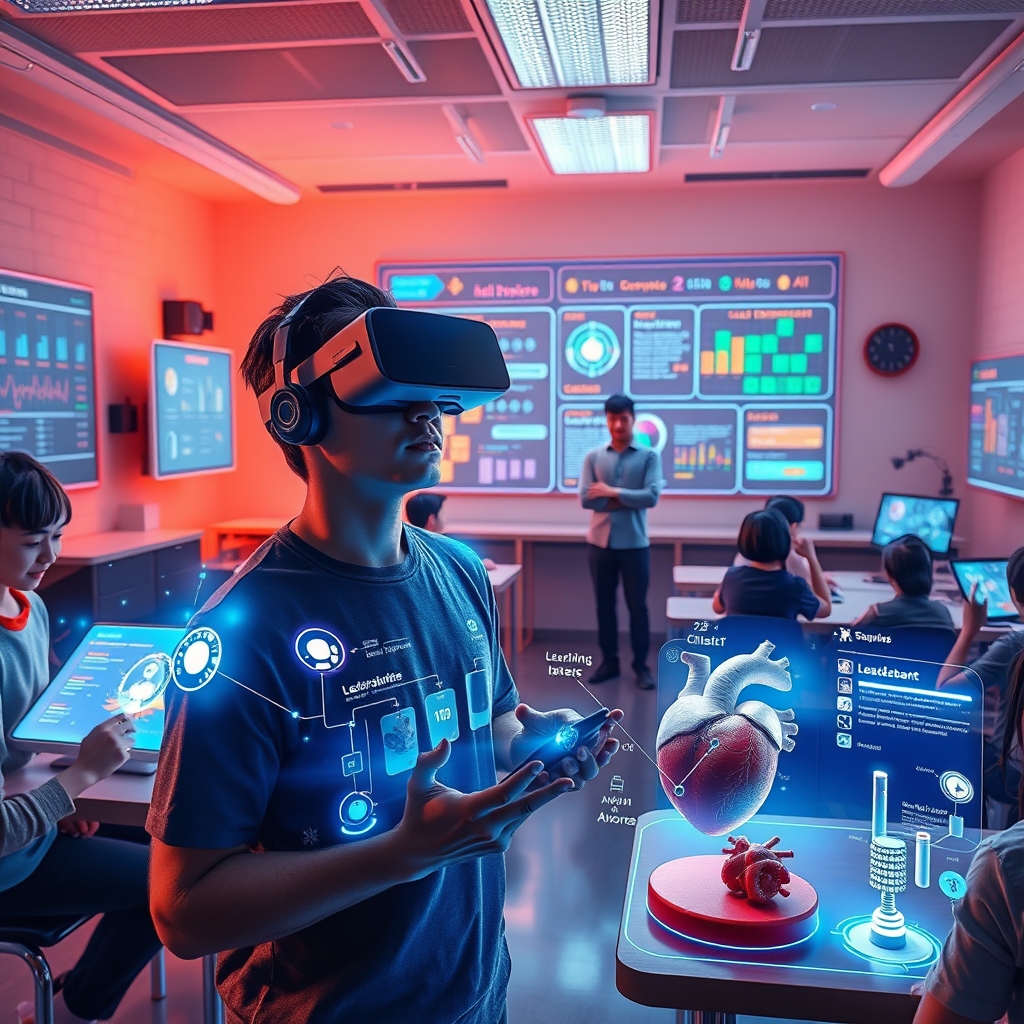
Imagine a classroom where every student is not just a passive recipient of information but an active participant in a dynamic, evolving narrative. Where lessons adapt in real-time to individual strengths, weaknesses, and curiosities, and where the line between learning and play blurs into something far more powerful. This is not a distant utopia—it is the emerging reality of education, where gamification and artificial intelligence (AI) are joining forces to redefine how we acquire knowledge, master skills, and stay engaged in an era of constant change. The fusion of these two forces is not just enhancing education; it is transforming it into an experience that is as addictive as it is enriching.
The Psychology Behind the Play
At its core, gamification leverages the same psychological triggers that make games so compelling: instant feedback, clear goals, progressive challenges, and a sense of achievement. When these elements are woven into learning environments, they tap into intrinsic motivations that traditional education often struggles to activate. AI amplifies this effect by personalizing the experience. Adaptive algorithms analyze a learner’s behavior—how quickly they solve problems, where they hesitate, what topics they revisit—and adjust the difficulty, pacing, and even the narrative of the lesson in real-time. The result? A learning journey that feels less like a chore and more like a quest, where every milestone is a victory and every setback is a puzzle to solve.
Consider the rise of platforms like Duolingo, which has turned language learning into a daily habit for millions. The app’s streak counters, leaderboards, and virtual rewards create a sense of progression and competition, while its AI-driven algorithms ensure that each lesson is tailored to the user’s proficiency. This is gamification in action, but it’s also a glimpse into the future of education, where AI doesn’t just personalize content—it personalizes the entire emotional and cognitive experience of learning.
From Badges to Mastery: The Rise of Micro-Credentials
Gamification doesn’t stop at engagement; it also redefines how we measure and recognize achievement. Enter micro-credentials and digital badges—small, verifiable tokens of skill mastery that are earned through completing specific challenges or modules. Unlike traditional degrees, which often represent a broad, generalized education, micro-credentials are granular, skill-specific, and stackable. They allow learners to build a portfolio of competencies that reflect their unique journey, rather than conforming to a one-size-fits-all curriculum.
AI plays a crucial role here by identifying the skills that are most relevant to a learner’s goals and suggesting pathways to acquire them. For example, an aspiring data scientist might earn badges in Python programming, statistical analysis, and machine learning, each one a stepping stone toward a larger career objective. Platforms like Coursera and edX have already embraced this model, offering micro-credentials that are recognized by employers and institutions alike. The beauty of this system is its flexibility: learners can pivot their focus as their interests or industry demands evolve, without being locked into a rigid educational trajectory.
The Corporate Classroom: Gamification in the Workplace
The impact of gamification and AI extends far beyond traditional education. In the corporate world, where upskilling and reskilling have become critical to staying competitive, these tools are revolutionizing how employees learn. Companies like Google, Microsoft, and IBM have adopted gamified training platforms that turn professional development into an interactive, social experience. Employees earn points, badges, and even real-world rewards for completing training modules, participating in simulations, or contributing to team projects. AI enhances these platforms by identifying skill gaps, recommending relevant courses, and even predicting future learning needs based on industry trends.
For example, a sales team might use a gamified platform to practice negotiation skills in virtual scenarios, with AI providing real-time feedback on their performance. The platform could then suggest additional modules based on areas where the team struggles, ensuring that training is not just engaging but also highly targeted. This approach not only improves retention and application of skills but also fosters a culture of continuous learning, where employees are motivated to grow and adapt alongside their roles.
The Immersive Edge: Virtual and Augmented Reality
While gamification and AI are powerful on their own, their potential is magnified when combined with immersive technologies like virtual reality (VR) and augmented reality (AR). VR classrooms can transport learners to historical events, distant planets, or microscopic worlds, turning abstract concepts into tangible experiences. AR, on the other hand, overlays digital information onto the physical world, allowing learners to interact with 3D models, annotate real-world objects, or collaborate with peers in shared virtual spaces.
Imagine a medical student practicing surgery in a VR simulation, where AI adjusts the difficulty of the procedure based on their performance, or an engineering student using AR to visualize how a complex machine works by pointing their tablet at a physical prototype. These technologies don’t just make learning more engaging—they make it more effective by leveraging the brain’s natural ability to retain information through experience and interaction. When paired with gamification, they create a learning environment that is as close to real-world application as possible, without the risks or limitations of the physical world.
The Human Element: Why AI Can’t Replace Teachers (Yet)
Despite the transformative potential of these technologies, it’s important to recognize that AI and gamification are not replacements for human educators. Instead, they are tools that augment the teaching process, freeing instructors from administrative tasks and allowing them to focus on what they do best: inspiring, mentoring, and connecting with students. AI can personalize content, but it cannot replicate the empathy, creativity, and intuition of a great teacher. Gamification can motivate learners, but it cannot replace the sense of community and collaboration that comes from a shared classroom experience.
The future of education lies in striking the right balance between technology and humanity. AI and gamification can handle the heavy lifting of personalization, engagement, and assessment, but they must be guided by the values and goals of human educators. When used thoughtfully, these tools can create a learning ecosystem that is more inclusive, adaptive, and empowering than ever before, where every learner—regardless of age, background, or location—has the opportunity to thrive.
As we stand on the brink of this new era, one thing is clear: the alchemy of gamification and AI is not just changing how we learn—it is redefining what learning can be. It is turning education from a static, one-size-fits-all process into a dynamic, personalized journey, where curiosity is the compass and engagement is the fuel. The question is no longer whether these technologies will shape the future of learning, but how far we are willing to go to unlock their full potential. The classroom of tomorrow is not a distant dream; it is being built today, one badge, one simulation, and one AI-driven lesson at a time.



