
The Dawn of Adaptive Minds: How AI-Powered Learning and Micro-Credentials Are Crafting the Future of Skill Evolution
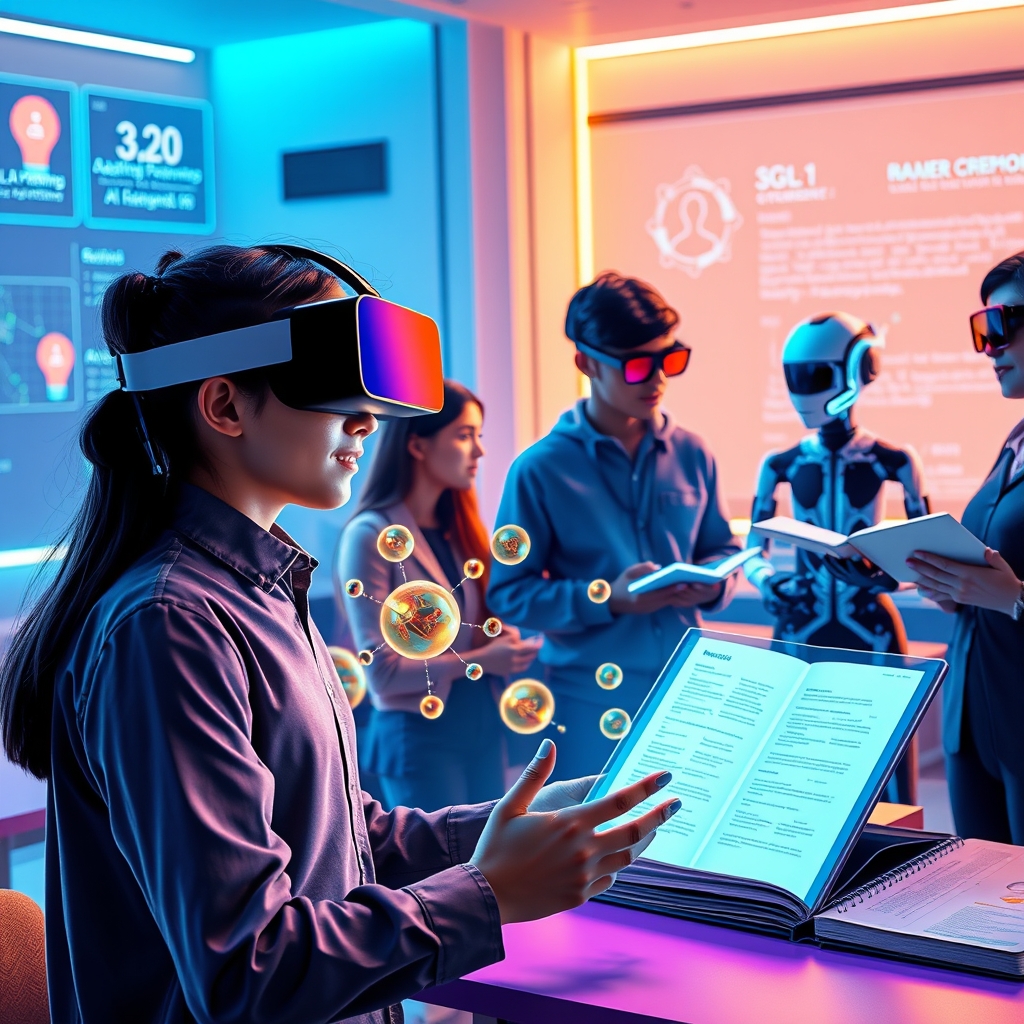
The landscape of education is undergoing a seismic shift, one where rigid curricula and one-size-fits-all teaching methods are being replaced by dynamic, responsive systems that adapt to the learner. At the heart of this transformation lies the fusion of artificial intelligence and micro-credentials, two innovations that are not just reshaping how we learn but redefining what it means to acquire and validate skills in the 21st century. This is not merely an upgrade to the existing system; it is a fundamental reimagining of how knowledge is consumed, applied, and recognized.
The Rise of the Adaptive Learner
Imagine a learning environment that evolves in real-time, adjusting its pace, content, and delivery based on the unique needs of each student. This is the promise of adaptive teaching software, a technology that leverages AI to create personalized learning experiences. Unlike traditional classrooms, where instruction is often linear and uniform, adaptive systems use data analytics to identify strengths, weaknesses, and learning preferences. They then tailor content accordingly, ensuring that learners are neither bored by material that is too easy nor overwhelmed by concepts that are too complex.
For example, platforms like Duolingo and Khan Academy have integrated adaptive algorithms to provide customized feedback and recommendations. A student struggling with algebraic equations might receive additional practice problems and explanatory videos, while another excelling in the same subject could be challenged with advanced applications. This level of personalization was once the domain of one-on-one tutoring, but AI is making it scalable and accessible to millions.
The Micro-Credential Revolution
As the nature of work continues to evolve, so too does the way we credential skills. Traditional degrees, while still valuable, are no longer the sole markers of expertise. Enter micro-credentials and digital badges, compact, verifiable representations of specific skills or competencies. These credentials are earned through short, focused courses or assessments, often delivered online, and they provide a flexible way for learners to demonstrate proficiency in niche areas.
Platforms like Coursera, edX, and LinkedIn Learning have embraced this model, offering micro-credentials in everything from data science to project management. For professionals, these badges serve as a way to upskill or reskill without committing to a full degree program. For employers, they offer a clear, granular view of a candidate’s capabilities, making hiring decisions more informed and efficient. The rise of micro-credentials is democratizing education, breaking down barriers to entry and allowing learners to build their expertise incrementally, one skill at a time.
The Synergy of AI and Micro-Credentials
The true power of this educational revolution lies in the synergy between AI-powered learning and micro-credentials. Adaptive systems can guide learners toward the most relevant micro-credentials based on their goals, performance, and career aspirations. For instance, an AI-driven platform might analyze a learner’s progress in a coding bootcamp and recommend a series of micro-credentials in cybersecurity or cloud computing to complement their existing skills. This creates a feedback loop where learning is not just personalized but also purposeful, aligning with the demands of the modern workforce.
Moreover, AI can enhance the credibility of micro-credentials by ensuring they are rigorously assessed and aligned with industry standards. Machine learning algorithms can analyze job market trends to identify emerging skills, then map micro-credentials to these needs. This ensures that learners are not just acquiring knowledge but gaining competencies that are directly applicable to their careers.
The Role of Immersive Technologies
While AI and micro-credentials are driving the personalization and validation of learning, immersive technologies like virtual reality (VR) and augmented reality (AR) are transforming how knowledge is delivered. VR classrooms, for example, can simulate real-world environments, allowing learners to practice skills in a risk-free setting. Medical students can perform virtual surgeries, engineers can troubleshoot machinery in a digital twin, and language learners can engage in lifelike conversations with AI-powered avatars.
AR, on the other hand, overlays digital information onto the physical world, creating interactive learning experiences. Imagine a biology student using AR to explore a 3D model of a cell, rotating it and zooming in on specific organelles, or a mechanic using AR glasses to receive step-by-step guidance on repairing an engine. These technologies make learning more engaging and memorable, bridging the gap between theory and practice.
Gamification: The Secret Sauce of Engagement
Another key ingredient in this new educational paradigm is gamification, the application of game-design elements to non-game contexts. By incorporating features like points, leaderboards, badges, and challenges, gamified learning platforms tap into the innate human desire for achievement and competition. This approach has been shown to boost motivation, increase retention, and make learning more enjoyable.
Platforms like Kahoot! and Quizlet have successfully integrated gamification into their tools, turning quizzes and flashcards into interactive, competitive experiences. In corporate training, gamified modules can make compliance training or soft skills development more engaging, leading to higher completion rates and better knowledge retention. When combined with AI and micro-credentials, gamification creates a powerful trifecta that makes learning not just effective but also addictive.
The Future of Corporate Training
The corporate world is one of the biggest beneficiaries of these innovations. Traditional corporate training programs, often criticized for being time-consuming and ineffective, are being replaced by AI-driven, micro-credentialed, and gamified learning experiences. Companies like Google, IBM, and Microsoft have developed their own micro-credentialing systems, allowing employees to upskill in areas like AI, cloud computing, and digital marketing. These credentials are often stackable, meaning employees can build toward larger certifications or even degrees over time.
AI-powered learning platforms can also identify skill gaps within an organization and recommend targeted training programs. For example, if an AI system detects that a team lacks expertise in a particular programming language, it can suggest a micro-credential course to address the deficit. This proactive approach to skill development ensures that companies remain competitive in an ever-changing business landscape.
The Lifelong Learning Imperative
In an era where technological advancements are rendering skills obsolete at an unprecedented rate, lifelong learning is no longer a luxury but a necessity. The combination of AI-powered learning, micro-credentials, and immersive technologies is making it easier than ever for individuals to continuously upskill and adapt. Whether it’s a mid-career professional pivoting to a new industry or a recent graduate looking to stand out in a crowded job market, these tools provide the flexibility and accessibility needed to thrive in the modern economy.
Moreover, the rise of mobile learning apps and microlearning courses means that education is no longer confined to classrooms or even desktops. Learners can access bite-sized lessons on their smartphones, turning commutes, lunch breaks, or downtime into opportunities for growth. This anytime, anywhere approach to learning is breaking down the traditional barriers of time and space, making education a seamless part of daily life.
As we stand on the brink of this educational revolution, it’s clear that the future of learning is not just about acquiring knowledge but about evolving with it. The tools and technologies emerging today are not just enhancing education; they are redefining what it means to be a learner in the 21st century. The question is no longer whether we can adapt to this new landscape but how quickly we can embrace it, for the skills of tomorrow are being forged in the adaptive, immersive, and credentialed classrooms of today.



