
The Alchemy of Learning: How Open Schools Transform Education Through Flexibility and Community
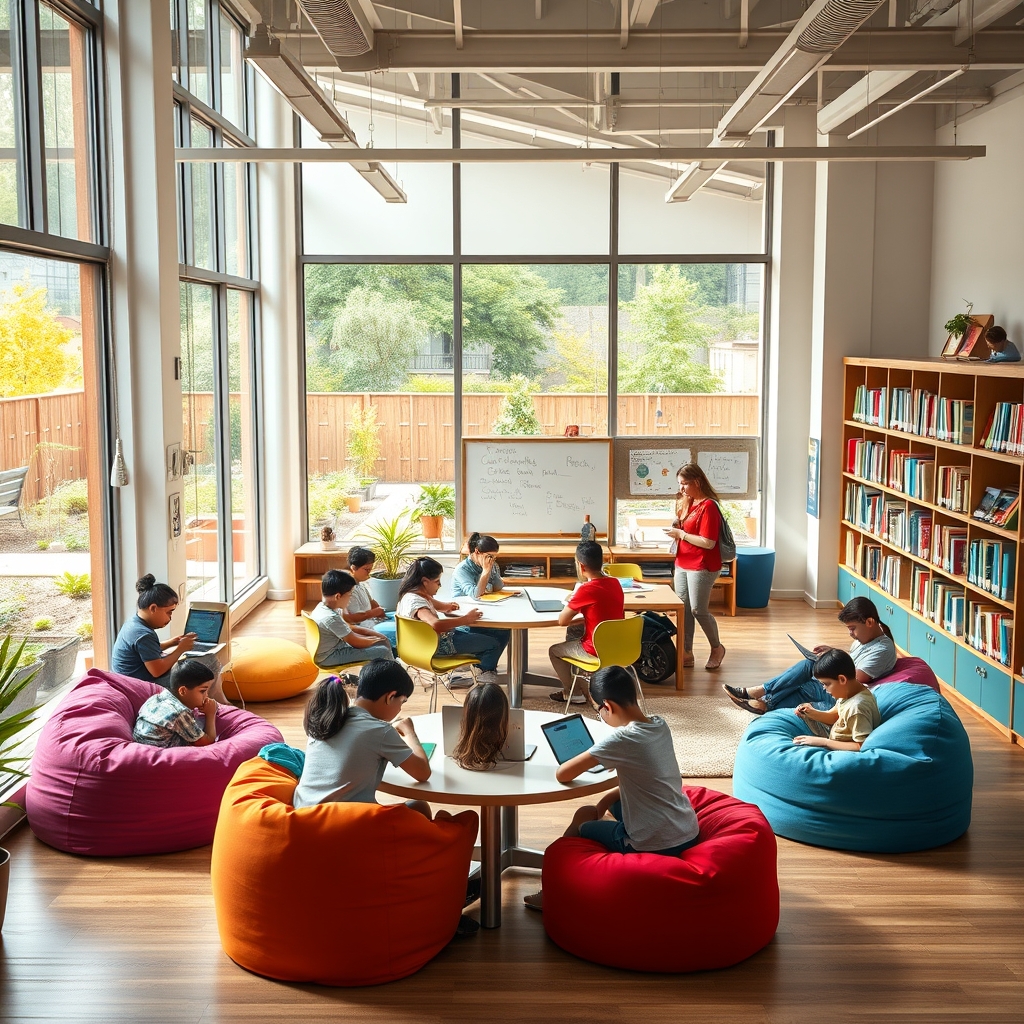
Education is no longer confined to rigid schedules, standardized tests, or one-size-fits-all curricula. The rise of open school models is challenging traditional notions of learning, proving that education can—and should—be as dynamic and unique as the students it serves. At the heart of this transformation lies a simple yet revolutionary idea: learning is not a linear process but a deeply personal journey shaped by curiosity, collaboration, and real-world relevance.
The Open School Definition: A Paradigm Shift in Learning
An open school is more than just a physical space; it’s a philosophy that prioritizes student-centered learning over institutional convenience. Unlike conventional schools, where students march in lockstep through predetermined lessons, open schools embrace flexible curriculum designs that adapt to individual needs, interests, and paces. This model dismantles the industrial-era approach to education, replacing it with environments where learners are active participants rather than passive recipients of knowledge.
Central to this philosophy is the belief that education should be inclusive and accessible. Open schools often dismantle barriers—whether socioeconomic, cognitive, or physical—by offering hybrid learning spaces that blend digital and in-person experiences. These spaces are designed to be fluid, allowing students to move between independent study, group projects, and experiential learning without the constraints of a traditional classroom.
Self-Paced Education and Competency-Based Progression
One of the most liberating aspects of open schools is their embrace of self-paced education. In a world where students are often forced to conform to arbitrary timelines, open schools recognize that mastery is not tied to a clock. Instead, they implement competency-based progression, where students advance only when they’ve demonstrated understanding—not when the calendar dictates.
This approach is particularly powerful for learners who thrive outside the conventional system. Whether a student needs more time to grasp a concept or is ready to accelerate beyond their peers, open schools provide the autonomy to learn at a pace that suits them. This flexibility doesn’t just reduce stress; it fosters a deeper, more meaningful engagement with the material, as students are no longer racing against deadlines but rather exploring subjects with genuine interest.
Personalized Study Plans: Tailoring Education to the Individual
At the core of open schooling is the personalized study plan, a roadmap co-created by students, educators, and sometimes even community mentors. These plans are not rigid syllabi but living documents that evolve as the learner’s interests and goals shift. By incorporating adaptive teaching strategies, educators act as facilitators rather than gatekeepers, guiding students toward resources, projects, and experiences that align with their passions.
For example, a student fascinated by marine biology might design a study plan that includes virtual dives with oceanographers, hands-on experiments in local waterways, and collaborative research with peers. Meanwhile, another student with a passion for storytelling could focus on writing workshops, film production, and publishing opportunities. The possibilities are as limitless as the students themselves.
Experiential and Community-Based Education: Learning Beyond the Textbook
Open schools reject the notion that learning happens only within four walls. Instead, they champion experiential learning projects and community-based education, where the world becomes the classroom. Whether through internships, service-learning initiatives, or interdisciplinary projects, students apply their knowledge in real-world contexts, bridging the gap between theory and practice.
Consider a group of students studying urban sustainability. Rather than reading about green infrastructure in a textbook, they might partner with local organizations to design and implement a community garden, analyze its impact on biodiversity, and present their findings to city planners. This kind of learning doesn’t just teach content—it cultivates lifelong learning skills like problem-solving, collaboration, and resilience.
Democratic Schooling: Giving Students a Voice
A defining feature of many open schools is their commitment to democratic schooling, where students have a say in how their education is structured. From deciding on school rules to shaping curriculum priorities, learners are empowered to take ownership of their educational journey. This model doesn’t just prepare students for academic success; it equips them with the agency to navigate the complexities of the real world.
In democratic schools, conflicts are resolved through dialogue, and decisions are made collectively. This approach fosters a sense of responsibility and mutual respect, as students learn to advocate for their needs while considering the perspectives of others. It’s a microcosm of the democratic ideals they’ll encounter beyond the school gates.
Holistic Development: Nurturing the Whole Student
Open schools recognize that education is about more than just academics. They prioritize holistic student development, addressing the emotional, social, and creative dimensions of learning. Through autonomous student research, collaborative group work, and access to open educational resources, students develop not just knowledge but also the skills and confidence to apply it.
For instance, a student struggling with anxiety might work with a mentor to design a mindfulness-based project, while another might explore their cultural identity through a documentary film. By valuing the whole person, open schools create environments where students feel seen, supported, and inspired to grow.
As education continues to evolve, open schools stand as a testament to what’s possible when we prioritize flexibility, inclusivity, and student agency. They remind us that learning is not a destination but a lifelong journey—one that thrives when given the space to breathe, adapt, and flourish. The future of education isn’t about fitting students into a mold; it’s about creating systems that mold themselves around the unique potential of every learner.



