
Immersive Learning: How Virtual and Augmented Reality Are Transforming Education
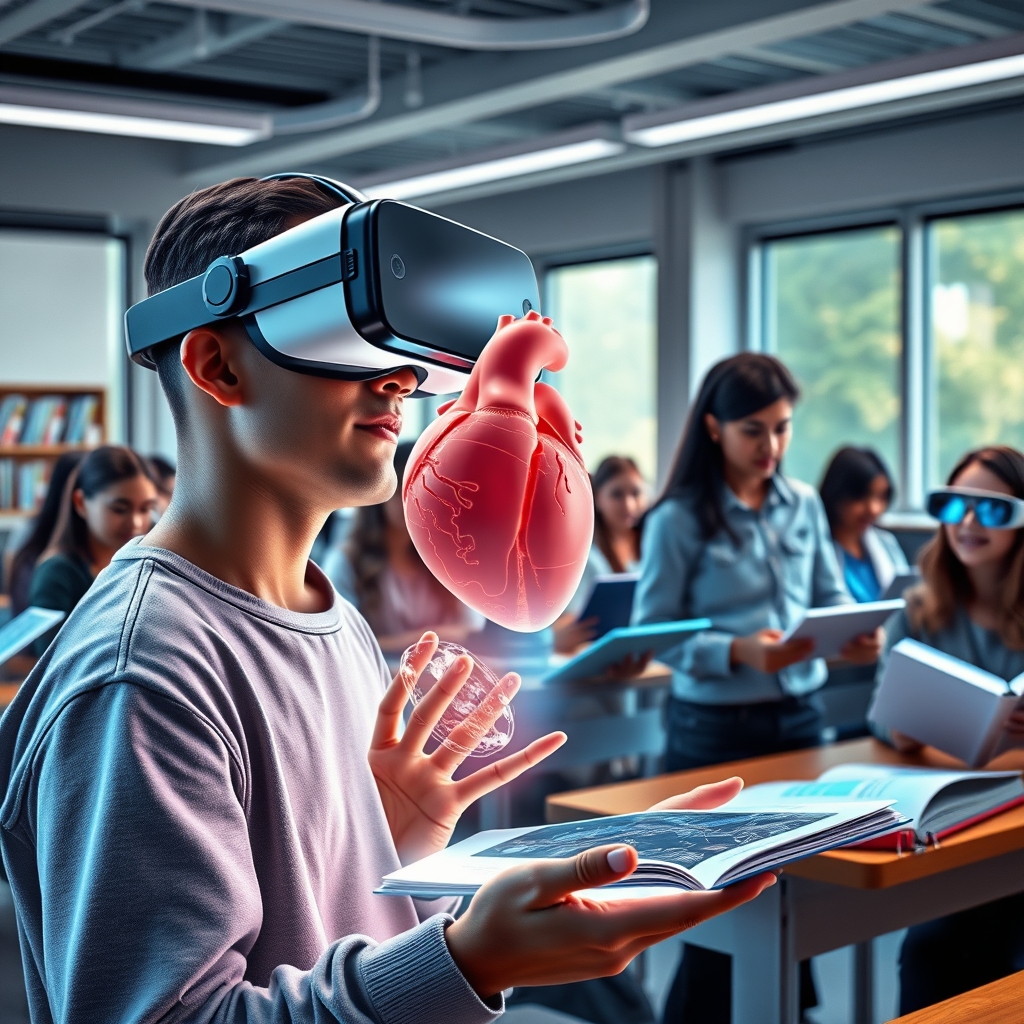
The traditional classroom, with its chalkboards and static textbooks, is undergoing a radical transformation. As technology continues to evolve, so too does the way we learn. Among the most groundbreaking advancements are Virtual Reality (VR) Classrooms and Augmented Reality (AR) Education, which are redefining the boundaries of interactive and experiential learning. These immersive technologies are not just futuristic concepts—they are here, and they are reshaping education in ways we could only imagine a decade ago.
The Power of Presence: Virtual Reality in Education
Virtual Reality classrooms transport students from their physical surroundings into entirely new environments. Imagine a history lesson where students can walk through ancient Rome, witnessing the grandeur of the Colosseum firsthand, or a biology class where they can explore the human body at a cellular level. VR creates a sense of presence that traditional learning methods simply cannot match. This level of immersion enhances engagement, retention, and understanding, making complex subjects more accessible and memorable.
For example, medical students are using VR to practice surgeries in a risk-free environment, while engineering students can simulate the construction of bridges or buildings. The ability to interact with 3D models and scenarios fosters deeper learning, as students are no longer passive recipients of information but active participants in their education. Schools and universities are increasingly adopting VR to complement their curricula, recognizing its potential to bridge the gap between theory and practice.
Augmented Reality: Blending the Digital and Physical Worlds
While VR creates entirely new worlds, Augmented Reality Education enhances the real world by overlaying digital information onto it. AR apps can turn a simple textbook into an interactive experience, where students can scan images to reveal 3D models, animations, or additional context. For instance, a geography lesson could come to life as students point their devices at a map, seeing real-time weather patterns, historical events, or cultural insights superimposed on the physical page.
AR is particularly powerful in subjects that benefit from visualization, such as chemistry, where students can manipulate molecular structures in 3D, or architecture, where they can walk through virtual buildings before they are constructed. The technology is also being used in corporate training, where employees can practice assembling machinery or navigating complex systems with step-by-step AR guidance. By blending the digital and physical, AR makes learning more dynamic and engaging, catering to different learning styles and preferences.
Gamification and Interactive Learning
Both VR and AR are often paired with Gamification in Learning, a strategy that incorporates game-like elements such as points, badges, and leaderboards into educational experiences. Gamification taps into the natural human desire for competition, achievement, and rewards, making learning feel less like a chore and more like an adventure. For example, language learning apps use AR to create scavenger hunts where students must find and interact with virtual objects to earn points, while VR simulations in corporate training might reward employees for completing tasks efficiently.
The combination of immersive technologies and gamification is particularly effective for younger learners, who are digital natives accustomed to interactive and visually rich experiences. However, its benefits extend to all age groups, as it motivates learners to engage more deeply with the material and retain information longer. By turning education into an interactive and enjoyable experience, gamification helps break down the barriers of traditional learning, making it more inclusive and effective.
The Role of AI in Immersive Learning
Behind the scenes, AI-Powered Learning is playing a crucial role in enhancing VR and AR experiences. Adaptive algorithms analyze student performance in real-time, adjusting the difficulty of tasks or providing personalized feedback to ensure optimal learning outcomes. For instance, an AI-driven VR history lesson might adapt its content based on a student’s prior knowledge, offering more detailed explanations for concepts they struggle with or skipping ahead for topics they have already mastered.
AI also powers Virtual Tutors, which can guide students through immersive experiences, answer questions, and provide hints when needed. These tutors are available 24/7, offering support outside of traditional classroom hours and ensuring that learning can happen anytime, anywhere. The integration of AI with VR and AR creates a powerful synergy, where technology not only delivers content but also personalizes it to meet the unique needs of each learner.
Challenges and Considerations
Despite their immense potential, immersive technologies are not without challenges. The cost of VR and AR hardware can be prohibitive for some schools and institutions, limiting access to those with greater resources. Additionally, there is a learning curve for both educators and students, who may need training to effectively use these tools. Content creation is another hurdle, as developing high-quality VR and AR experiences requires specialized skills and significant time investment.
There are also concerns about screen time and the potential for over-reliance on technology. While immersive learning can enhance education, it should complement—not replace—traditional teaching methods. Striking the right balance is key to ensuring that technology serves as a tool for empowerment rather than a distraction.
The Future of Immersive Learning
As VR and AR technologies become more affordable and accessible, their adoption in education is expected to grow exponentially. We are already seeing the emergence of Hybrid Learning Models that combine immersive experiences with traditional classroom instruction, offering the best of both worlds. Online degree programs and Microlearning Courses are also incorporating VR and AR to create more engaging and effective learning experiences, catering to the needs of lifelong learners and professionals seeking to upskill.
The potential of immersive learning extends beyond the classroom. In corporate training, VR and AR are being used to simulate real-world scenarios, such as customer service interactions or emergency response drills, allowing employees to practice and refine their skills in a safe environment. Skill-Based Certifications and Digital Badges are increasingly being tied to these immersive training programs, providing tangible proof of competency and enhancing employability.
As we look to the future, it is clear that immersive technologies will play a central role in the evolution of education. They have the power to make learning more engaging, personalized, and effective, breaking down the barriers of time, space, and traditional teaching methods. The classroom of tomorrow is not confined to four walls—it is a boundless, interactive, and immersive experience that adapts to the needs of every learner. The question is no longer whether these technologies will transform education, but how quickly we can embrace them to unlock their full potential. The journey has just begun, and the possibilities are as limitless as our imagination.



