
The Metamorphosis of Education: How AI and Immersive Tech Are Crafting the Future of Learning
Embracing the AI Revolution in Education
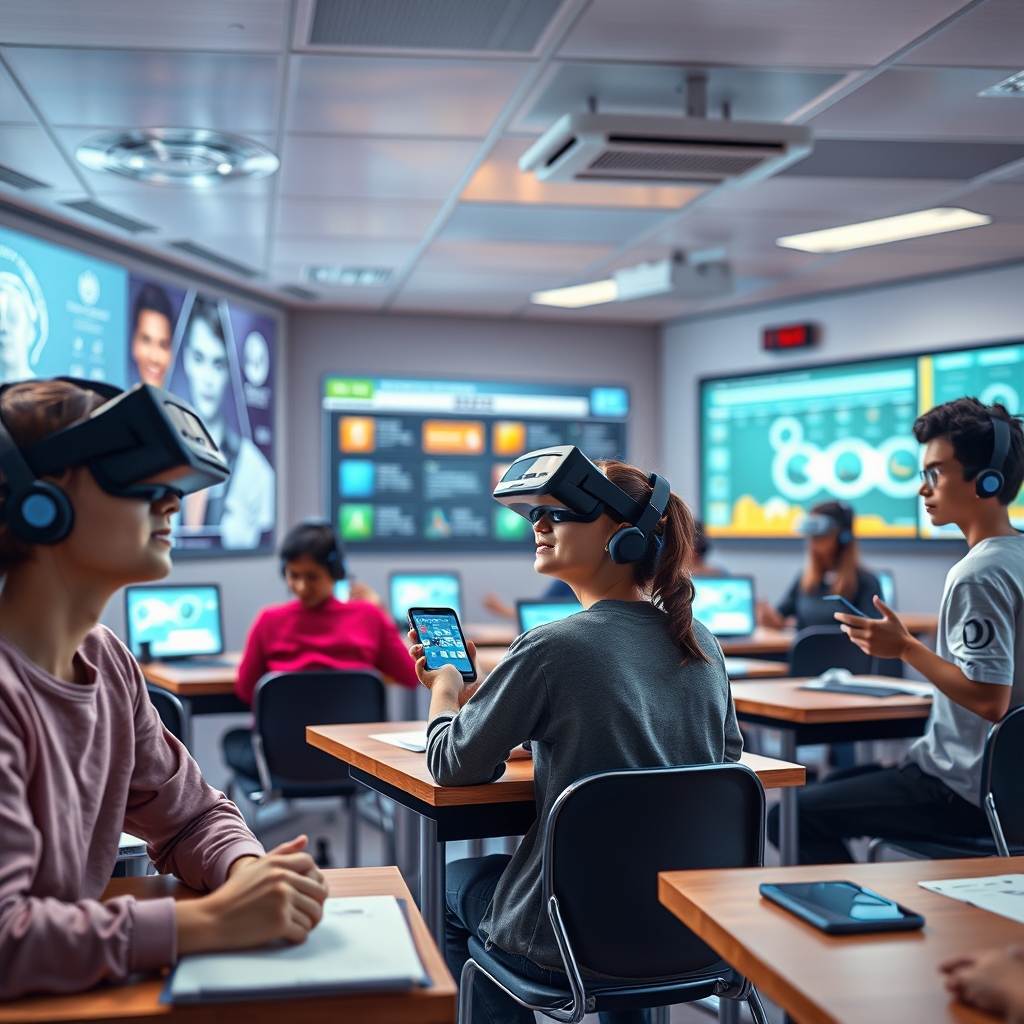
In the heart of the 21st century, education is undergoing a profound transformation, driven by the relentless march of technology. At the forefront of this revolution stands Artificial Intelligence (AI), a powerful force that is reshaping the way we learn, teach, and interact with knowledge. AI-powered learning systems are not just tools; they are the architects of a new educational landscape, one that is personalized, immersive, and infinitely adaptable.
The Rise of Personalized Learning Systems
Gone are the days of one-size-fits-all education. Today, AI is enabling the creation of personalized learning systems that cater to the unique needs and abilities of each student. These systems analyze vast amounts of data to understand individual learning styles, strengths, and weaknesses. By doing so, they can tailor educational content and pacing to optimize learning outcomes. This level of personalization ensures that every student receives the support they need to thrive, fostering a more inclusive and effective educational environment.
Immersive Learning with Virtual Reality Classrooms
Virtual Reality (VR) classrooms are another groundbreaking innovation that is transforming education. By immersing students in virtual environments, VR allows them to explore complex concepts in a hands-on, interactive manner. Whether it’s dissecting a virtual frog in biology class or walking through ancient Rome in history, VR brings learning to life in ways that traditional methods cannot. This immersive experience not only enhances understanding but also makes learning more engaging and memorable.
Augmented Reality: Bridging the Gap Between Theory and Practice
Augmented Reality (AR) is another powerful tool that is revolutionizing education. By overlaying digital information onto the physical world, AR bridges the gap between theory and practice. Students can use AR to visualize abstract concepts, such as molecular structures in chemistry or historical events in geography. This interactive approach to learning makes complex ideas more accessible and understandable, fostering a deeper level of comprehension and retention.
Gamification: Making Learning Fun and Engaging
Gamification is another innovative approach that is transforming education. By incorporating game-like elements into learning activities, gamification makes education more fun and engaging. Students earn points, badges, and other rewards for completing tasks and achieving milestones. This not only motivates students to learn but also provides a sense of accomplishment and progress. Gamification is particularly effective in fostering a growth mindset, encouraging students to embrace challenges and persist in the face of obstacles.
Micro Credentials and Digital Badges: Recognizing Achievement
Micro credentials and digital badges are emerging as important tools for recognizing and validating student achievement. These digital certifications acknowledge the mastery of specific skills or knowledge areas, providing a tangible record of learning. Micro credentials and digital badges are particularly valuable in the context of lifelong learning, allowing individuals to continuously update and expand their skill sets in response to changing demands and opportunities.
Hybrid Learning Models: Flexibility and Accessibility
Hybrid learning models are another innovative approach that is transforming education. By combining online and in-person learning, hybrid models offer greater flexibility and accessibility. Students can learn at their own pace and on their own schedule, while still benefiting from the structure and support of traditional classroom settings. This flexibility is particularly valuable for non-traditional students, such as working adults and parents, who may have competing demands on their time.
Adaptive Teaching Software: Personalizing the Learning Experience
Adaptive teaching software is another powerful tool that is transforming education. By using AI to analyze student performance and adjust instructional content in real-time, adaptive software ensures that each student receives a personalized learning experience. This level of personalization not only enhances learning outcomes but also makes education more efficient and effective.
Mobile Learning Apps: Learning on the Go
Mobile learning apps are another innovative approach that is transforming education. By providing access to educational content on mobile devices, these apps allow students to learn anytime, anywhere. Whether it’s reviewing flashcards on the bus or completing a quiz during a lunch break, mobile learning apps make education more convenient and accessible. This flexibility is particularly valuable for busy students who may have limited time for traditional classroom learning.
Microlearning Courses: Bite-Sized Education
Microlearning courses are another innovative approach that is transforming education. By breaking down complex topics into bite-sized modules, microlearning makes education more manageable and accessible. Students can learn at their own pace, focusing on one concept at a time. This approach not only enhances understanding but also makes learning more efficient and effective.
Corporate Training Online: Upskilling the Workforce
Online corporate training is another innovative approach that is transforming education. By providing access to educational content online, these programs allow employees to upskill and reskill in response to changing demands and opportunities. This flexibility is particularly valuable for businesses that need to stay competitive in a rapidly changing market.
Lifelong Learning Programs: Continuous Education
Lifelong learning programs are another innovative approach that is transforming education. By providing access to educational content throughout an individual’s lifetime, these programs foster a culture of continuous learning and growth. This approach is particularly valuable in a world where knowledge and skills are constantly evolving.
Virtual Tutors: Personalized Support
Virtual tutors are another innovative approach that is transforming education. By providing personalized support and guidance, virtual tutors help students overcome challenges and achieve their learning goals. This level of support is particularly valuable for students who may struggle with traditional classroom learning.
Edtech Innovations: The Future of Education
Edtech innovations are at the forefront of the educational revolution, driving the development of new tools and approaches that enhance learning outcomes. From AI-powered learning systems to virtual reality classrooms, edtech is transforming education in ways that were once unimaginable. As these innovations continue to evolve, the future of education looks brighter than ever.
As we look to the future, it is clear that AI and immersive technologies are not just tools for education; they are the architects of a new learning landscape. By embracing these innovations, we can create a more personalized, engaging, and effective educational experience for all. The journey of learning is no longer a linear path but a dynamic, ever-evolving adventure, shaped by the power of technology and the boundless potential of the human mind.



