
The Augmented Classroom: How Virtual Reality and Adaptive Software Are Redefining the Learning Experience
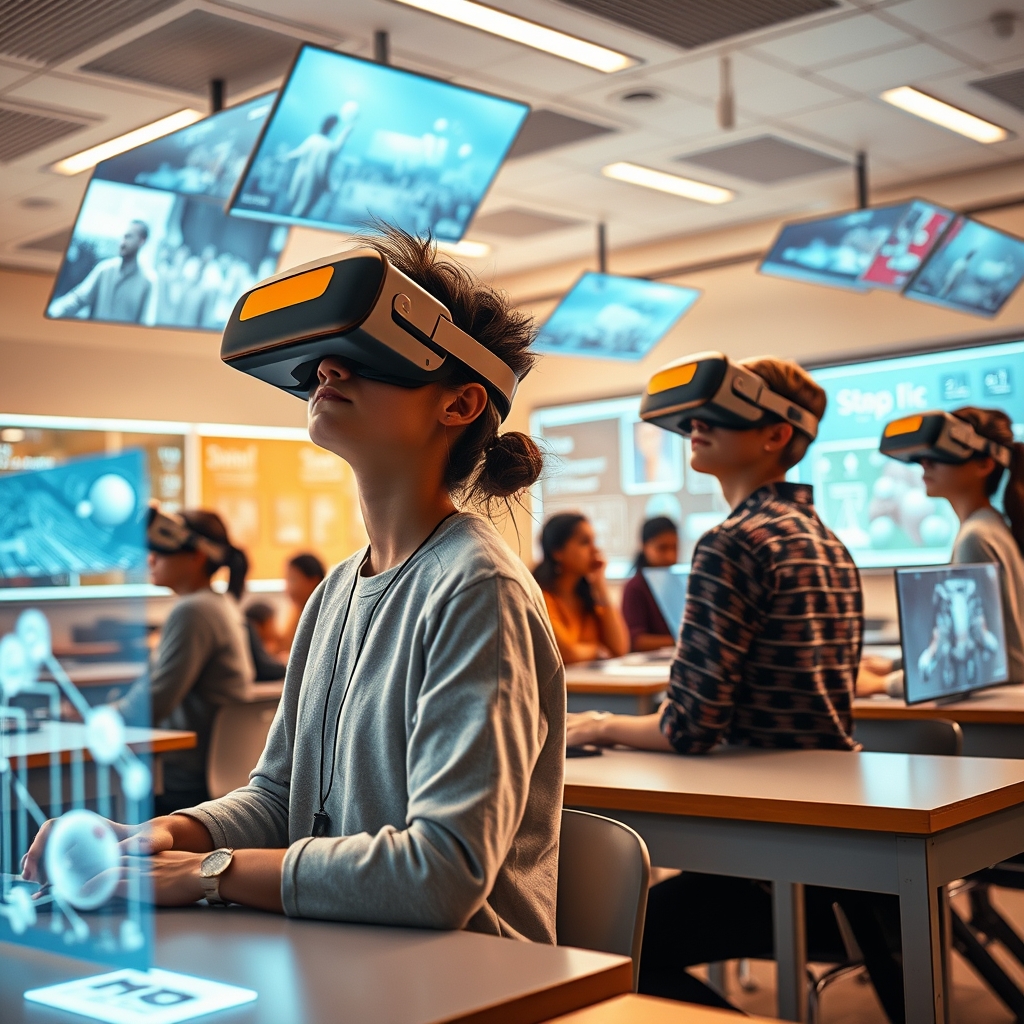
Imagine stepping into a classroom where the walls dissolve into the ancient streets of Rome, where students can walk alongside gladiators or debate philosophy with Socrates. This is not a scene from a science fiction novel but a glimpse into the future of education, where Virtual Reality Classrooms and Adaptive Teaching Software are transforming how we learn. The integration of these technologies is not just enhancing traditional education; it is redefining the very fabric of the learning experience, making it more immersive, personalized, and engaging than ever before.
The Rise of Virtual Reality in Education
Virtual Reality (VR) has long been associated with gaming and entertainment, but its potential in education is nothing short of revolutionary. Virtual Reality Classrooms are creating environments where learners can interact with subjects in ways that were previously unimaginable. For instance, medical students can perform virtual surgeries, allowing them to practice and refine their skills without the risk of real-world consequences. History students can witness the signing of the Declaration of Independence or explore the pyramids of Egypt as if they were there. These experiences are not just engaging; they are transformative, fostering a deeper understanding and retention of knowledge.
One of the most compelling aspects of VR in education is its ability to cater to different learning styles. Visual learners can benefit from 3D models and simulations, while kinesthetic learners can engage in hands-on activities within the virtual space. This level of immersion ensures that students are not just passive recipients of information but active participants in their learning journey. Schools and universities around the world are beginning to adopt VR technology, recognizing its potential to bridge the gap between theoretical knowledge and practical application.
The Power of Adaptive Teaching Software
While VR is transforming the physical environment of learning, Adaptive Teaching Software is revolutionizing the way content is delivered and consumed. Unlike traditional one-size-fits-all education models, adaptive software uses artificial intelligence to tailor learning experiences to the individual needs of each student. By analyzing data on a student’s performance, learning pace, and preferences, the software can adjust the difficulty of tasks, provide personalized feedback, and even suggest additional resources to address specific areas of weakness.
This level of personalization is particularly beneficial in subjects where students may struggle with foundational concepts. For example, in mathematics, adaptive software can identify when a student is struggling with algebra and provide targeted exercises to reinforce their understanding. Over time, the software learns from the student’s interactions, continuously refining its approach to ensure optimal learning outcomes. This not only boosts academic performance but also builds confidence, as students receive the support they need to succeed.
Bridging the Gap Between VR and Adaptive Learning
The true magic happens when Virtual Reality Classrooms and Adaptive Teaching Software converge. Imagine a student entering a VR environment where they are tasked with solving a complex scientific problem. The adaptive software monitors their progress in real-time, adjusting the difficulty of the task based on their performance. If the student struggles, the software can provide hints or simplify the problem. If they excel, it can introduce more challenging elements to keep them engaged. This dynamic interplay between immersion and personalization creates a learning experience that is both deeply engaging and highly effective.
Moreover, this combination of technologies can foster collaboration among students. In a VR classroom, learners from different parts of the world can work together on projects, share insights, and learn from one another. Adaptive software can facilitate these interactions by pairing students with complementary skills or suggesting group activities that align with their individual learning goals. This not only enhances the learning experience but also prepares students for the collaborative nature of the modern workforce.
The Role of Gamification in Immersive Learning
Another key component of this educational revolution is Gamification in Learning. By incorporating game-like elements such as points, badges, and leaderboards into the learning process, educators can make education more engaging and motivating. When combined with VR and adaptive software, gamification can create a powerful learning ecosystem where students are incentivized to explore, experiment, and achieve.
For example, a VR history lesson could be structured as a quest, where students earn points for completing challenges, such as solving puzzles or answering questions correctly. Adaptive software can ensure that these challenges are tailored to the student’s skill level, providing a sense of accomplishment without overwhelming them. This approach not only makes learning fun but also encourages a growth mindset, where students view challenges as opportunities to improve rather than obstacles to overcome.
The Future of Corporate Training and Lifelong Learning
The impact of these technologies extends beyond traditional education. In the corporate world, Corporate Training Online is being transformed by VR and adaptive software. Employees can participate in immersive training simulations that replicate real-world scenarios, from customer service interactions to emergency response drills. Adaptive software can track their performance and provide personalized feedback, ensuring that they develop the skills needed to excel in their roles.
Furthermore, these technologies are making Lifelong Learning Programs more accessible and effective. Professionals can engage in continuous learning through VR courses and adaptive platforms, acquiring new skills and certifications without the need for traditional classroom settings. This is particularly valuable in industries where rapid technological advancements require workers to constantly update their knowledge and expertise.
Overcoming Challenges and Embracing the Future
Despite the immense potential of VR and adaptive software, there are challenges to overcome. The cost of VR equipment and the development of high-quality educational content can be prohibitive for some institutions. Additionally, there is a need for educators to be trained in using these technologies effectively, ensuring that they complement rather than replace traditional teaching methods.
However, as technology continues to advance and become more affordable, these challenges are likely to diminish. The benefits of immersive, personalized learning are too significant to ignore, and institutions that embrace these innovations will be at the forefront of the educational revolution. By leveraging the power of Virtual Reality Classrooms and Adaptive Teaching Software, we can create a future where education is not just a means to an end but a dynamic, engaging, and lifelong journey.
The classroom of the future is no longer confined to four walls or limited by the constraints of traditional teaching methods. It is a boundless, ever-evolving space where technology and human curiosity converge to create unparalleled learning experiences. As we stand on the brink of this new era, the possibilities are as limitless as the imagination of the learners who will shape it.



