
The Hybrid Horizon: How Flexible Learning Paths and AI Are Crafting the Future of Education
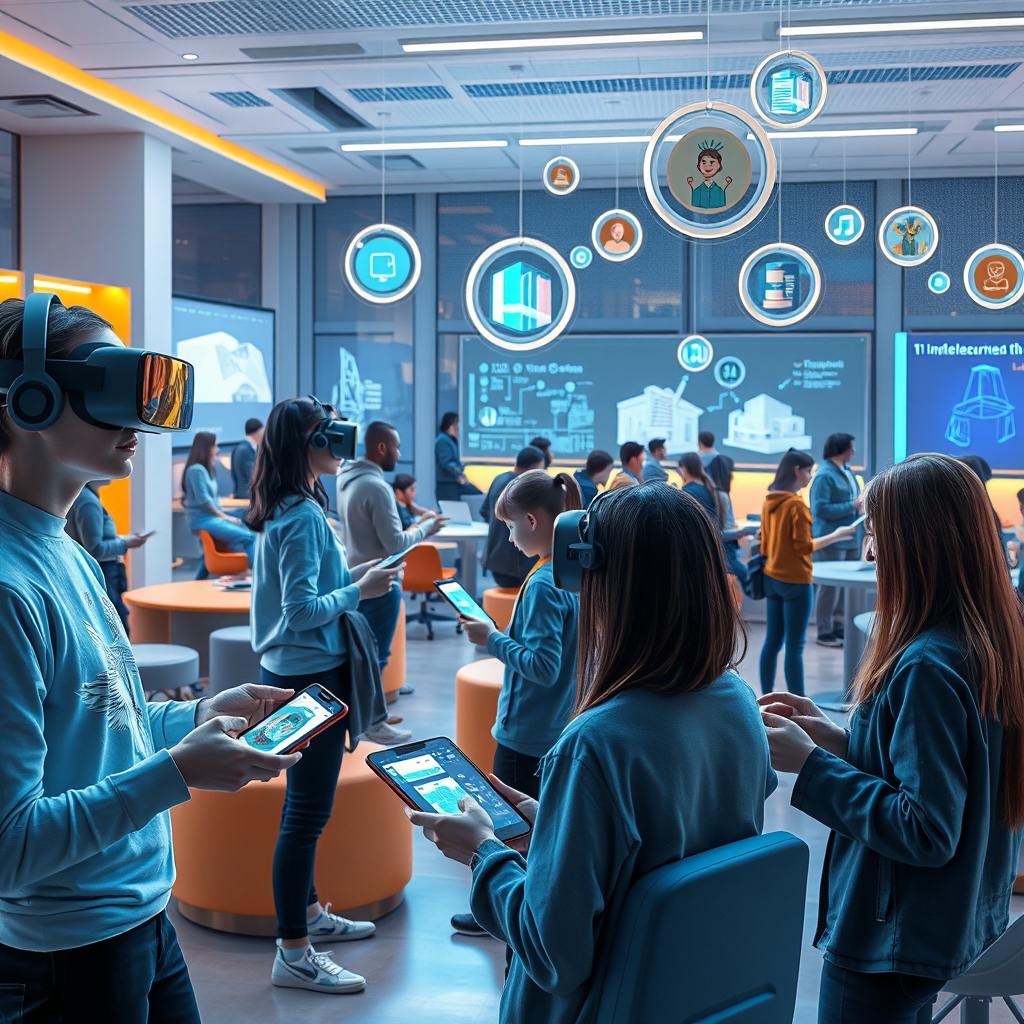
Education is no longer confined to the four walls of a classroom or the rigid schedules of traditional academia. The digital age has ushered in a new era where learning is as dynamic and fluid as the learners themselves. At the heart of this transformation lies the fusion of flexible learning paths and artificial intelligence, creating a hybrid horizon that promises to redefine how knowledge is acquired, skills are mastered, and careers are shaped. This evolution is not just about convenience; it’s about crafting a learning experience that adapts to the individual, rather than forcing the individual to adapt to it.
The Rise of Flexible Learning Paths
Flexible learning paths represent a paradigm shift from the one-size-fits-all model of education. These paths allow learners to tailor their educational journeys to their unique needs, goals, and circumstances. Whether it’s a working professional seeking to upskill, a student balancing academics with extracurricular passions, or a lifelong learner exploring new interests, flexible learning paths provide the autonomy to choose what, when, and how to learn. This approach is not just about breaking free from the constraints of time and place; it’s about empowering learners to take ownership of their education.
Online degree programs and microlearning courses are two pillars of this flexibility. Online degrees offer the rigor and depth of traditional education but with the added benefit of asynchronous learning, allowing students to engage with coursework at their own pace. Microlearning, on the other hand, breaks down complex topics into bite-sized, digestible modules that can be completed in minutes. This format is particularly effective for corporate training, where employees can quickly acquire new skills without disrupting their workflow. Together, these models create a learning ecosystem that is as adaptable as it is accessible.
The Role of AI in Personalizing Education
While flexible learning paths provide the structure for personalized education, artificial intelligence is the engine that powers it. AI-driven adaptive teaching software analyzes a learner’s progress, strengths, and weaknesses in real time, adjusting the content and pace to match their needs. This level of personalization ensures that no learner is left behind or held back by a rigid curriculum. For example, if a student struggles with a particular concept, the AI can provide additional resources, alternative explanations, or even connect them with a virtual tutor for one-on-one support.
Virtual tutors and AI-powered learning apps are becoming increasingly sophisticated, offering more than just automated feedback. These tools can engage in natural language conversations, simulate real-world scenarios, and even detect emotional cues to adjust their approach. Imagine a mobile learning app that not only teaches a new language but also adapts its lessons based on the user’s mood, energy levels, or learning preferences. This is not the future; it’s the present, and it’s transforming education into a deeply personal experience.
Gamification and Immersive Tech: The Engines of Engagement
Flexibility and personalization are only part of the equation. To truly revolutionize education, learners must be engaged and motivated. This is where gamification and immersive technologies like virtual reality (VR) and augmented reality (AR) come into play. Gamification incorporates elements of game design—such as points, badges, leaderboards, and challenges—into the learning process. These mechanics tap into the human desire for achievement and competition, making education feel less like a chore and more like an adventure.
Digital badges and micro-credentials further enhance this experience by providing tangible recognition for skills acquired. Unlike traditional degrees, which often take years to complete, micro-credentials can be earned in weeks or even days, making them ideal for professionals looking to quickly validate their expertise. These badges are not just symbols of achievement; they are portable, shareable, and increasingly recognized by employers as proof of competency in a rapidly changing job market.
Immersive technologies like VR and AR take engagement to the next level by creating environments where learners can interact with content in ways that were previously impossible. Virtual reality classrooms, for example, can transport students to historical events, scientific phenomena, or even fictional worlds, making abstract concepts tangible. Augmented reality, on the other hand, overlays digital information onto the physical world, allowing learners to explore everything from anatomy to architecture in their own space. These technologies are not just gimmicks; they are powerful tools that enhance comprehension, retention, and motivation.
The Corporate Connection: Lifelong Learning in the Workplace
The impact of flexible learning paths and AI extends far beyond traditional education. In the corporate world, lifelong learning programs are becoming a cornerstone of workforce development. Companies are increasingly investing in online corporate training platforms that leverage AI, microlearning, and gamification to upskill their employees. These programs are not just about compliance or mandatory training; they are about fostering a culture of continuous learning where employees are encouraged to grow and adapt alongside the organization.
Skill-based certifications and digital badges play a crucial role in this ecosystem. They provide employees with a clear pathway to advancement, while also giving employers a way to identify and nurture talent. For example, a software developer might earn a micro-credential in a new programming language, while a marketing professional could complete a gamified course on data analytics. These certifications are not just badges of honor; they are currency in the modern job market, signaling to employers that an individual is committed to staying ahead of the curve.
The Future of Hybrid Learning Models
The hybrid learning model, which blends online and in-person education, is perhaps the most visible manifestation of this flexible, AI-driven future. Hybrid models offer the best of both worlds: the convenience and personalization of digital learning, combined with the social interaction and hands-on experience of traditional classrooms. This approach is particularly effective in fields like medicine, engineering, and the arts, where practical, in-person training is essential but can be enhanced by digital tools.
For instance, medical students can use VR simulations to practice surgical procedures before stepping into an operating room, while engineering students can collaborate on projects in virtual labs. These experiences are not just supplementary; they are integral to preparing learners for the complexities of the real world. Hybrid models also make education more inclusive by breaking down geographical and financial barriers, allowing students from diverse backgrounds to access high-quality learning experiences.
As we stand on the brink of this hybrid horizon, it’s clear that the future of education is not just about technology—it’s about people. The tools and platforms we’ve discussed are not ends in themselves but means to an end: creating a learning ecosystem that is as diverse, dynamic, and adaptable as the learners it serves. The question is no longer whether education will change, but how quickly we can embrace these innovations to unlock the full potential of every individual. The journey has just begun, and the possibilities are as limitless as the human capacity to learn and grow.



