
The Invisible Architects: How AI and Micro-Credentials Are Crafting the Future of Lifelong Learning Ecosystems
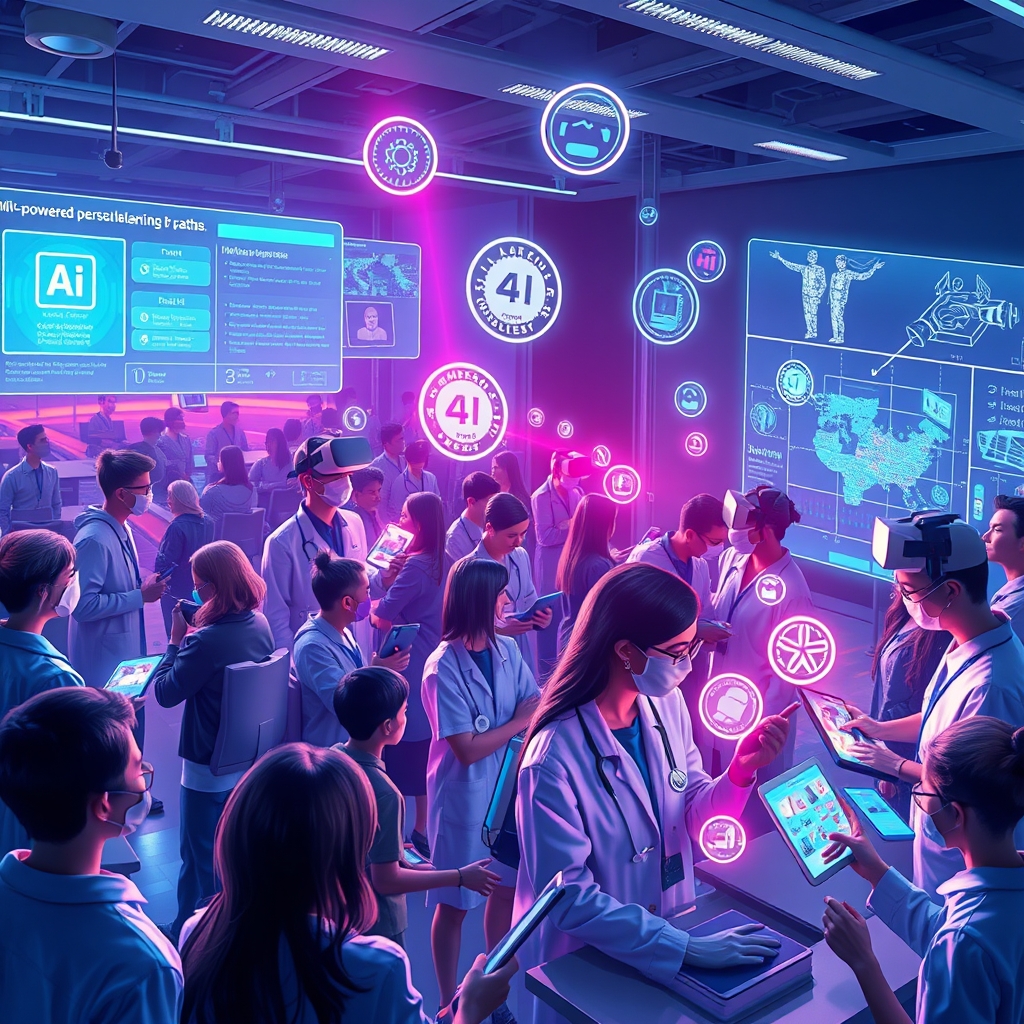
Imagine a world where learning is not confined to classrooms, textbooks, or rigid schedules. A world where education adapts to you—not the other way around. This is not a distant utopia; it is the reality being shaped by the convergence of artificial intelligence (AI) and micro-credentials. Together, they are dismantling the traditional barriers of education, creating a dynamic, lifelong learning ecosystem that empowers individuals to grow, adapt, and thrive in an ever-evolving world.
The Rise of the Lifelong Learner
Gone are the days when education was a finite journey, culminating in a degree or certification that would last a lifetime. Today, the half-life of skills is shrinking at an unprecedented rate. According to the World Economic Forum, 50% of all employees will need reskilling by 2025 as automation and technological advancements reshape industries. In this landscape, lifelong learning is no longer a luxury—it is a necessity.
AI-powered learning platforms are at the forefront of this shift, enabling individuals to engage in continuous, on-demand education. These platforms leverage machine learning algorithms to analyze a learner’s behavior, preferences, and performance, delivering personalized content that evolves alongside their needs. Whether it’s mastering a new programming language, developing leadership skills, or staying updated on industry trends, AI ensures that learning is always relevant, engaging, and accessible.
The Power of Micro-Credentials: Bite-Sized Validation for a Fast-Paced World
While AI personalizes the learning experience, micro-credentials provide the validation that learners need to showcase their skills. Unlike traditional degrees, which often require years of study, micro-credentials are bite-sized, focused certifications that verify specific competencies. They are the digital badges of the modern era—portable, stackable, and recognized by employers worldwide.
Platforms like Coursera, Udacity, and LinkedIn Learning have embraced micro-credentials, offering courses that culminate in digital badges or certificates. These credentials are not just symbols of achievement; they are powerful tools for career advancement. A study by the Harvard Business Review found that professionals who earn micro-credentials are 22% more likely to receive promotions or salary increases. In a world where skills matter more than degrees, micro-credentials are the currency of the future.
How AI Enhances Micro-Credentialing
AI is not just a tool for delivering content—it is also revolutionizing how micro-credentials are earned and validated. Adaptive assessment systems use AI to evaluate a learner’s proficiency in real-time, adjusting the difficulty of questions based on their performance. This ensures that credentials are not just earned but truly reflect a learner’s mastery of the subject.
Moreover, AI-driven platforms can recommend micro-credentials based on a learner’s career goals, industry trends, and skill gaps. For example, if a software developer wants to transition into data science, an AI-powered system might suggest a series of micro-credentials in Python, machine learning, and data visualization. This targeted approach accelerates skill acquisition and ensures that learners are always aligned with market demands.
The Role of Gamification: Making Learning Irresistible
Let’s face it—learning can be tedious. Even the most motivated individuals can struggle to stay engaged when faced with dense textbooks or monotonous lectures. This is where gamification comes into play. By incorporating game-like elements such as points, leaderboards, and challenges, AI-powered platforms transform learning into an immersive, interactive experience.
Gamification is particularly effective in corporate training, where engagement is often a challenge. Companies like Duolingo and Khan Academy have demonstrated how gamified learning can boost motivation and retention. For instance, Duolingo’s streak feature encourages users to practice daily, while Khan Academy’s badges reward learners for completing milestones. These elements tap into our innate desire for achievement, making learning feel less like a chore and more like a rewarding adventure.
Virtual Reality and Augmented Reality: The Next Frontier
While gamification enhances engagement, virtual reality (VR) and augmented reality (AR) take immersion to the next level. VR classrooms allow learners to step into simulated environments, from historical battlefields to surgical operating rooms, where they can practice skills in a risk-free setting. AR, on the other hand, overlays digital information onto the real world, enabling learners to interact with 3D models, annotations, and tutorials in their physical space.
For example, medical students can use VR to perform virtual surgeries, while engineers can use AR to visualize complex machinery. These technologies are not just novelties—they are powerful tools for experiential learning. A study by PwC found that VR learners are up to four times faster to train than traditional classroom learners, and they are 275% more confident in applying their skills. As VR and AR become more accessible, they will play an increasingly vital role in lifelong learning ecosystems.
The Corporate Connection: Upskilling the Workforce of Tomorrow
Lifelong learning is not just an individual pursuit—it is a strategic imperative for businesses. Companies that invest in upskilling their employees gain a competitive edge, fostering innovation, productivity, and employee retention. AI-powered learning platforms and micro-credentials are becoming essential tools for corporate training, enabling organizations to deliver targeted, scalable, and cost-effective education.
For instance, IBM’s Your Learning platform uses AI to recommend courses based on an employee’s role, skills, and career aspirations. Similarly, Google’s Career Certificates offer micro-credentials in high-demand fields like IT support, data analytics, and UX design. These programs are designed to be completed in months, not years, making them ideal for professionals looking to pivot or advance their careers.
Moreover, micro-credentials allow companies to track and validate the skills of their workforce in real-time. This data-driven approach enables organizations to identify skill gaps, tailor training programs, and make informed decisions about talent development. In a world where agility is key, AI and micro-credentials are the building blocks of a future-ready workforce.
The Democratization of Education
One of the most profound impacts of AI and micro-credentials is their ability to democratize education. Traditional higher education is often expensive, time-consuming, and inaccessible to many. In contrast, AI-powered platforms and micro-credentials offer affordable, flexible, and inclusive learning opportunities. Whether you’re a single parent, a full-time professional, or someone living in a remote area, these tools make education accessible to all.
For example, platforms like edX and FutureLearn offer micro-credentials from top universities at a fraction of the cost of a traditional degree. These credentials are recognized by employers worldwide, leveling the playing field for learners from diverse backgrounds. By breaking down the barriers of cost, geography, and time, AI and micro-credentials are empowering individuals to take control of their learning journeys.
As we stand on the brink of a new era in education, it is clear that the future belongs to those who embrace lifelong learning. AI and micro-credentials are not just tools—they are the invisible architects of this transformation, crafting a world where education is personalized, accessible, and boundless. The question is no longer whether we can afford to invest in learning, but whether we can afford not to. The journey has just begun, and the possibilities are limitless.



