
Redefining Education: The Rise of Open Schools and Student-Centered Learning
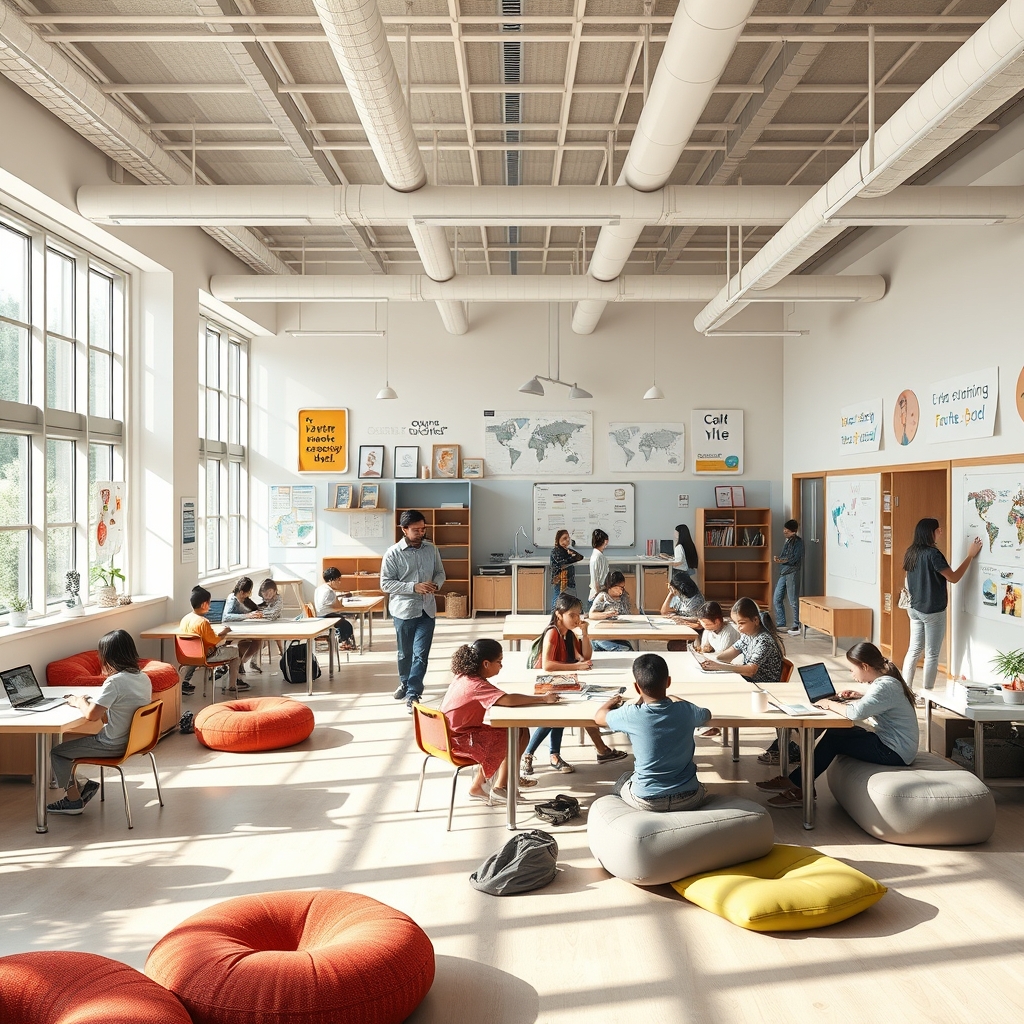
Education is no longer confined to the rigid structures of traditional classrooms. As society evolves, so too does our understanding of how learning should unfold. Open schools and alternative schooling models are challenging conventional norms, offering flexible, inclusive, and dynamic approaches that prioritize the individual needs of students. These models emphasize autonomy, creativity, and real-world application, reshaping what it means to educate and be educated in the 21st century.
The Open School Definition: A Paradigm Shift
At its core, an open school is a learning environment that breaks away from the one-size-fits-all approach of traditional education. Unlike conventional schools, which often rely on standardized curricula and fixed schedules, open schools embrace flexibility, allowing students to explore subjects at their own pace and according to their interests. This model is rooted in the belief that learning is a personal journey, not a race to meet arbitrary benchmarks.
Open schools often operate under principles of student-centered learning, where the focus shifts from teacher-led instruction to student-driven exploration. This doesn’t mean teachers are absent; rather, their role evolves into that of a facilitator or guide, helping students navigate their educational paths while providing support and resources as needed. The emphasis is on fostering curiosity, critical thinking, and a love of learning that extends beyond the classroom.
Flexible Curriculum and Self-Paced Education
One of the most significant advantages of open schools is their flexible curriculum. Unlike traditional schools, where students must adhere to a predetermined sequence of courses, open schools allow for personalized study plans that adapt to each learner’s strengths, weaknesses, and passions. This flexibility is particularly beneficial for students who may struggle in conventional settings, whether due to learning differences, personal circumstances, or simply a mismatch between their interests and the standard curriculum.
Self-paced education is another cornerstone of open schooling. Students are not bound by the pace of their peers; instead, they progress through material as they master it. This approach is closely tied to competency-based progression, where advancement is determined by demonstrated understanding rather than time spent in a classroom. For example, a student who excels in mathematics might move ahead quickly, while another who needs more time to grasp a concept can take it without fear of falling behind.
Alternative Schooling Models: Beyond the Traditional Classroom
The rise of alternative schooling models reflects a growing recognition that education should be as diverse as the students it serves. From democratic schooling, where students have a say in the rules and policies that govern their learning, to hybrid learning spaces that blend online and in-person instruction, these models offer innovative solutions to the limitations of traditional education.
Experiential learning projects are a hallmark of many alternative schools. Instead of relying solely on textbooks and lectures, students engage in hands-on activities that connect learning to real-world contexts. Whether it’s through internships, community service, or project-based assignments, experiential learning helps students develop practical skills while deepening their understanding of academic concepts. This approach aligns with the idea of community-based education, where learning extends beyond the school walls and into the broader world.
Inclusive Classroom Design and Holistic Development
Inclusivity is a key feature of open and alternative schools. Inclusive classroom design ensures that all students, regardless of ability, background, or learning style, have access to the same opportunities for growth. This might involve adaptive teaching strategies, such as differentiated instruction or the use of assistive technologies, to meet the diverse needs of learners. The goal is to create an environment where every student feels valued and empowered to succeed.
Holistic student development is another priority in these models. Education is not just about academic achievement; it’s about nurturing the whole person—intellectually, emotionally, socially, and physically. Open schools often incorporate lifelong learning skills, such as resilience, collaboration, and problem-solving, into their curricula. These skills are essential for navigating an increasingly complex and interconnected world, where adaptability and continuous learning are key to success.
The Role of Technology and Open Educational Resources
Technology plays a crucial role in enabling the flexibility and personalization that define open schools. Open educational resources (OER)—freely accessible, openly licensed materials—provide students and teachers with a wealth of high-quality learning tools. From interactive simulations to open textbooks, OER democratize access to education, making it possible for learners to explore subjects in depth without the constraints of traditional publishing models.
Autonomous student research is another area where technology shines. With access to digital libraries, online courses, and collaborative platforms, students can pursue independent projects that align with their interests. This autonomy not only fosters a sense of ownership over their learning but also prepares them for the self-directed nature of higher education and modern workplaces.
Collaborative Group Work and Democratic Schooling
While open schools emphasize individuality, they also recognize the value of collaborative group work. Learning is often a social process, and working with peers can enhance understanding, build communication skills, and foster a sense of community. In many open schools, students are encouraged to collaborate on projects, share ideas, and learn from one another in ways that mirror real-world teamwork.
Democratic schooling takes this idea further by giving students a voice in the governance of their learning environments. In these settings, students and teachers work together to create rules, resolve conflicts, and shape the school’s culture. This model not only teaches valuable civic skills but also reinforces the idea that education is a shared responsibility, not a top-down process.
As we look to the future of education, open schools and alternative models offer a compelling vision of what learning can be. They challenge us to rethink the purpose of education—not as a means to an end, but as a lifelong journey of discovery, growth, and empowerment. By embracing flexibility, inclusivity, and student-centered approaches, we can create learning environments that inspire curiosity, foster resilience, and prepare students for the challenges and opportunities of an ever-changing world. The shift toward these models is not just a trend; it’s a necessary evolution, one that recognizes the unique potential of every learner and the limitless possibilities of education itself.



